Historical Letters Reveal Nehru's Stance on Somnath Temple, Says Gujarat Minister
Synopsis
In a recent assembly session, Gujarat's Education Minister Pradyuman Vaja highlighted Nehru's letters opposing the Somnath Temple's reconstruction. This revelation came during discussions on 'Somnath Swabhiman Parv', emphasizing the temple's enduring significance to India's spiritual identity.
Key Takeaways
Historical Context: Nehru's letters reflect opposition to the Somnath Temple's reconstruction.
Cultural Significance: The temple is viewed as a symbol of faith and identity.
Modern Developments: Infrastructure improvements enhance the pilgrimage experience.
Ongoing Celebrations: Year-long programs will celebrate Somnath's heritage.
Political Implications: The discussion highlights the intersection of history and contemporary politics.
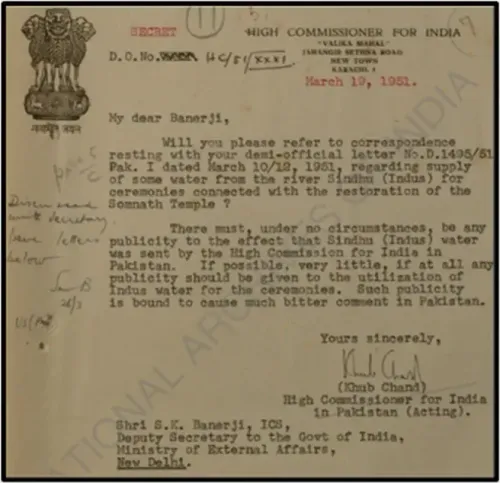
Gandhinagar, March 13 (NationPress) Gujarat's Education Minister Pradyuman Vaja recently referred to historical correspondence from the late Prime Minister Jawaharlal Nehru during a discussion in the state Assembly about a private resolution on 'Somnath Swabhiman Parv'. He highlighted that these letters demonstrated Nehru's disapproval of the Somnath Temple's reconstruction and consecration.
Minister Vaja pointed out that in a letter dated March 2, 1951, Nehru urged then-President Rajendra Prasad to refrain from attending the temple's consecration ceremony, labeling it as "Hindu revivalism".
Additionally, Vaja mentioned another correspondence with Kanhaiyalal Munshi where Nehru criticized the Somnath construction as "an improper expenditure" and "a construction at the wrong time".
These historical references were part of Vaja's presentation of facts during the Assembly debate on the Somnath Temple resolution, which was ultimately approved unanimously.
The Minister emphasized that the Somnath Temple is emblematic of more than just a place of worship. "Somnath is not just a temple; it is a vibrant symbol of India's faith and Gujarat's identity," he remarked, elaborating on the shrine's historical and cultural importance.
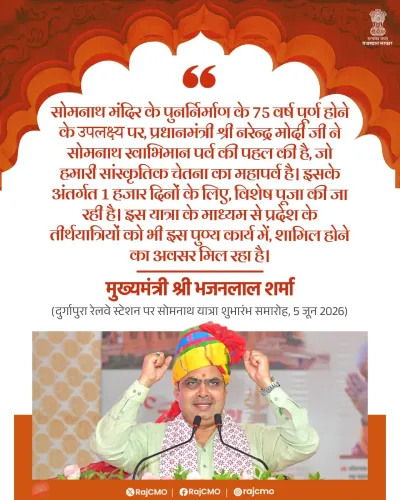
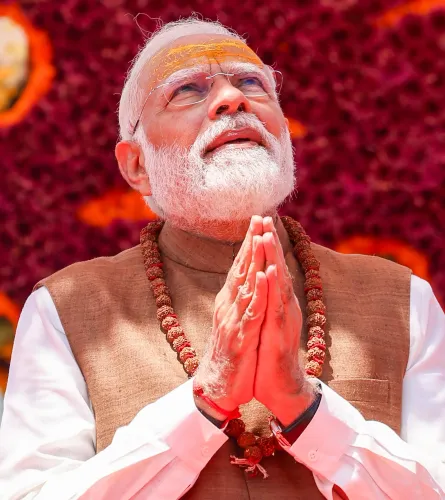
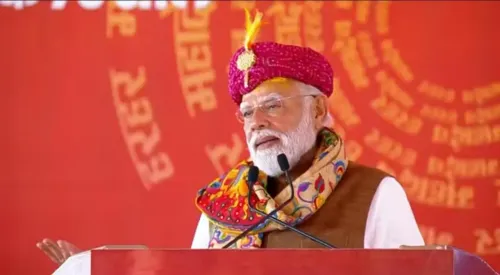
Commemorating the 1,000-year anniversary of the temple's invasion in 1026, Vaja noted that a week-long 'Somnath Swabhiman Parv' was held from January 8 to 15, led by Prime Minister Narendra Modi.
This event featured 72 hours of continuous 'Omkar' chanting, devotional music, and cultural festivities, attracting millions of devotees to the temple.
Recalling the late Vallabhbhai Patel's role in the temple's reconstruction post-Independence, Vaja shared how Patel made a historic vow in November 1947, holding sea water in his hands, to restore Somnath to its former glory with its shikhara.
He also acknowledged Kanhaiyalal Munshi's contributions to the reconstruction efforts.
Vaja stated that under Prime Minister Modi's vision, the Somnath pilgrimage site has seen a significant transformation, including the establishment of a modern railway station, a multi-modal transport hub, a scenic sea-view pathway, and a digital museum for visitors.
He also discussed the 'Somnath–Sasan–Diu' tourist circuit and the initiatives of Somnath Sanskrit University in promoting spiritual and educational endeavors.
According to Vaja, celebrations will extend through comprehensive year-long programs nationwide until January 11, 2027, under the auspices of the Union Ministry of Culture.
These initiatives will feature cluster-based programs in states hosting the twelve Jyotirlingas, cultural showcases, and digital broadcasts aimed at connecting citizens with Somnath's heritage.
The state government is also set to launch 'Somnath Swabhiman Sankalp' initiatives at district and taluka levels.
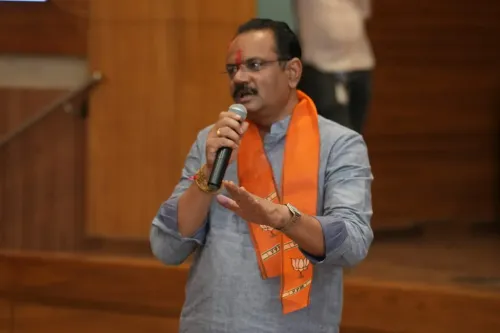
This private resolution was proposed by Kheralu BJP MLA Sardarbhai Chaudhari, who emphasized that the term Somnath evokes a sense of pride and symbolizes India's spiritual heritage.
He stated, "Somnath is the foremost of the twelve Jyotirlingas. Despite facing numerous invasions, its reconstruction is a testament to unyielding faith." The discussion included contributions from several BJP MLAs before the resolution was passed unanimously by the Assembly.
Point of View
The discussion in the Gujarat Assembly reflects the ongoing dialogue about cultural identity and historical narratives in India. By referencing Nehru's correspondence, the Minister underscores the complexities surrounding the Somnath Temple's legacy, prompting a reevaluation of historical events and their significance in contemporary society.
NationPress
3 Oct 2026
Frequently Asked Questions
What did Nehru say about the Somnath Temple's reconstruction?
Nehru characterized the reconstruction as 'Hindu revivalism' and advised against attending the consecration ceremony, labeling it an 'improper expenditure'.
What is the significance of the 'Somnath Swabhiman Parv'?
'Somnath Swabhiman Parv' commemorates the temple's historical importance and cultural heritage, featuring various events to celebrate its significance.
Who played a key role in the temple's reconstruction post-Independence?
Vallabhbhai Patel took a historic pledge to reconstruct the Somnath Temple after Independence, symbolizing resilience against past invasions.
What developments have occurred at the Somnath pilgrimage site?
The pilgrimage site has seen enhancements including a modern railway station, a multi-modal transport hub, and a digital museum.
How will the Somnath celebrations continue in the coming years?
Celebrations will extend through year-long programs until January 11, 2027, involving cultural representations and digital outreach.