Was the Somnath Temple Rebuilt Against Nehru's Consent?
Synopsis
The Karnataka BJP claims the historic Somnath Temple was rebuilt without the approval of former PM Jawaharlal Nehru. This article delves into the temple's significance and the political dynamics surrounding its reconstruction. Discover the history and impact of this pivotal moment in India's heritage.
Key Takeaways
Somnath Temple has a rich history spanning over 1,000 years.
The temple was reconstructed despite opposition from former PM Nehru .
It symbolizes Hindu cultural identity and resilience.
Special rituals were performed nationwide to commemorate its 75th anniversary.
Leaders like Sardar Vallabhbhai Patel played a crucial role in advocating for its restoration.
Bengaluru, Jan 10 (NationPress) The Karnataka Bharatiya Janata Party (BJP) asserted on Saturday that the revered Somnath temple was reconstructed without the approval of the late former Prime Minister Jawaharlal Nehru following India's Independence.
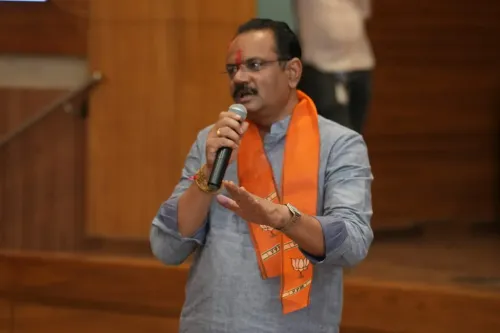
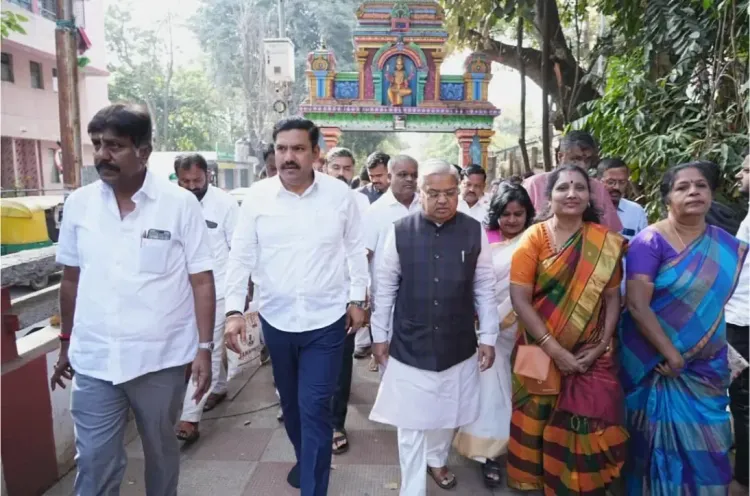
Former Deputy Chief Minister Govind Karjol made this declaration during a press briefing after a special pooja held on Saturday morning at the Kadumalleshwara Temple in Malleshwaram, commemorating 75 years since the temple's restoration.
Karjol noted that the Somnath Temple is an ancient site with a history exceeding 1,000 years.
He reiterated that the temple was rebuilt without the consent of Nehru.
Following its reconstruction, the temple was consecrated and opened for worship in 1951.
"Today, approximately 140 crore people nationwide visit the Somnath Temple with deep devotion to offer their prayers," he mentioned.
Karjol remarked that not only the BJP but Hindus from all over the country are engaging in special rituals in their towns and villages to celebrate the anniversary of the temple's rebuilding.
"Under the leadership of our State party President B.Y. Vijayendra, BJP members also conducted a special pooja today, chanting 'Om Namah Shivay' with fervor, praying for universal welfare," he stated.
He pointed out that the temple was completely obliterated during the Mughal invasions and its riches were plundered.
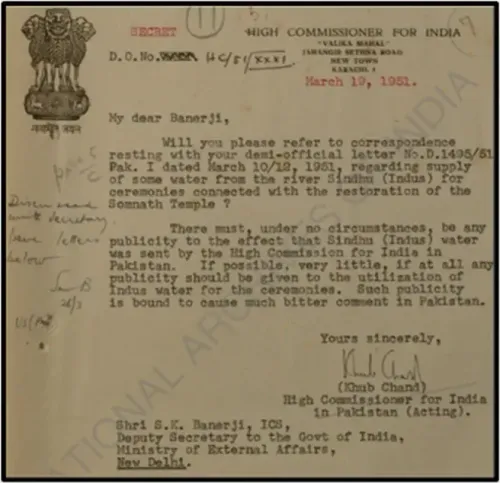
"After Independence, when Nehru was Prime Minister, Sardar Vallabhbhai Patel proposed in 1948 that the temple, one of Hinduism's most significant structures, be rebuilt to mend Hindu identity, but Nehru opposed the idea, stating that it should not be rebuilt under any circumstances," Karjol explained.
He recalled that leaders such as K.M. Gadgil and K.M. Munshi supported Patel’s stance, insisting on the temple's reconstruction.
"Even though Nehru opposed it, Gadgil and Munshi persisted," he added.
Karjol mentioned that former Union Education Minister Maulana Abul Kalam Azad later suggested that the temple be entrusted to the Archaeological Department.
"Despite differing views, when these leaders united in their insistence to restore the temple's past glory, the Somnath Temple was eventually reconstructed in defiance of Nehru's wishes," he concluded.
State BJP President and MLA B.Y. Vijayendra stated that as part of the 'Somnath Swabhiman Parv', BJP members and patriots across the nation offered special prayers at Shiva temples, chanting 'Om Namah Shivay' mantra 11 times.
Former Deputy Chief Minister Govind Karjol, State BJP Secretary Ambika Hulinaykar, Bengaluru North District President S. Harish, and Bengaluru Central District President Saptagiri Gowda were present at the event.
Point of View
It is essential to recognize the significance of historical sites like the Somnath Temple in shaping cultural identity. While differing political views exist, the temple represents a pivotal aspect of India's heritage and the diverse narratives that define our nation.
NationPress
25 Sept 2026
Frequently Asked Questions
What is the historical significance of the Somnath Temple?
The Somnath Temple is one of the oldest temples in India, symbolizing the resilience of Hindu culture and spirituality. It has a history of being destroyed and rebuilt, representing the enduring faith of millions.
Why did Jawaharlal Nehru oppose the reconstruction of the temple?
Nehru believed that the reconstruction of the temple could exacerbate communal tensions and wanted to focus on nation-building post-Independence.
When was the Somnath Temple officially consecrated?
The Somnath Temple was consecrated and opened for public worship in 1951 after its reconstruction.
Who were the key figures advocating for the temple's reconstruction?
Key figures included Sardar Vallabhbhai Patel, K.M. Gadgil, and K.M. Munshi, who argued for the temple's restoration as a means to heal Hindu identity.
What events commemorated the 75th anniversary of the temple's reconstruction?
Special poojas and prayers were held across various Shiva temples nationwide, organized by the BJP and Hindu communities to celebrate the temple's historical importance.