Exam reforms: Nilekani task force seeks public input till Sept 13
Synopsis
India's exam integrity crisis has produced a two-track government response: a Nilekani-led High-Powered Task Force now seeking public input until 13 September, and fresh IAS and IPS leadership installed at the NTA. The moves follow a nationwide student agitation over alleged paper leaks that ended with the Education Minister's resignation — making this the most consequential restructuring of India's public examination architecture in years.
Key Takeaways
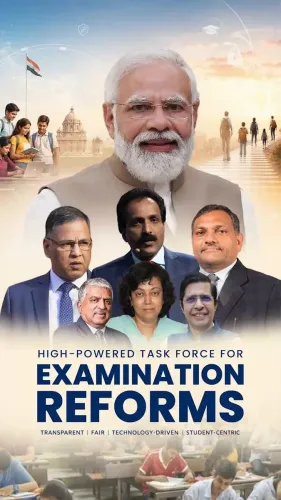
The Nandan Nilekani -headed High-Powered Task Force (HPTF) is accepting public suggestions on exam reforms until 13 September .
Task force members include former ISRO chief S.
Somnath , former IB Director Tapan Deka , IIT Chennai Director V.
Kamakoti , former Education Secretary Anita Karwal , and Logistics Expert Amrit Lal Meena .
The HPTF is examining exam security, assessment design, governance, malpractice prevention, and technology deployment including secure Computer-Based Testing .
The task force was constituted following a student agitation over alleged paper leaks and the resignation of Education Minister Dharmendra Pradhan .
The NTA appointed IAS officer Prasanna Venkatesh V and IPS officer Ravi Kumar Singh as directors, and IRS officer Amit Samdariya as joint director.
The Nandan Nilekani-headed High-Powered Task Force (HPTF) on public examination reforms has opened a public consultation window, inviting suggestions from students, parents, teachers, and civil society organisations until 13 September. The announcement was made on Friday, 28 August, by an official familiar with the matter, as India's examination oversight system undergoes its most significant restructuring in recent memory.
Who Is on the Task Force
Beyond Nandan Nilekani — the technologist widely credited as the architect of the Aadhaar identity system — the government has appointed a panel of seasoned institutional figures. Members include former ISRO Chairman S. Somnath, former Intelligence Bureau (IB) Director Tapan Deka, IIT Chennai Director V. Kamakoti, former Education Secretary Anita Karwal, and Logistics Expert Amrit Lal Meena. The composition signals a deliberate blend of technology, security, academic, and administrative expertise.
What Suggestions Are Being Sought
The HPTF has outlined several thematic areas on which it is seeking public input. These include the conduct and security of public examinations, examination design and assessment methodology, governance and institutional accountability, and the prevention, detection, and redressal of examination malpractices. The task force is also inviting views on the deployment of secure Computer-Based Testing (CBT), expansion of examination infrastructure, and building an inclusive framework that addresses disparities across social, economic, regional, and linguistic groups. The stated objective is to develop a system that is robust, secure, transparent, equitable, and future-ready.
Context: Paper Leaks and Political Fallout
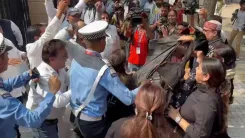
The formation of the HPTF follows a period of acute public pressure. Nilekani's appointment came a day after a sustained students' agitation against alleged paper leaks concluded — an agitation that had contributed to the resignation of Union Education Minister Dharmendra Pradhan the previous month. This is the most visible structural response the Centre has mounted to the examination integrity crisis, which drew nationwide protests and cast a shadow over the credibility of the National Testing Agency (NTA).
NTA Gets New Leadership
In a parallel development, the National Testing Agency this week appointed two new directors and a joint director. Prasanna Venkatesh V, a 2012-batch Indian Administrative Service (IAS) officer, has been posted to the NTA under the Central Staffing Scheme for a period of five years. Ravi Kumar Singh, a 2012-batch Andhra Pradesh cadre Indian Police Service (IPS) officer recommended for Central deputation by the Union Home Ministry, has also been appointed as director. Singh previously served as Deputy Commissioner of Police, Economic Offences Wing, Delhi Police. Additionally, Amit Samdariya, a 2016-batch Indian Revenue Service (IRS) officer, will serve as joint director at the deputy secretary level for four years, according to the Department of Personnel and Training.
What Happens Next
The public consultation closes on 13 September, after which the HPTF is expected to consolidate recommendations and submit a reform roadmap to the government. The dual track — a high-powered advisory panel alongside fresh NTA leadership — suggests the Centre is moving on both policy design and institutional rebuilding simultaneously. Whether these measures restore public confidence in the examination system will depend heavily on the transparency of the process and the rigour with which recommendations are implemented.
Point of View
But the panel's security and administrative composition also reflects that the Centre views the exam crisis as partly a law-and-order problem. The harder question — whether the NTA's institutional culture and incentive structures are fit for purpose — is one that new directors alone cannot answer. Public consultations are only as good as the mechanism that converts them into binding policy, and that mechanism has not yet been disclosed.
NationPress
12 Oct 2026
Frequently Asked Questions
What is the Nandan Nilekani-led High-Powered Task Force on exam reforms?
It is a government-appointed expert panel tasked with recommending reforms to India's public examination system, covering security, design, governance, and malpractice prevention. The HPTF is currently inviting suggestions from students, parents, teachers, and civil society until 13 September.
Why was the task force formed?
The HPTF was constituted following widespread student protests over alleged paper leaks in public examinations, which culminated in the resignation of Union Education Minister Dharmendra Pradhan. Nandan Nilekani's appointment came a day after the agitation concluded.
Who are the other members of the Nilekani task force?
Apart from Nilekani, the task force includes former ISRO Chairman S. Somnath, former IB Director Tapan Deka, IIT Chennai Director V. Kamakoti, former Education Secretary Anita Karwal, and Logistics Expert Amrit Lal Meena.
What changes have been made at the NTA?
The National Testing Agency appointed two new directors — IAS officer Prasanna Venkatesh V and IPS officer Ravi Kumar Singh — along with IRS officer Amit Samdariya as joint director. All three appointments were formalised this week through official orders.
How can the public submit suggestions to the task force?
The HPTF has opened a public consultation process accepting inputs from all stakeholders, including students, parents, teachers, and civil society organisations, until 13 September. The government has not yet publicly detailed the specific submission portal or process beyond the official announcement.