Northeast India: 3,746 projects, 16,207 km highways in 12-year push
Synopsis
An official fact-sheet puts hard numbers to India's northeast transformation: 3,746 projects sanctioned, 2,730 completed at over ₹27,963 crore, highways expanded by 5,300 km, and railway commissioning up nearly sixfold since 2014. The region is being repositioned from a developmental laggard to a strategic gateway for Southeast Asian trade under the Act East Policy.
Key Takeaways
3,746 projects sanctioned by MDoNER across eight northeast states; 2,730 completed at a cost exceeding ₹27,963 crore .
PM-DevINE scheme carries a ₹6,600 crore outlay for 2022–23 to 2025–26 , with 48 projects under implementation.
National Highways in the northeast expanded from 10,905 km (2014) to 16,207 km (April 2025) .
Railway track commissioning surged from 333 km (2009–14) to over 1,900 km (2014–26) .
The Act East Policy positions the northeast as India's strategic corridor to Southeast Asia for trade, mobility, and cultural engagement.
India's Northeast region has undergone a measurable transformation over the past 12 years, with improvements in connectivity, energy access, basic services, and livelihoods reshaping the development landscape, according to an official fact-sheet released on Saturday, 20 June. The region, home to eight states, is now being described as a gateway for trade and regional engagement with Southeast Asia.
Scale of Projects and Investment
The Ministry of Development of North Eastern Region (MDoNER) has been channelling financial assistance to all eight northeast states through five Central Sector Schemes. According to the fact-sheet, a total of 3,746 projects have been sanctioned under these schemes, of which 2,730 projects have been completed at an approved cost exceeding ₹27,963 crore. The scale of sanctioned work signals a sustained, multi-year commitment rather than episodic spending.
PM-DevINE: Centrally Funded Acceleration
The Prime Minister's Development Initiative for North East Region (PM-DevINE) represents a dedicated policy intervention to close persistent developmental gaps. The scheme is 100 per cent centrally funded with an outlay of ₹6,600 crore for the period 2022–23 to 2025–26. A total of 48 projects spanning infrastructure, livelihoods, and social development are currently under implementation. Three projects have already been completed, including a Centre of Excellence and Passenger Ropeway Systems.
Roads and Railways: Connectivity Surge
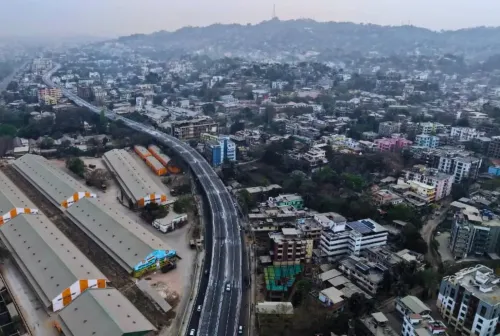
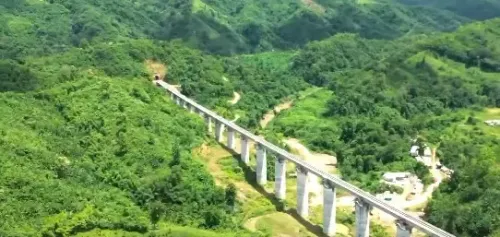
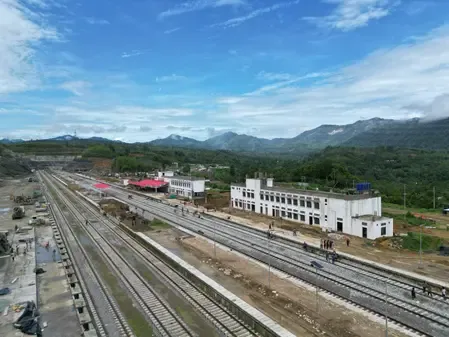
Road infrastructure has seen significant expansion. The National Highways network in the northeast grew from 10,905 km in 2014 to 16,207 km as of 1 April 2025 — an addition of over 5,300 km in just over a decade. Railway connectivity has seen an even sharper acceleration. Track commissioning jumped from 333 km during 2009–14 to over 1,900 km during 2014–26, making rail a transformative mode of mobility across the region's challenging terrain.
Act East Policy and Regional Integration
The Act East Policy, a cornerstone of India's external engagement since 2014, places the northeast at the centre of the country's outreach to Southeast Asia. Over the past decade, the policy has driven progress on cross-border connectivity, trade facilitation, cultural linkages, and border infrastructure. Officials note that the northeast is increasingly being seen not as a peripheral zone but as a strategic corridor.
Sustainability and the Road Ahead
'Development has moved alongside ecological considerations and respect for local communities. This has helped build outcomes that are not only impactful, but also sustainable over the long term. As the region strengthens its links within India and with neighbouring countries, it is opening new avenues for trade, mobility, and cooperation,' the official statement noted. The statement also invoked the Ashtalakshmi framing — a reference to the eight northeastern states — describing the region as 'more connected, more resilient, and better prepared for the future.' How these gains translate into private investment, employment, and quality-of-life indicators beyond infrastructure will be the next measure of progress.
Point of View
730 completed projects and a near-sixfold jump in railway commissioning are not rhetorical claims. But official fact-sheets by design measure inputs and outputs, not outcomes: how much of the connectivity gain has translated into private investment, job creation, or reduced out-migration from the northeast remains unaddressed. The Ashtalakshmi framing is politically resonant, but the region's share of national GDP and FDI inflows would be the more telling scoreboard. The Act East Policy is now over a decade old; its strategic logic is sound, but the pace of cross-border trade actualisation with Myanmar and Bangladesh has lagged the infrastructure narrative. The next phase of credibility rests on outcome metrics, not project counts.
NationPress
19 Sept 2026
Frequently Asked Questions
How many projects has the Centre sanctioned for Northeast India's development?
A total of 3,746 projects have been sanctioned by MDoNER across the eight northeast states under five Central Sector Schemes. Of these, 2,730 have been completed at an approved cost of over ₹27,963 crore, according to the official fact-sheet released on 20 June.
What is the PM-DevINE scheme and how much has been allocated?
PM-DevINE, or the Prime Minister's Development Initiative for North East Region, is a 100 per cent centrally funded scheme with an outlay of ₹6,600 crore for the period 2022–23 to 2025–26. It covers 48 projects in infrastructure, livelihoods, and social development, with three already completed including a Centre of Excellence and Passenger Ropeway Systems.
How has road connectivity in Northeast India improved since 2014?
The National Highways network in the northeast has grown from 10,905 km in 2014 to 16,207 km as of 1 April 2025, an addition of over 5,300 km. This expansion is cited as a key driver of improved mobility across the region.
What is the Act East Policy and how does it affect the northeast?
The Act East Policy, in place since 2014, positions Northeast India as the country's strategic gateway to Southeast Asia. It focuses on cross-border connectivity, trade facilitation, cultural linkages, and border infrastructure, aiming to integrate the region into broader regional economic networks.
How much has railway connectivity expanded in Northeast India?
Railway track commissioning in the northeast rose from 333 km during 2009–14 to over 1,900 km during 2014–26, nearly a sixfold increase. Officials describe rail as a transformative mode of connectivity given the region's difficult terrain.