Strategic and Economic Transformation in India's Northeast through Enhanced Connectivity
Synopsis
India's Northeast is on the brink of a groundbreaking transformation, driven by ambitious infrastructure initiatives that promise to reshape its strategic and economic landscape. Discover how these developments are enhancing connectivity and national security.
Key Takeaways
Extensive investments in connectivity are transforming Northeast India.
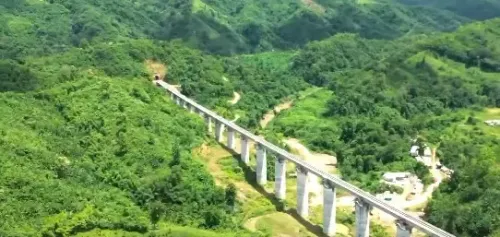
Major infrastructure projects include roads, railways, and bridges.
Government initiatives support local communities and bolster national security.
Improved infrastructure enhances economic opportunities.
Projects align with India's Act East Policy for regional integration.
New Delhi, March 15 (NationPress) The Northeast region of India is undergoing a significant strategic and economic shift, fueled by extensive connectivity and infrastructure projects initiated in recent years, as highlighted in a report by India Narrative.
The document, titled “Connecting the North East: Infrastructure as a Strategic Catalyst,” authored by Brigadier Ranjit Borthakur, Sena Medal (Retd.), underscores how ongoing investments in roads, railways, bridges, waterways, and air travel are transforming the region's development landscape while bolstering national security and advancing India's Act East Policy.
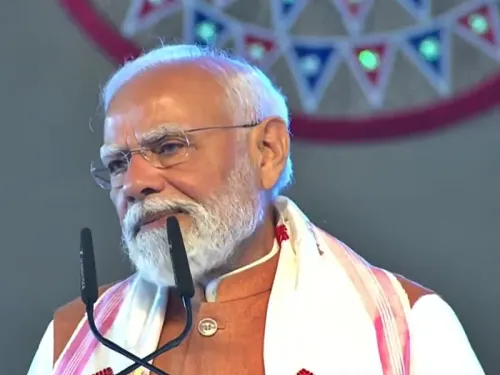
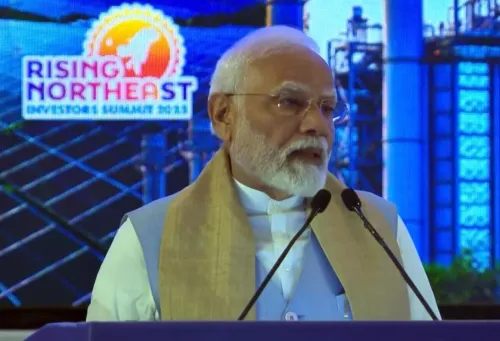
The report reveals that Prime Minister Narendra Modi's repeated visits to the Northeast in early 2026 reflect the government's dedication to the region's progress.
“The frequent visits by Prime Minister Modi to the Northeast during the first quarter of 2026 clearly showcase his commitment to the development of this strategically critical area,” noted the report.
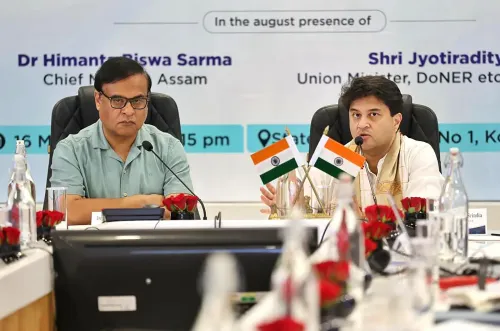
During his recent trip to Assam on March 13 and 14, Prime Minister Modi inaugurated and laid the groundwork for infrastructure initiatives exceeding Rs 47,600 crore. These projects included the 'bhoomi pujan' for the Shillong–Silchar high-speed corridor, the commissioning of the Kopili Hydro-Electric Project, the enhancement of the Numaligarh–Siliguri Product Pipeline capacity, and railway electrification projects.
This visit also marked a pivotal welfare measure for tea garden workers in the state.
Certificates of land ownership were granted to nearly 3.5 lakh workers across 825 tea plantations—a historic move, considering their ancestors were brought to the region from the Chotanagpur Plateau by the British nearly two centuries ago.
Earlier, on January 17–18, PM Modi performed the 'bhoomi pujan' for the proposed Kaziranga Elevated Corridor, a 35-km project estimated to cost around Rs 6,950 crore.
This initiative aims to safeguard wildlife in Kaziranga National Park during the monsoon while enhancing connectivity to eastern Assam and nearby states.
“While vehicles will traverse the elevated corridor, animals will be able to move freely beneath it,” emphasized the report, highlighting its ecological importance.
The Prime Minister also inaugurated two new Amrit Bharat Express trains that link the Northeast with northern India, significantly improving rail connectivity for both passengers and commerce.
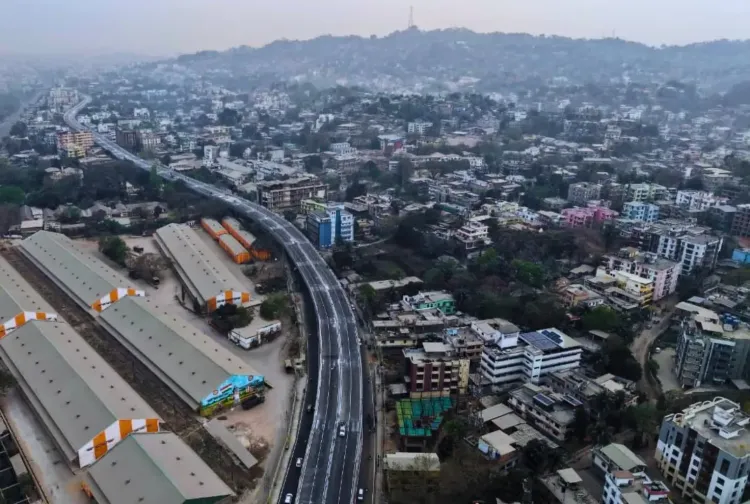
The report further noted the inauguration of the Kumar Bhaskar Barman Bridge over the Brahmaputra River on February 13.
Constructed at a cost of Rs 3,030 crore, this bridge connects Guwahati with North Guwahati and is expected to alleviate congestion in the city while enhancing regional mobility.
Another significant initiative approved by the Centre is an underwater tunnel beneath the Brahmaputra River linking Gohpur and Numaligarh.
This 15.79-km four-lane tunnel, with an estimated cost of Rs 18,600 crore, will dramatically reduce the distance between the two towns from approximately 240 km to just 34 km.
The report states that this project will also have strategic implications.
“Importantly, in addition to facilitating trade and commerce, this will offer an additional route for the Army to access the Arunachal border,” it noted.
The report also mentioned that the Union government is enhancing emergency landing facilities on national highways to bolster defense readiness and disaster response, including a facility inaugurated at Moran near Dibrugarh.
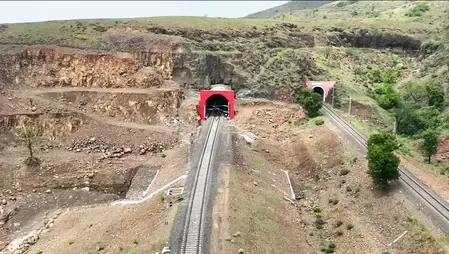
Improvements in inland waterways, airports, and logistics infrastructure across the Northeast have also been highlighted, with the assertion that improved connectivity through road, rail, air, and waterways is accelerating economic growth while reinforcing India's Act East Policy.
“The construction of bridges and other infrastructures like the elevated corridor, underwater tunnel, airports, and inland water transport not only fosters economic prosperity in the region but also addresses the country’s security challenges while enhancing India's Act East Policy,” the report concluded.
The analysis affirms that ongoing infrastructure development and connectivity expansion are driving comprehensive growth in the Northeast, benefiting sectors such as agriculture, industry, and job creation while reinforcing India's strategic stance in the region.
Point of View
It is evident that the ongoing infrastructure initiatives in India's Northeast are not just about connectivity but are pivotal for national security and regional development. The commitment demonstrated by the government reflects a forward-thinking approach that prioritizes both strategic interests and the welfare of local communities.
NationPress
28 Sept 2026
Frequently Asked Questions
What are the key infrastructure projects in Northeast India?
Key projects include the Shillong–Silchar high-speed corridor, Kaziranga Elevated Corridor, and the Kumar Bhaskar Barman Bridge, among others.
How does improved connectivity benefit Northeast India?
Enhanced connectivity boosts trade, supports local economies, and strengthens national security by facilitating quicker access to remote areas.
What is the significance of the underwater tunnel project?
The underwater tunnel will significantly reduce travel distance, enhancing trade and military logistics between Gohpur and Numaligarh.
How is the government supporting tea garden workers?
The government is distributing land ownership certificates to tea garden workers, a historic step towards recognizing their rights.
What role does the Act East Policy play in this transformation?
The Act East Policy aims to enhance economic ties and connectivity with Southeast Asia, and the infrastructure projects in Northeast India are crucial for its success.