How Should the Next NSA Director Address US Cyber Defense?
Synopsis
NSA nominee Joshua Rudd emphasizes the urgent need for speed and integration in US cyber defense during a Senate hearing. With threats to national security escalating, he advocates for innovative strategies to safeguard infrastructure and democracy. Rudd's extensive military experience shapes his vision for a unified approach to intelligence and cybersecurity.
Key Takeaways
Joshua Rudd emphasizes the need for speed and innovation in cyber defense.
Close coordination between the NSA and US Cyber Command is vital.
Unified leadership is essential to avoid misalignment of intelligence priorities.
Artificial intelligence plays a critical role in modern cybersecurity.
China is identified as the leading national security challenge.
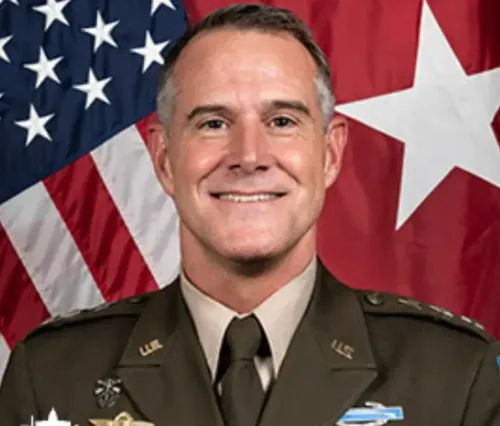
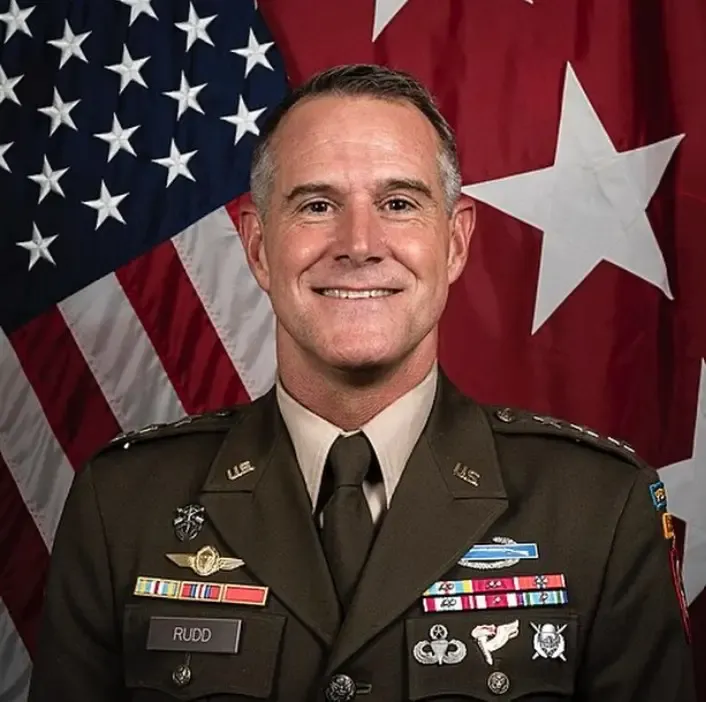
Washington, Jan 30 (NationPress) In light of what he termed as urgent threats to the infrastructure and democracy of the United States, NSA nominee Joshua Rudd addressed senators, asserting that speed, integration, and innovation are essential for American cyber defense.
Rudd, who has been nominated by President Donald Trump to take the reins of the National Security Agency, detailed his priorities in written responses to the Senate Select Committee on Intelligence, as well as in his opening remarks to lawmakers this week.
He emphasized that the NSA is at the forefront of two fundamental missions vital to national security: foreign signals intelligence and cybersecurity. Rudd stated that both missions must provide timely intelligence while safeguarding the nation's most critical systems.
Furthermore, Rudd highlighted the necessity of maintaining close collaboration between the NSA and US Cyber Command, noting that both entities function in a shared and interconnected environment.
He defended the long-standing practice wherein the NSA director concurrently serves as commander of Cyber Command, warning that any change to this structure could potentially slow operations and disrupt alignment.
Rudd argued that without unified leadership, intelligence priorities and cyber operations risk becoming misaligned, leading to inefficiencies, delays in responses, and diminished transparency.
According to him, the dual role facilitates quicker decision-making and enhances accountability in a rapidly evolving threat landscape, while also preserving sensitive relationships and mission equities.
He recognized that this arrangement should be reassessed as Cyber Command evolves, but he maintained that a unified effort is crucial for defending the homeland and deterring adversaries.
On oversight and funding, Rudd asserted that all allocated funds must strictly serve their designated purposes, promising that established processes will ensure accountability between the two organizations.
With over three decades of military experience, including senior leadership roles across multiple combatant commands, Rudd conveyed that his experiences have shaped his belief in the necessity of rapidly integrating intelligence and operations.
He particularly pointed to his recent years in the Indo-Pacific as a period of increased adversarial activity, noting that such threats have been intensified by the proliferation of low-cost technologies.
According to Rudd, artificial intelligence, cyber tools, and autonomous systems have democratized access to advanced capabilities for a broader array of actors.
“These threats are no longer distant,” he emphasized, categorizing them as direct challenges to US infrastructure and democratic institutions.
If confirmed, Rudd pledged to advocate for closer integration across the intelligence community, outlining initiatives to bolster data sharing, interoperability, and interagency training.
He underscored the increasing significance of artificial intelligence in intelligence and cybersecurity, stating that AI enables quicker analysis of extensive datasets and fortifies cyber defenses, all while demanding strict adherence to legal and ethical standards.
Rudd identified China as the most pressing national security challenge confronting the NSA, also noting cyber threats to critical infrastructure, rapid technological advancements, and escalating global instability.
Discussing surveillance authorities, Rudd asserted that intelligence gathered under Section 702 of the Foreign Intelligence Surveillance Act has provided invaluable insights into foreign adversaries, contributing to saving American lives and enhancing national security.
The NSA serves as the premier cryptologic entity in the United States, tasked with foreign signals intelligence and the safeguarding of national security systems under the direction of the director of national intelligence.
Point of View
This pivotal moment in American cybersecurity underscores the pressing need for innovation and unity. Joshua Rudd's insights reveal a comprehensive approach to safeguarding our nation's infrastructure and democratic values amidst rising global threats. His extensive experience positions him uniquely to guide the NSA in navigating the complex landscape of modern cyber challenges.
NationPress
7 Oct 2026
Frequently Asked Questions
What are the main challenges highlighted by Joshua Rudd?
Joshua Rudd identifies threats to US infrastructure and democracy, particularly from adversarial activities and the rapid technological changes making advanced capabilities more accessible.
What is Rudd's stance on the relationship between the NSA and Cyber Command?
Rudd emphasizes the necessity of close coordination between the NSA and Cyber Command, arguing that unified leadership is essential for effective operations.
How does Rudd view the role of artificial intelligence in cybersecurity?
Rudd sees artificial intelligence as a crucial tool for faster data analysis and improved cyber defenses, while emphasizing the need for legal and ethical standards.
Who does Rudd identify as the main national security threat?
He identifies China as the most significant national security challenge facing the NSA, along with cyber threats to critical infrastructure.
What is the role of the NSA?
The NSA is responsible for foreign signals intelligence and the protection of national security systems, operating under the authority of the Director of National Intelligence.