Odisha Cabinet Approves 11 Major Proposals Including Atal Bus Stand Scheme
Synopsis
In a significant move, the Odisha Cabinet, led by Chief Minister Mohan Charan Majhi, approved 11 vital proposals across five departments, including the launch of the Atal Bus Stand scheme aimed at revolutionizing public transport in the state.
Key Takeaways
Odisha Cabinet approved 11 proposals enhancing infrastructure.
Atal Bus Stand scheme to modernize public transport.
Budget of Rs 3,400 crore allocated for the scheme.
Focus on irrigation and water management projects.
Investment in energy infrastructure to strengthen power supply.
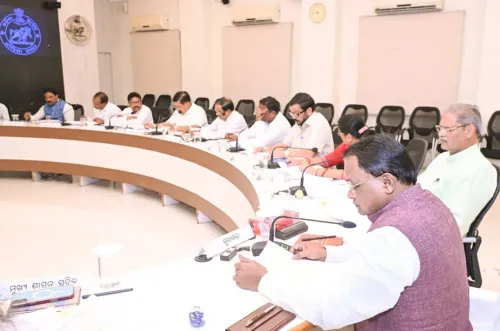
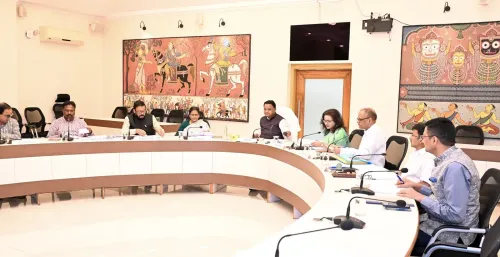
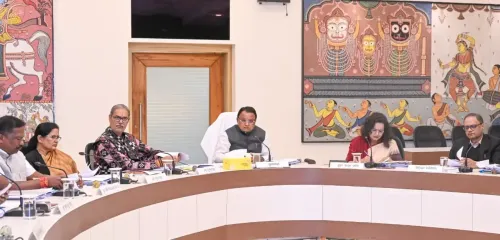
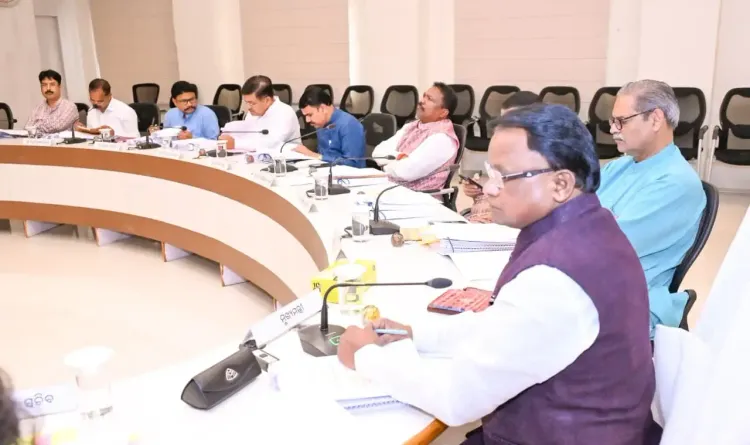
Bhubaneswar, April 10 (NationPress) The Odisha Cabinet convened on Friday to sanction 11 significant proposals across five distinct departments, presided over by Chief Minister Mohan Charan Majhi.
One of the pivotal decisions made by the Odisha Cabinet was the endorsement of the construction of modern bus stands equipped with state-of-the-art amenities under the ambitious "Atal Bus Stand" initiative throughout the state.
To enhance public transport infrastructure and facilities across Odisha, the state government has initiated the "Atal Bus Stand (ABS)" scheme, aiming to oversee the construction, development, renovation, operation, maintenance, and management of bus stands throughout the region.
This scheme is designed to unify all public bus stands in Odisha, which includes those established under previous initiatives and Urban Local Bodies (ULBs), creating a consistent framework for effective management and standards statewide.
Within the Atal Bus Stand Scheme, bus stands will be established at district headquarters, sub-divisional headquarters, block headquarters, ULBs, and other vital locations, including tourist spots in Odisha.
The bus stands will be classified into "A", "B", and "C" categories based on the public's requirements and the necessity for substantial bus transportation and communication facilities in those areas.
The execution of the "Atal Bus Stand (ABS)" Scheme will be managed by the Odisha State Road Transport Corporation under the Commerce and Transport Department, with a total budget allocation of Rs 3,400 crore approved for its implementation through the Financial Year (FY) 2031–32.
While briefing the media on other significant proposals receiving Cabinet approval, Odisha Chief Secretary Anu Garg remarked that the Water Resources Department contributed five major proposals, demonstrating the state government's commitment to infrastructure development and empowering farmers.
Among these was a Rs 135 crore irrigation project in the Cuttack district aimed at irrigating 3,641 hectares of land across 76 villages using an underground pipeline system, which also supports micro-irrigation.
This project will entail the construction of a reservoir on the Hadua river near Kharod village in Cuttack district, along with a comprehensive distribution system to provide reliable irrigation to the 3,641 hectares of cultivable land in the drought-affected areas of the Narasinghpur, Badamba, and Tigiria blocks.
In terms of water management, Garg noted that the Panchayati Raj and Drinking Water Department has introduced a comprehensive Operation and Maintenance Policy for Rural Drinking Water Supply-2026.
This policy encourages community involvement through village-level committees, gram panchayats, and self-help groups to ensure enhanced water quality, distribution, and maintenance of infrastructure.
In the energy sector, a significant infrastructure initiative was approved for the establishment of a 2x500 MVA grid substation at Basudevpur in Keonjhar district, with an estimated cost of Rs 1,647 crore.
The project, expected to be completed within three years, is set to bolster the power supply in Keonjhar and Sundargarh districts.
Chief Secretary Garg reiterated that the Cabinet's decisions emphasize the state government's priority on infrastructure enhancement, irrigation expansion, improved public services, and administrative reforms.
Point of View
The government aims to enhance connectivity and support economic growth, all while addressing critical issues in irrigation and water management.
NationPress
19 Sept 2026
Frequently Asked Questions
What is the Atal Bus Stand scheme?
The Atal Bus Stand scheme aims to construct and modernize bus stands across Odisha, integrating them into a unified framework for better management and facilities.
What is the budget allocated for the Atal Bus Stand scheme?
The Odisha government has approved a budget of Rs 3,400 crore for the implementation of the Atal Bus Stand scheme until the Financial Year 2031–32.
How many proposals were approved in the recent Cabinet meeting?
The Odisha Cabinet approved a total of 11 key proposals during the recent meeting.
What other sectors were addressed in the Cabinet proposals?
Apart from the Atal Bus Stand scheme, the Cabinet proposals included initiatives in water resources, irrigation projects, and energy sector improvements.
What is the significance of the Rs 135 crore irrigation project in Cuttack?
This project aims to irrigate 3,641 hectares of land in Cuttack district, enhancing agricultural productivity and supporting drought-prone areas.