Owaisi's 'Abdul' puts SP, Congress on notice in UP Muslim vote battle
Synopsis
Owaisi's 'Abdul' is more than a rally slogan — it is a calculated wedge aimed at the SP's most reliable vote base ahead of 2027. If even a fraction of UP's 19-per-cent Muslim electorate shifts its calculus, the arithmetic of Opposition consolidation unravels, and the BJP's path widens.
Key Takeaways
Asaduddin Owaisi invoked 'Abdul' at UP rallies, accusing the SP and Congress of treating Muslims as a vote bank while denying them real political representation.
The 2027 Uttar Pradesh Assembly election is seeing an emerging three-way contest among SP , Congress , and AIMIM for the state's Muslim electorate.
Muslims constitute over 19 per cent of UP's population, with concentrations above 50 per cent in Moradabad and Rampur , per Census 2011 .
In West Bengal 's Rejinagar by-poll — over 70 per cent Muslim — the BJP 's Sakharav Sarkar won with over 63 per cent of valid votes, underlining the fragility of assumed minority consolidation.
SP chief Akhilesh Yadav has been broadening his appeal to Brahmins and non-Yadav OBC groups, creating an opening Owaisi is seeking to exploit.
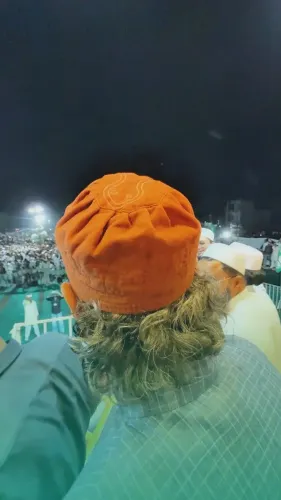
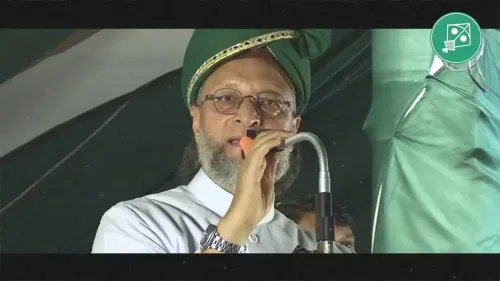
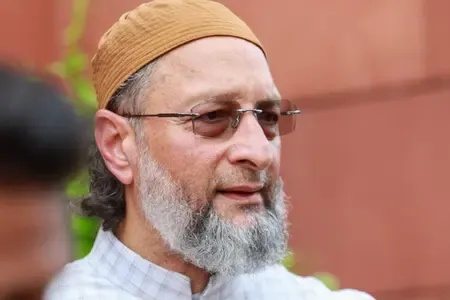
As Uttar Pradesh moves toward the 2027 Assembly election, Asaduddin Owaisi's All India Majlis-e-Ittehadul Muslimeen (AIMIM) is challenging the Samajwadi Party (SP) and Congress for the loyalty of the state's Muslim electorate — with a pointed symbolic argument. Addressing rallies across UP, Owaisi invoked 'Abdul', a reference to the ordinary Muslim voter, arguing that political parties have long treated the community as a vote bank while denying it meaningful representation.
The 'Abdul' Argument
In his UP rallies, Owaisi declared that 'Abdul' has been expected to deliver votes for political dynasties for decades but has rarely been allowed to become a leader himself. He accused both the SP and Congress of exploiting Muslim support without offering commensurate political power. The AIMIM chief specifically targeted SP chief Akhilesh Yadav, alleging that despite consistent backing from Muslim voters, the party remains demographically under-representative of the community.
Notably, the 'Abdul' framing is not merely rhetorical — it is a deliberate attempt to plant doubt among Muslim voters, particularly younger ones, who are increasingly asking whether decades of strategic, anti-BJP tactical voting has yielded sufficient representation, jobs, educational access, or political leadership.
A Shifting Electoral Landscape
The backdrop to Owaisi's intervention is instructive. A recent Assembly by-poll in West Bengal's Rejinagar — where Muslims comprise well over 70 per cent of voters — saw the Bharatiya Janata Party (BJP) candidate Sakharav Sarkar win with over 63 per cent of valid votes polled. The rival candidate, Golam Nabi Azad Robin — son of controversial Babri Masjid-replica builder Humayun Kabir, who had stepped aside to retain his own seat — finished 75,800 votes behind the winner. This result, critics argue, signals that Muslim consolidation around a single Opposition candidate is no longer automatic.
This comes amid broader evidence of voter mandate shifts across states, even in minority-dominated constituencies, as voters increasingly weigh governance records alongside identity-based appeals.
The Demographic Weight of UP's Muslim Electorate
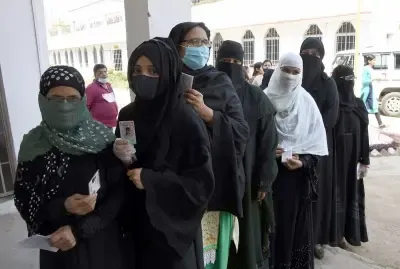
According to Census 2011 data, Muslims constitute over 19 per cent of Uttar Pradesh's population. Concentrations are highest in western UP and Rohilkhand: Moradabad and Rampur have over 50 per cent Muslim population, while Bijnor, Saharanpur, Muzaffarnagar, and Amroha exceed 40 per cent. Significant Muslim populations also exist in Bareilly, Meerut, Bahraich, Balrampur, Shamli, Sambhal, and parts of eastern UP — all constituencies where vote distribution can be decisive.
Historically, Muslim voters in UP have demonstrated a high degree of tactical flexibility. Since the 1990s, many shifted to the SP as the strongest anti-BJP force. In select elections, the Bahujan Samaj Party (BSP) also drew substantial Muslim support, and Congress retained pockets of influence. Internal divisions based on class, caste, region, sect, and local leadership have further fragmented the community's voting behaviour, meaning it has never voted uniformly as a bloc.
SP's Dilemma and Akhilesh's Broadening Play
Owaisi's push arrives at a delicate moment for Akhilesh Yadav, who has been visibly expanding the SP's appeal beyond the traditional Muslim-Yadav alliance. He has made overtures to Brahmin and upper-caste voters while emphasising issues relevant to women, welfare beneficiaries, and non-Yadav Other Backward Class (OBC) groups. Any dilution of his Muslim-Yadav core, however, could prove costly — and that is precisely the pressure Owaisi's 'Abdul' narrative is designed to apply.
Historically, the AIMIM has struggled to translate rhetoric into sustained electoral gains outside its stronghold in Hyderabad, though it made a notable dent in Bihar's 2020 Assembly elections. Whether it can replicate that disruptive role in UP's far larger and more complex electoral geography remains to be seen — but the political signal has been sent, and the Opposition has been put on notice.
Point of View
Banking on a generational shift among younger Muslim voters who are less willing to subordinate representation to tactical anti-BJP logic. The Rejinagar result is a warning sign that assumed minority consolidation is weakening; if that trend reaches UP, it reshapes every Opposition coalition calculation for 2027. The real question is whether AIMIM has the organisational depth in UP to convert a compelling narrative into votes — or whether, as in most states outside Hyderabad, it ends up as a spoiler rather than a contender.
NationPress
27 Oct 2026
Frequently Asked Questions
Who is 'Abdul' and why is Owaisi using the term in Uttar Pradesh?
'Abdul' is a symbolic reference used by AIMIM chief Asaduddin Owaisi to represent the ordinary Muslim voter in Uttar Pradesh. Owaisi argues that political parties have long expected 'Abdul' to deliver votes but have never allowed him to become a political leader himself, using the term to challenge the SP and Congress over under-representation of Muslims.
Why does the battle for Muslim votes in UP matter for the 2027 election?
Muslims constitute over 19 per cent of Uttar Pradesh's population, with decisive concentrations in western UP and Rohilkhand. Their tactical consolidation behind a single Opposition candidate has historically been critical to defeating the BJP in key constituencies, making their allegiance central to the 2027 arithmetic.
How has the Samajwadi Party historically related to Muslim voters in UP?
Since the 1990s, the SP has been the principal beneficiary of Muslim consolidation in Uttar Pradesh, perceived as the strongest challenger to the BJP. However, critics argue the party has not proportionately rewarded the community with political representation or tickets relative to its demographic contribution.
What does the Rejinagar by-poll result suggest about minority voting patterns?
In West Bengal's Rejinagar — where Muslims comprise over 70 per cent of voters — the BJP's Sakharav Sarkar won with more than 63 per cent of valid votes, with the rival candidate finishing 75,800 votes behind. The result suggests that minority consolidation around a single Opposition candidate can no longer be taken for granted.
Has AIMIM been electorally successful outside Hyderabad?
AIMIM has historically struggled to translate its rhetoric into electoral gains beyond its Hyderabad stronghold, though it made a notable impact in Bihar's 2020 Assembly elections. Whether the party can build comparable organisational strength in Uttar Pradesh's far larger electoral landscape remains uncertain.