Pakistan-UAE ties face lasting damage after Islamabad's diplomatic missteps
Synopsis
Decades of Pakistan-UAE partnership are fracturing — and a US think tank says the damage may be permanent. From a USD 3.5 billion loan recall and mass deportations to fury over Islamabad's Saudi defence pact and perceived Iran sympathies, the Middle East Forum's report maps how a series of missteps have pushed Abu Dhabi from Pakistan's closest Gulf ally toward open estrangement.
Key Takeaways
The Pakistan-UAE relationship has suffered serious and potentially lasting damage, according to a Middle East Forum report.
The UAE recalled a USD 3.5 billion loan; Pakistan repaid it only with Saudi Arabia's support.
Emirati authorities deported nearly 15,000 Pakistanis ; Etihad Airways dismissed Pakistani staff with a 48-hour exit notice.
Pakistan's mutual defence pact with Saudi Arabia signed in September 2025 offended Abu Dhabi , which has a longstanding rivalry with Riyadh .
Pakistan's opening of six land routes into Iran during a Gulf-Iran standoff deepened Emirati grievances.
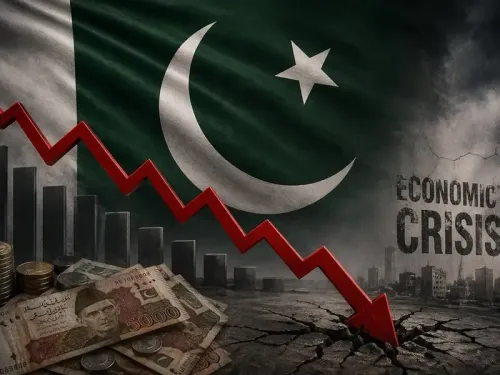
A prolonged rift risks heightening Pakistan's economic vulnerabilities, given the UAE's role as a key remittance source.
The diplomatic relationship between Pakistan and the United Arab Emirates (UAE) has deteriorated sharply, with analysts warning the damage to the bilateral partnership may prove enduring. According to a report by the Middle East Forum, a US-based think tank, the foundational trust underpinning decades of cooperation — built on Pakistan's expected support for Abu Dhabi during critical moments — has significantly eroded.
A Relationship Under Strain
The Middle East Forum report details how the UAE has been among Pakistan's most reliable Gulf partners, repeatedly extending financial lifelines during economic crises and hosting millions of Pakistani expatriate workers whose remittances form a crucial pillar of Islamabad's economy. The bilateral relationship historically encompassed military cooperation, intelligence coordination, and deep people-to-people ties, with leaders on both sides routinely describing each other as 'brotherly states'.
That relationship, the report argues, began unravelling after Pakistan signed a mutual defence pact with Saudi Arabia in September 2025 — under which an attack on one is treated as an attack on both. The move reportedly offended Abu Dhabi, whose rivalry with Riyadh had already peaked following Saudi-backed military operations in southern Yemen.
Key Flashpoints That Deepened the Rift
A series of concrete developments underscored the deterioration. The UAE reportedly asked Pakistan to repay a USD 3.5 billion loan, which Islamabad could settle only with Saudi Arabia's financial support. In the aftermath, Emirati authorities deported nearly 15,000 Pakistanis, while Etihad Airways dismissed several Pakistani employees and ordered them to vacate the country within 48 hours. Individually, each episode raised questions; together, according to the report, they signal a serious and sustained breakdown.
Gulf Arab tensions with Iran added another layer of friction. The UAE reportedly believed that Pakistan displayed sympathy toward Iran during and after the recent conflict — a perception that rankled Abu Dhabi given years of Emirati financial support for Islamabad. The report noted that Pakistan's decision to open six land routes into Iran while Gulf Arab countries were themselves facing an Iranian blockade compounded the grievance considerably.
What the Middle East Forum Said
'Such a crisis has been a long time coming. For decades, Pakistan and the United Arab Emirates maintained deep strategic, economic, and people-to-people ties,' the Middle East Forum report stated. It added that the partnership began to unravel after the Pakistan-Saudi Arabia mutual defence pact of September 2025, and that Emirati strategic commentary increasingly reflects the growing tension with Islamabad.
The report further noted that Abu Dhabi felt Pakistan did not adequately address Emirati concerns during peace negotiations, adding to what it described as 'a sense of grievance' on the UAE side.
Economic Stakes for Pakistan
The Middle East Forum warned that any long-term deterioration in Pakistan-UAE ties would directly heighten Pakistan's economic vulnerabilities. The UAE remains a major destination for Pakistani workers, and a sustained chill in relations could affect remittance flows at a time when Islamabad is already navigating a fragile economic recovery. This comes amid broader questions about Pakistan's strategic positioning between its Gulf partners — a balancing act that appears to have grown significantly harder.
How Islamabad navigates its competing commitments to Riyadh and Abu Dhabi in the months ahead will likely determine whether the current rift deepens further or finds a diplomatic off-ramp.
Point of View
Ranging from loan recall to mass deportations, is less a diplomatic tantrum and more a calibrated signal that Gulf patronage is conditional. What mainstream coverage underplays is the remittance dimension: a sustained chill with the UAE does not just hurt Pakistan's foreign policy standing — it directly squeezes household incomes for millions of Pakistani families. Islamabad's Iran land-route decision, made while Gulf states faced an Iranian blockade, suggests either a failure of diplomatic imagination or a deliberate pivot that Pakistan has not yet publicly owned.
NationPress
30 Sept 2026
Frequently Asked Questions
Why are Pakistan-UAE relations deteriorating?
Relations have deteriorated due to a combination of factors: Pakistan's mutual defence pact with Saudi Arabia in September 2025 offended Abu Dhabi, Pakistan's perceived sympathy toward Iran during a Gulf-Iran conflict, and Islamabad's decision to open six land routes into Iran while Gulf states faced an Iranian blockade. Together, these moves eroded the trust Abu Dhabi had placed in Pakistan as a reliable partner.
What is the USD 3.5 billion loan dispute between Pakistan and UAE?
The UAE reportedly asked Pakistan to repay a USD 3.5 billion loan, which Islamabad was only able to settle with financial support from Saudi Arabia. The episode was one of several concrete signs of strain in the bilateral relationship, according to the Middle East Forum report.
How many Pakistanis were deported by the UAE?
Emirati authorities deported nearly 15,000 Pakistanis, according to the Middle East Forum report. Additionally, Etihad Airways dismissed several Pakistani employees and ordered them to leave the country within 48 hours.
What is the Middle East Forum and why does its report matter?
The Middle East Forum is a US-based think tank that analyses political and security developments across the Gulf and South Asia. Its report on Pakistan-UAE ties carries weight because it aggregates diplomatic, economic, and security signals that individually might seem isolated but together point to a structural breakdown in the relationship.
What are the economic consequences for Pakistan if UAE ties worsen?
The UAE is a major destination for Pakistani workers, and remittances from the Gulf are a crucial pillar of Pakistan's economy. A prolonged deterioration in ties could reduce remittance flows and restrict employment opportunities for Pakistani nationals, heightening Islamabad's already significant economic vulnerabilities.