Pakistan to Return $3.5 Billion to UAE Following Debt Demand

Synopsis
In a significant financial move, Pakistan has agreed to repay approximately $3.5 billion to the UAE by April's end, prompted by the Gulf country's demand for immediate repayment amidst rising regional tensions. This decision highlights Pakistan's ongoing economic challenges and reliance on foreign support.
Key Takeaways
Pakistan will repay $3.5 billion to the UAE by the end of April.
The repayment is due to a demand for immediate return amidst regional tensions.
Payments are scheduled in three installments over 12 days.
The decision reflects ongoing challenges in managing external debt.
Pakistan's economy remains under pressure with declining exports and weak foreign investment.
New Delhi/Islamabad, April 4 (NationPress) Under increasing pressure, Pakistan has consented to repay a total of around USD 3.5 billion in loans and deposits to the United Arab Emirates (UAE) by the close of April, following a request from the Gulf nation for the immediate return of these funds.
This decision comes amid reports indicating that the UAE has sought the rapid return of the money, primarily due to regional instability associated with the ongoing conflict in West Asia involving the US, Israel, and Iran.
Various media outlets and senior officials in Pakistan have confirmed that Abu Dhabi recently requested this repayment, marking an end to the traditional rollovers that Pakistan had relied upon for many years.
On Saturday, Pakistan's Ministry of Foreign Affairs released a statement strongly rejecting what it termed “misleading and unfounded commentary” regarding this issue.
The ministry characterized the repayment as a “routine financial transaction” conducted under mutually agreed commercial terms and emphasized that the deposits illustrated the UAE's support for Pakistan's economic stability.
However, the timing and circumstances surrounding the UAE's request have sparked concerns regarding the strain on Pakistan's financial condition.
A senior cabinet member confirmed the decision to settle the entire debt, with repayments planned in three installments: $450 million on April 11, $2 billion on April 17, and $1 billion on April 23. One of these payments includes a longstanding loan of $450 million from 1996-97.
Officials indicated that these funds are likely to be sourced from the current foreign exchange reserves of the State Bank of Pakistan, which stand at approximately $16.4 billion.
Simultaneously, discussions are reportedly in progress to convert a portion of this amount into an investment, rather than executing a full cash repayment. This situation has been perceived as somewhat awkward for Pakistan, which has historically depended on friendly deposits from the UAE, Saudi Arabia, and China to strengthen its reserves under the IMF program.
Earlier this year, Prime Minister Shehbaz Sharif publicly expressed feelings of “embarrassment” while seeking such external financial assistance, acknowledging that it often constrains the country’s policy flexibility. Despite the outflows, Pakistani officials have asserted that reserves remain at “comfortable” levels.
The nation has pledged to maintain allied deposits intact until the ongoing $7 billion IMF program concludes in September 2027. This rapid repayment—transitioning from long-term or short-term rollovers to complete settlement within just weeks—underscores Pakistan’s ongoing struggles to manage external debt and secure new investment inflows while under IMF scrutiny.
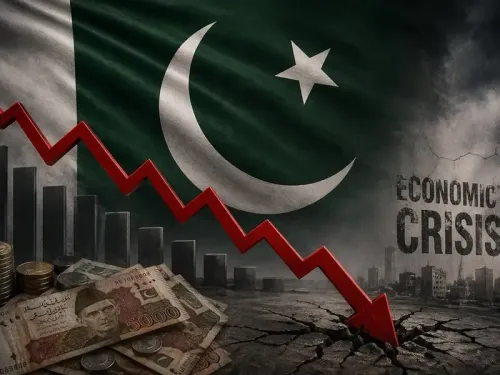
This move comes as Pakistan's exports have decreased and foreign investment remains sluggish, exacerbating the economic challenges facing Islamabad.
Point of View
This financial move by Pakistan underscores the nation's precarious economic situation. The swift repayment to the UAE not only reflects the current pressures faced by Islamabad but also highlights the challenges of managing external debts while seeking new investments. A nation-first approach is crucial as Pakistan navigates these turbulent waters.
NationPress
8 Oct 2026
Frequently Asked Questions
What prompted Pakistan to repay the UAE?
Pakistan agreed to repay the UAE due to a demand for immediate return of approximately $3.5 billion in deposits and loans amidst regional tensions.
How much will Pakistan repay and when?
Pakistan will repay a total of $3.5 billion in three installments: $450 million on April 11, $2 billion on April 17, and $1 billion on April 23.
What has been the historical relationship between Pakistan and the UAE in terms of financial support?
Pakistan has historically relied on financial support from the UAE, Saudi Arabia, and China to bolster its reserves under the IMF program, often resorting to rollovers.
How does this repayment impact Pakistan's economy?
The repayment reflects the strain on Pakistan's finances and highlights the challenges the country faces in managing external debts while attracting new investments.
What are the implications of this financial decision for future investments in Pakistan?
This swift repayment may affect investor confidence, as it underscores Pakistan's economic vulnerabilities and reliance on external support.