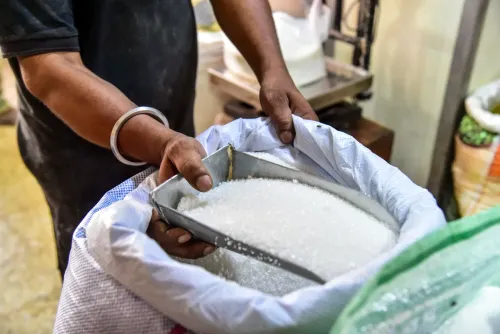
Pakistan sugar export of 108,000 MT raises food security and price concerns
Synopsis
Pakistan has approved the export of 108,000 metric tonnes of sugar even as domestic supply concerns mount — a reversal of its own recent import-to-stabilise policy. Critics say the move subsidises water exports via a thirsty crop, benefits politically connected mill owners, and leaves consumers exposed to price shocks when stocks inevitably tighten.
Key Takeaways
Pakistan has approved the export of 108,000 metric tonnes of sugar, reversing its recent policy of importing sugar to stabilise domestic supplies.
Critics warn the move could reduce domestic buffer stocks and drive up sugar prices for consumers.
Sugarcane's heavy water use means the exports effectively represent a subsidised export of Pakistan's scarce groundwater, according to The Express Tribune .
The Competition Commission of Pakistan has previously flagged concerns over the accuracy of industry data used in export decisions.
Similar past export decisions have historically been followed by costly import operations to address resulting supply shortages.
Reform proposals recommending reduced government intervention in the sugar trade have not been implemented.
Pakistan's decision to permit the export of 108,000 metric tonnes of sugar has drawn sharp criticism, with analysts and media reports warning that the move could push domestic prices higher while primarily benefiting influential sugar mill owners. The policy shift, reported by The Express Tribune, reverses the government's earlier stance of prioritising domestic supply stability.
A Policy Reversal Under Scrutiny
In recent years, Pakistan had resorted to importing sugar to stabilise domestic supplies and keep prices in check. The latest decision to allow exports of available stocks — despite lingering concerns over future shortages — marks a significant departure from that approach. Critics argue the move reduces critical buffer stocks at a time when the country can ill afford supply-side vulnerabilities.
The policy, according to the report, risks tightening local market supplies and could trigger a fresh round of price increases for consumers. Notably, similar export-permitting decisions in the past have historically been followed by costly import operations to plug the resulting supply gaps — a cyclical pattern that has repeatedly burdened both the exchequer and ordinary consumers.
Environmental Costs of Sugar Exports
Beyond the immediate economic implications, the report raises serious environmental concerns. The Express Tribune described the consequences as 'severe,' noting that sugarcane is among the most water-intensive crops in agriculture, consuming vast quantities of Pakistan's rapidly depleting groundwater reserves.
'By providing state-backed safety nets and artificial export incentives to sugar millers, the government effectively subsidises the virtual export of water, a scarce natural resource, to international buyers at discount rates,' the publication stated. There are also concerns that incentivising sugar production and exports could divert agricultural land and resources away from other critical crops, including wheat, further straining food security.
Political Influence and Structural Concerns
The report further alleges that political influence within Pakistan's sugar sector has played a significant role in shaping policy decisions that favour mill owners over consumers. The Competition Commission of Pakistan has previously raised red flags over the accuracy of industry data used in making export-related decisions — a concern that critics say remains unaddressed.
Former reform proposals had recommended scaling back government intervention in the sugar trade and allowing market forces to determine production levels, pricing, and import decisions. However, those recommendations have not been implemented, and the current export approval suggests the structural issues remain deeply entrenched.
What This Means for Consumers
Consumer groups and observers warn that reducing available domestic stocks leaves ordinary citizens exposed to future price spikes, particularly if supply tightens ahead of peak demand periods. The pattern of allowing exports only to subsequently import at higher costs has historically translated into a net loss for consumers and a net gain for politically connected mill owners.
With no immediate policy corrective in sight, the situation is likely to remain under close watch by food security analysts and opposition voices within Pakistan.
Point of View
Stocks thin, prices rise, the government imports at higher cost, and consumers absorb the difference. The Competition Commission's unheeded warnings about data accuracy make this worse — decisions of national food security consequence are being made on numbers that regulators themselves do not fully trust. Until the structural nexus between sugar mill owners and policymakers is broken, no reform proposal, however sensible, will gain traction.
NationPress
15 Sept 2026
Frequently Asked Questions
Why is Pakistan's sugar export decision controversial?
Pakistan recently imported sugar to stabilise domestic supplies, making the fresh decision to allow exports of 108,000 metric tonnes a direct policy reversal. Critics argue it reduces buffer stocks, risks higher consumer prices, and primarily benefits influential sugar mill owners rather than the broader public.
How much sugar has Pakistan allowed to be exported?
Pakistan has approved the export of 108,000 metric tonnes of sugar, according to a report by The Express Tribune. The decision has drawn criticism from consumer groups and food security analysts.
What environmental concerns are linked to Pakistan's sugar exports?
Sugarcane is an exceptionally water-intensive crop, and Pakistan's groundwater reserves are rapidly depleting. By incentivising sugar production and exports, the government is effectively subsidising the export of scarce water to international buyers, according to The Express Tribune.
What role does political influence play in Pakistan's sugar policy?
Reports allege that political connections within Pakistan's sugar sector have shaped policy decisions in favour of mill owners. The Competition Commission of Pakistan has also raised concerns about the reliability of industry data used to justify export decisions.
What has happened after similar sugar export decisions in the past?
Historically, similar export approvals have been followed by import operations to address the resulting domestic supply shortages, creating a cycle that burdens consumers and the public exchequer while benefiting exporters and mill owners.