Is Pakistan Escalating Its Campaign Against Ahmadi Muslims?
Synopsis
A recent ruling in Pakistan has intensified concerns over the treatment of the Ahmadi community, as a member is sentenced to life imprisonment for practicing his faith. This case highlights ongoing persecution and raises vital questions about religious freedom.
Key Takeaways
Mubarak Ahmad Saani was sentenced to life imprisonment under blasphemy laws.
The term “Hafiz” is a respected title for those who memorize the Quran.
The ruling reflects ongoing persecution of the Ahmadi community in Pakistan.
Pakistan's blasphemy laws are often misused against minorities.
This case raises significant questions about religious freedom in Pakistan.
Islamabad, Jan 3 (NationPress) A court in Pakistan has handed a life sentence to a member of the Ahmadi community for using the title “Hafiz”, which signifies “one who knows the Quran by heart,” and for disseminating the “Tafsir-e-Saghir,” a revered collection of Quranic translations and commentary within his community, according to a report published on Saturday.
On December 24, 2025, an Additional Sessions Court in Lalian, Punjab, delivered a verdict that is a disgrace to any legal system that claims to uphold justice. Mubarak Ahmad Saani, an Ahmadi Muslim, was convicted under Pakistan’s blasphemy laws. His alleged crime was not disrespecting the Quran or inciting violence but rather referring to himself as a 'Hafiz' and distributing a book of Quranic translation and commentary that is cherished by his community, as detailed by the online magazine ‘Bitter Winter’.
The court’s ruling criminalizes devotion, punishes piety, and weaponizes theological differences to persecute an individual whose only fault was practicing his faith sincerely — a belief system that Pakistan’s legal framework has systematically deemed illegal.
The report indicated that the verdict, which defies both legal logic and theological humility, involved a doctrinal examination of Ahmadi “heresies,” labeling the book as a “defiled, desecrated translation of the Holy Quran,” while invoking a clause of Pakistan’s blasphemy law that prescribes life imprisonment for anyone who burns, tears, or otherwise defiles the Quran.
However, Saani did not commit these acts. He shared the Quran, respected it, and provided a translation and commentary that his community has valued for generations. This is the insidious nature of Pakistan’s blasphemy laws; they punish interpretations and govern theology. When applied to Ahmadis, they become instruments of religious apartheid, where the Sunni majority dictates who can identify as Muslim and who can read, translate, and honor the Quran.
The report emphasizes that the case of Mubarak Ahmad Saani underscores a broader campaign against Ahmadis in Pakistan — a campaign that has criminalized religious identity, equated theological nuances with blasphemy, and treated peaceful devotion as a crime.
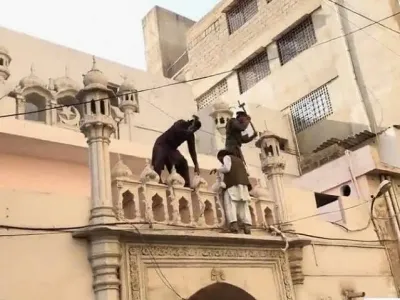
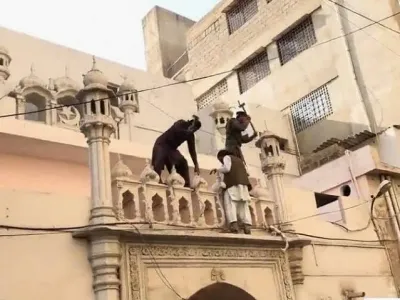
Ahmadis are prohibited from identifying as Muslims, forbidden from using Islamic terminology, their mosques are not acknowledged as places of worship, their literature is banned, their graves are desecrated, their lives are at risk, and now, their memorization of the Quran is criminalized.
Point of View
We remain committed to covering stories that shine a light on human rights abuses, particularly those affecting marginalized communities. The recent ruling against Mubarak Ahmad Saani is a stark reminder of the ongoing challenges faced by the Ahmadi community in Pakistan. We advocate for religious tolerance and urge our readers to reflect on the implications of such legal decisions.
NationPress
1 Oct 2026
Frequently Asked Questions
What were the charges against Mubarak Ahmad Saani?
Mubarak Ahmad Saani was charged with blasphemy for using the title 'Hafiz' and distributing the 'Tafsir-e-Saghir,' a Quranic translation and commentary respected within the Ahmadi community.
What is the significance of the term 'Hafiz'?
'Hafiz' refers to an individual who has memorized the Quran, a title that holds great respect in the Islamic faith.
What are Pakistan's blasphemy laws?
Pakistan's blasphemy laws are legal provisions that punish acts deemed disrespectful towards Islam or the Quran, often leading to severe consequences, including imprisonment or even death.
How does this case reflect the treatment of Ahmadis in Pakistan?
The case of Mubarak Ahmad Saani highlights the broader systemic persecution of Ahmadis, who face severe restrictions on their religious practices and identity in Pakistan.
What actions can be taken to support the Ahmadi community?
Raising awareness about the plight of the Ahmadi community, advocating for religious freedom, and supporting organizations that promote human rights can help create positive change.