Is Pakistan's Trilateral Initiative a Solution to Its Diplomatic Stalemate?
Synopsis
Discover how Pakistan's trilateral cooperation proposal with Bangladesh and China aims to reshape South Asian dynamics, serving as a potential alternative to SAARC amidst rising tensions with India.
Key Takeaways
Pakistan's trilateral initiative aims to address regional stagnation.
It reflects frustration with SAARC's ineffectiveness .
Bangladesh's involvement marks a shift in its diplomatic ties.
The proposal seeks to create economic corridors and enhance regional cooperation.
India's influence in the region may be challenged.
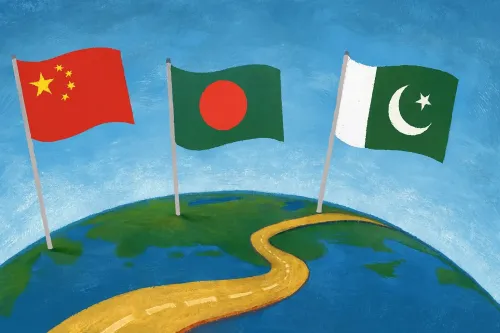
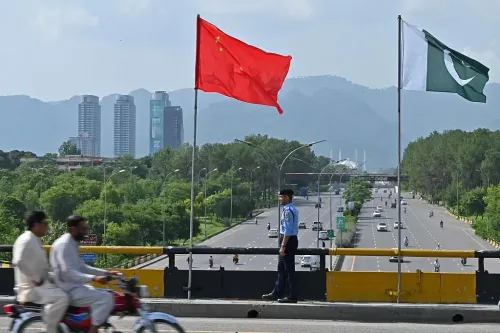
Jerusalem, Dec 11 (NationPress) Pakistan's initiative to broaden its trilateral collaboration with Bangladesh and China into a foundational South Asian bloc reflects a significant institutional breakdown. Positioned as a substitute for SAARC, this proposal highlights Islamabad's escalating discontent with the India-centric regional stagnation and the broader shifts in power dynamics, alliances, and political issues in South and West Asia, according to a recent report.
Pakistan's pivot towards a trilateral alliance should be viewed not merely as a show of diplomatic strength but rather as a reaction to strategic inertia. Through its partnership with Bangladesh and China, Pakistan aims to transcend the veto culture that has stymied SAARC, as noted by Italian geopolitical analyst Sergio Restelli in The Times of Israel. Islamabad is signaling that regional collaboration will progress regardless of India's involvement, with a concerted effort by Pakistan and China to marginalize democratic processes.
Restelli remarked, "Pakistan's ambition to broaden its emerging trilateral cooperation with Bangladesh and China into a larger South Asian bloc signifies one of the most pivotal diplomatic signals in the region in nearly ten years. Positioned as a counter to the stagnant SAARC, this initiative not only illustrates Islamabad's mounting dissatisfaction with India-centric paralysis but also indicates a broader reconfiguration of power, alliances, and political uncertainties across South and West Asia."
At the heart of this proposal lies an acknowledgment of institutional failure. SAARC, established in 1985 as South Asia's response to ASEAN or the EU, has now become largely ineffective. The last summit took place in 2014, and since India's withdrawal from the scheduled 2016 Islamabad summit following the Kashmir attack, the organization has been effectively paralyzed by hostility between India and Pakistan. What was intended to be one of the world's most vibrant regional economic areas is now one of its least integrated, with intra-South Asian trade barely accounting for 5% of total commerce, in contrast to ASEAN's 25%. Transport routes remain blocked, energy collaboration is fragmented, and movement among people is minimal, he added.
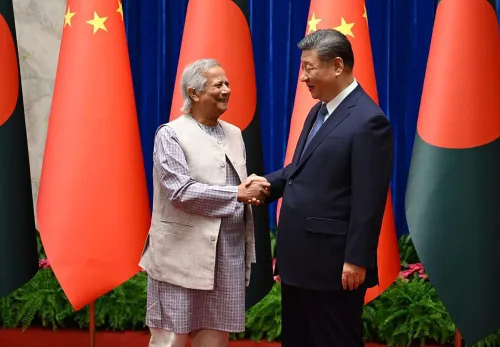
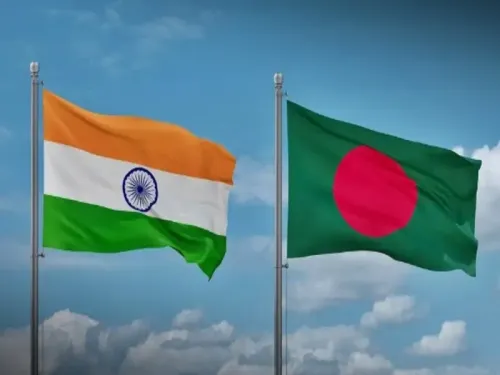
Restelli emphasized the importance of Bangladesh's involvement, considering that Dhaka's relationship with New Delhi has soured since the removal of former Prime Minister Sheikh Hasina. Concurrently, economic pragmatism is driving Bangladesh to seek diverse partnerships, particularly with China and now Pakistan, a former adversary turned ally. From India's viewpoint, this situation is more than just about South Asian collaboration; it also pertains to encirclement, diminishing influence, and the increasing sinicization of its immediate vicinity.
"For the smaller nations of South Asia, the situation is more complex. Nepal, Sri Lanka, the Maldives, and even Bhutan are grappling with escalating debt, climate vulnerability, and fragile export economies. Rigid bloc politics provide little solace for them. What they truly desire are financing options, transport access, labor mobility, and mechanisms for climate adaptation. If Pakistan's proposal results in practical economic corridors, energy networks, and maritime connectivity rather than mere ideological alignment, these nations might cautiously engage—quietly, incrementally, and without announcing any strategic shifts," Restelli elaborated.
However, the political ramifications are considerable. Any formal arrangement that appears to exclude India is likely to provoke backlash in areas such as trade, transport, tourism, and security cooperation. For most of South Asia, India is not just a neighbor; it is the principal transit market, energy center, and financial ally. No alternative bloc can swiftly replace that gravitational influence. Instead, we are witnessing the emergence of 'minilateralism': small, issue-focused coalitions that operate below the threshold of full alliance politics. This trend is already observable in BIMSTEC, BBIN, and various frameworks involving India-Japan-ASEAN and China-Pakistan-Central Asia. Pakistan's trilateral approach aligns perfectly with this pattern. It is not a substitute for SAARC but rather an experiment in circumventing its paralysis.
Point of View
It is crucial to recognize the complexity of the geopolitical landscape in South Asia. Pakistan's trilateral initiative may present opportunities for regional cooperation; however, it also highlights the ongoing challenges posed by entrenched rivalries. The importance of dialogue and strategic engagement cannot be overstated, as it is through these means that we can hope for a more integrated and prosperous South Asia.
NationPress
3 Oct 2026
Frequently Asked Questions
What is the significance of Pakistan's trilateral cooperation with Bangladesh and China?
This cooperation signifies a potential shift in regional dynamics, seeking to establish a new bloc that could operate independently of India's influence, reflecting frustrations with SAARC's ineffectiveness.
How does this initiative impact India's position in South Asia?
India may perceive this trilateral alliance as a challenge to its dominant role in the region, raising concerns about encirclement and influence erosion.
What are the economic implications of this trilateral proposal?
If successful, the initiative could lead to enhanced economic corridors, energy cooperation, and improved trade relations among the member countries, benefiting smaller South Asian states.
Why has SAARC become ineffective?
SAARC has struggled due to political tensions between member states, particularly India and Pakistan, leading to a lack of summits and collaborative initiatives since 2014.
What does 'minilateralism' mean in this context?
'Minilateralism' refers to smaller, focused coalitions that address specific issues without forming full alliances, a trend seen in Pakistan's trilateral approach.