Is Pakistan the Lowest-Ranked Country in South Asia for Literacy?
Synopsis
Pakistan's literacy crisis deepens as a recent report reveals it remains the lowest-ranked country in South Asia for literacy, with only 63% of people aged 10 and above being literate. This alarming trend raises serious concerns about the educational landscape and socio-economic challenges faced by the population. What does this mean for the future of education in Pakistan?
Key Takeaways
Pakistan ranks lowest in South Asia for literacy at 63% .
Literacy has only increased by 3% over six years.
Significant gender disparities exist in literacy rates.
Household spending on education is now primarily borne by families.
The rise in food insecurity poses further challenges for families.
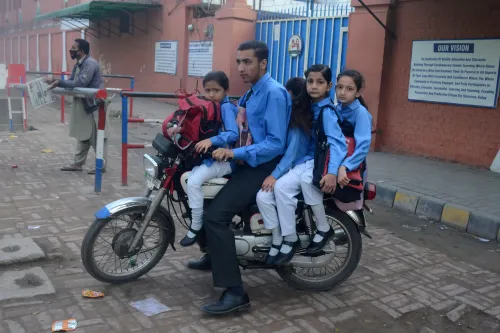
Islamabad, Feb 3 (NationPress) A recent report has revealed that Pakistan holds the dubious distinction of being the lowest-ranked nation in South Asia for literacy, with only 63 percent of individuals aged 10 and above being able to read and write, as per findings from the Free and Fair Election Network (FAFEN), local media reported.
The report is derived from official survey data from the Pakistan Social and Living Standards Measurement-Household Integrated Economic Survey (PSLM–HEIS) 2024–2025 and benchmarks Pakistan's literacy performance against World Bank data for the region, as highlighted in the Pakistani daily The Express Tribune. Notably, there has been a marginal increase in literacy from 60 percent during 2018-2019 to 63 percent in 2024-2025, a mere three-percentage-point rise over six years.
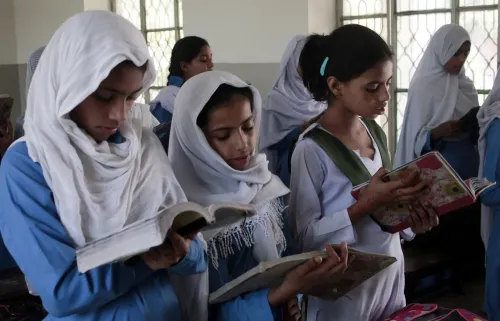
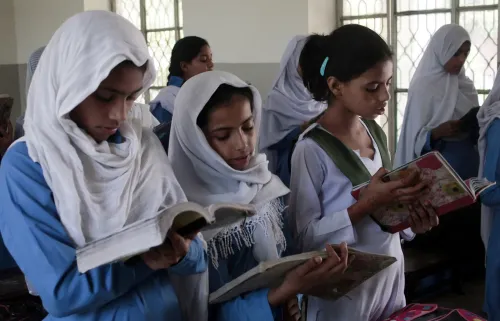
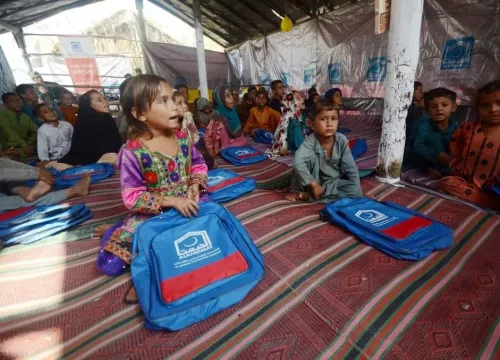
Experts have pointed out that the rate of improvement is “alarmingly slow” for a nation with a population exceeding 240 million. The FAFEN report also sheds light on significant gender and provincial disparities. It indicates that male literacy is at 73 percent, while female literacy lags at 54 percent. In terms of provincial performance, Punjab boasts a literacy rate of 68 percent, while both Sindh and Khyber Pakhtunkhwa stand at 58 percent, and Balochistan fares the worst at 49 percent.
The literacy rate among youth aged 15-24 years is 77 percent, yet the adult literacy rate for individuals aged 15 years and older remains at 60 percent, emphasizing ongoing educational gaps among older demographics, as reported by The Express Tribune. According to FAFEN's criteria, an individual aged 10 or older who can read and comprehend a simple statement and write a basic sentence is classified as “literate.”
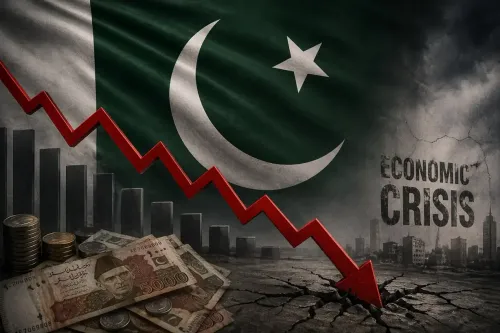
A January poll published by Gallup Pakistan indicated that Pakistan is grappling with challenges in affording food and education. A two-decade comparison of household consumption patterns in Pakistan illustrates a troubling shift towards prioritizing living expenses over basic needs like food, local media reported.
Findings from the Household Integrated Economic Survey (HIES) show that household expenditure on food has decreased from 43 percent to 37 percent between 2005 and 2025. Concurrently, spending on housing and utilities has surged from 15 percent to 25 percent of household budgets, according to an editorial from Pakistani daily The News International.
The analysis from Gallup suggests that this trend, when considered alongside declining real incomes and diminishing food quantities, likely indicates that households are reducing food consumption to manage escalating fixed costs, such as housing and utilities, rather than food becoming more readily affordable. This is not an isolated finding; other analyses have also noted that Pakistanis are cutting back on food.
The HIES 2024-25 survey has revealed that the number of people experiencing moderate-to-severe food insecurity has risen from one in six to one in four between 2018-19 and 2024-25, making survival increasingly difficult for the residents of Pakistan, with bleak prospects for the future.
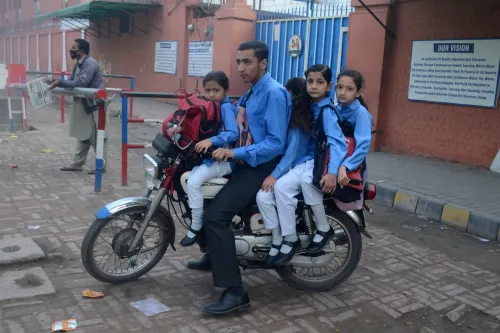
According to the Institute of Social and Policy Science (I-SAP)'s 15th annual report on Public Financing of Education, families are now shouldering the majority of educational expenses for the first time in the nation's history. Out of a total education cost of PKR 5.03 trillion, households contribute PKR 2.8 trillion, while the public sector contributes PKR 2.23 trillion.
Household expenses include PKR 1.31 trillion for private school fees, PKR 613 billion for tuition and supplementary education, and PKR 878 billion for other costs. This disparity arises as families opt for private education due to significant challenges within the public education system.
Point of View
This report underscores a critical issue for Pakistan. The persistently low literacy rates, particularly among women and in certain provinces, reveal systemic failures in our educational framework. We must advocate for meaningful reforms and increased investments in education to ensure a brighter future for all citizens.
NationPress
26 Sept 2026
Frequently Asked Questions
What is the literacy rate in Pakistan?
According to recent data, the literacy rate in Pakistan is 63% for individuals aged 10 and above.
How does Pakistan's literacy rate compare to other South Asian countries?
Pakistan ranks the lowest in South Asia for literacy, lagging behind its neighbors.
What factors contribute to low literacy rates in Pakistan?
Gender disparities, regional inequalities, and socio-economic challenges contribute significantly to low literacy rates.
What are the implications of low literacy rates?
Low literacy rates can hinder economic development, perpetuate poverty, and limit job opportunities.
What steps can be taken to improve literacy rates in Pakistan?
Investing in education, addressing gender disparities, and enhancing the quality of public education are crucial steps.