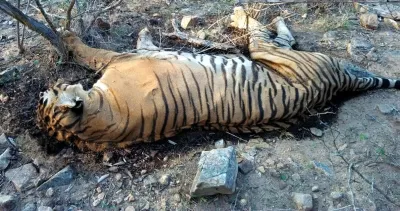
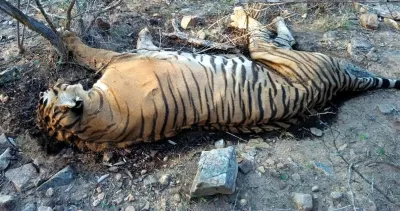
Panna tigress death: 5 detained, forest team held hostage
Synopsis
A three-year-old tigress in Panna was trapped in a clutch wire snare, unable to hunt, and is believed to have starved over several days. When five suspects were detained, villagers held forest officials hostage and deflated the tyres of their vehicles, which turned a poaching probe into a law-and-order standoff.
Key Takeaways
A tigress aged about three years died in the Manki beat of Panna district , Madhya Pradesh , after being trapped in a clutch wire noose .
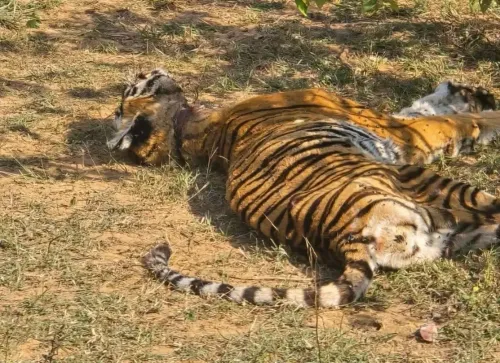
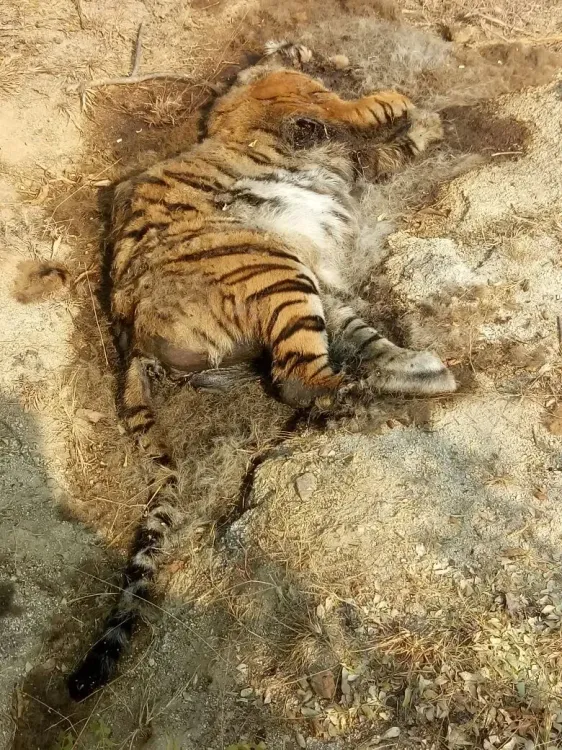
The carcass was found on Thursday with red marks on the neck and a broken clutch wire stuck in it.
Officials believe the tigress could not hunt and died of starvation ; the noose appeared several days old.
Five suspects , including Rammu Adivasi and Dildar Adivasi , were taken into custody after dog squads traced clues to a hut about 500 metres away.
On Friday , villagers held forest officials hostage for hours and deflated vehicle tyres until police pacified them.
The post-mortem is under way at Smriti Van , and the exact cause of death is awaited.
A tigress aged around three years has died after getting trapped in a clutch wire noose in the Manki beat of Madhya Pradesh's Panna district, police said. Forest and police teams have taken five suspects into custody, and the department is treating the death as a case of poaching. Tensions rose on Friday when villagers surrounded forest officials and held them for several hours to demand the release of those detained.
Key Developments in the Panna Tigress Case
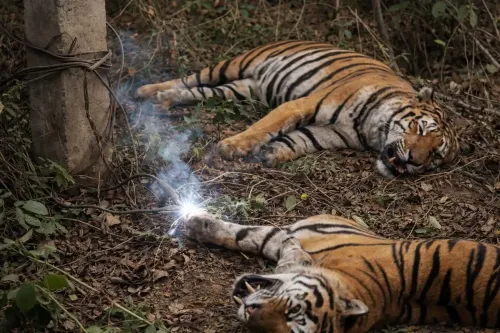
The forest department found the tigress's carcass on Thursday in the forest of Manki beat. According to District Forest Officer Krishna Maravi of the Panna north forest circle, the animal was about three years old.
Officials found red marks on the tigress's neck, with a broken clutch wire still stuck in it. This raised suspicion that a noose had been used for hunting.
The noose reportedly appeared to be several days old. Officials said the tigress was therefore unable to hunt and is believed to have died of starvation.
Dog Squads Trace Leads to a Hut
Dog squad teams from Satna and Panna police collected clues about 500 metres from the site and followed them to a hut. Acting on these leads, the forest department took Rammu Adivasi, Dildar Adivasi and three other suspects into custody for questioning.
Officials have not yet named any of the five as accused. Their role will be established through the ongoing investigation.
Villagers Block Forest Team, Deflate Vehicle Tyres
After the detentions, villagers surrounded the forest department team on Friday. They held the officials hostage for several hours and deflated the tyres of government vehicles.
The protesters blocked the path, demanded the release of the detained men, and stopped officials from removing the tigress's body. The forest officials informed the police, and a police force reached the spot and pacified the villagers.
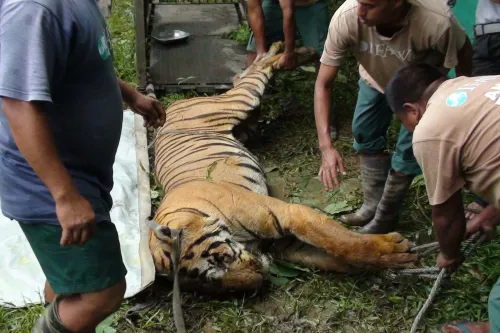
The carcass was then shifted to Smriti Van, where doctors began the post-mortem.
Why the Case Matters for Wildlife Conservation
Authorities are treating the incident seriously from a wildlife conservation point of view. Panna district is home to the Panna Tiger Reserve, which lost its tigers entirely in the late 2000s. The reserve was later repopulated through a reintroduction programme.
Snare hunting is one of the hardest threats for forest staff to detect. Wire traps cost very little, are easy to hide, and are often set for smaller animals. Even so, they can maim or kill large predators.
The standoff with villagers also points to a familiar fault line in forest-fringe regions, where enforcement action against local residents can quickly turn into a confrontation.
What Happens Next
Officials said the investigation into the suspected snare hunting has been stepped up. The exact cause of death will be confirmed only after the post-mortem report is received. The forest department has said further action will follow, and the questioning of the five suspects is likely to shape the next steps in the case.
Point of View
Not only a crime by a few individuals. Panna once lost all its tigers and spent years rebuilding the population, so a snare going unnoticed this long should prompt a review of field surveillance. The villagers' resistance matters just as much. Conservation that local communities see as hostile will keep producing standoffs, so enforcement needs to come with sustained community engagement. The post-mortem will settle the cause of death, but the wider failures here will not be fixed by arrests alone.
NationPress
27 Nov 2026
Frequently Asked Questions
How did the tigress die in Panna?
The tigress died after getting trapped in a clutch wire noose in the Manki beat of Panna district, Madhya Pradesh. Officials believe the several-days-old snare left her unable to hunt and that she died of starvation, though the post-mortem report is awaited.
Who has been detained in the Panna tigress death case?
Five suspects, including Rammu Adivasi and Dildar Adivasi, have been taken into custody for questioning. Dog squads from Satna and Panna police traced clues to a hut about 500 metres from the site.
Why did villagers hold forest officials hostage in Panna?
Villagers surrounded the forest team on Friday to demand the release of the detained suspects. They held officials for several hours, deflated vehicle tyres and blocked removal of the carcass until police arrived and pacified them.
How old was the tigress that died in Panna?
The tigress was around three years old, according to District Forest Officer Krishna Maravi of the Panna north forest circle.
What happens next in the Panna tigress poaching probe?
The forest department is treating the case as poaching and has intensified the investigation. The exact cause of death will be confirmed after the post-mortem report, which is being conducted at Smriti Van.