Gujarat tops India with 62 compostable plastic makers, 16% share
Synopsis
Gujarat now hosts 62 of India's 400 CPCB-registered compostable plastic manufacturers, about 16% of the national total and 20 more than second-placed Tamil Nadu. A three-day GPCB approval window and the Viksit Gujarat Industrial Policy 2026 are driving the lead. The real test is whether industrial composting capacity can keep pace.
Key Takeaways
Gujarat has 62 CPCB-registered compostable plastic manufacturers, about 16% of the national total of 400 .
Tamil Nadu ( 42 ), Maharashtra ( 41 ), Telangana ( 33 ) and Madhya Pradesh ( 26 ) follow.
The GPCB must now decide consent applications within three working days , under a circular dated 30 July 2026 .
The Viksit Gujarat Industrial Policy 2026 , unveiled in June , makes sustainability one of its four pillars .
Products must conform to IS/ISO 17088:2021 and carry the label ‘compostable only under industrial composting’.
Gujarat has become India's leading state for registered compostable plastic manufacturers, with 62 units certified on the Central Pollution Control Board (CPCB) portal. That is roughly 16 per cent of the national total of 400 manufacturers, according to state-wise CPCB data reported from Gandhinagar on 27 November 2026. The state government attributes the lead to sustained policy support through the Vibrant Gujarat platform and its new industrial policy.
How the States Compare
Gujarat is 20 units ahead of second-placed Tamil Nadu, which has 42 registered manufacturers. Maharashtra follows with 41, Telangana with 33 and Madhya Pradesh with 26.
Together, these five states account for 204 of the 400 registered units, or just over half the national total. Notably, the gap between Gujarat and Tamil Nadu is wider than the gap between any other two states in the top five.
Policy Push Behind the Numbers
The growth comes amid a sharper policy focus in Gujarat on sustainable materials and alternatives to conventional plastics. The state has used the Vibrant Gujarat platform to draw investment and engagement into the sector.
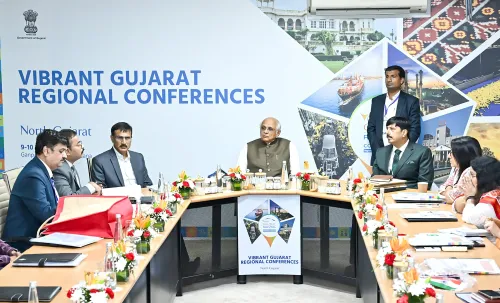
The Vibrant Gujarat Regional Conference for the Kutch and Saurashtra zone, held in Rajkot in January, opened with a seminar on plastic waste management and environmental protection. At that session, the Central Institute of Petrochemicals Engineering and Technology (CIPET), Ahmedabad, briefed entrepreneurs, Gujarat Pollution Control Board (GPCB) officials, academics and students on the standards and the CPCB certification process for compostable plastics.
Regional conferences across the state have also produced memorandums of understanding with industries, including micro, small and medium enterprises (MSMEs). These agreements form part of the build-up to the Vibrant Gujarat Global Summit 2027.
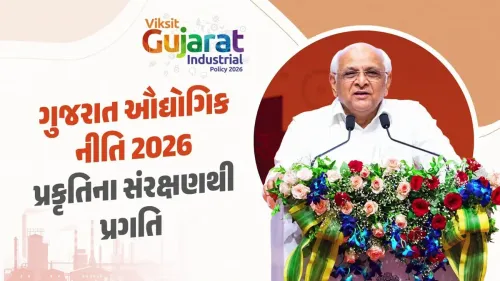
The Viksit Gujarat Industrial Policy 2026, unveiled in June, names sustainability as one of its four pillars and lists circular-economy activities among its thrust sectors. The policy also promotes green industrial parks, cleaner production technologies and environmentally responsible manufacturing.
Three-Day Approval Window for Manufacturers
Forest and Environment Minister Arjun Modhwadia said the GPCB has introduced a fast-track timeline for approving units. “The Gujarat Pollution Control Board (GPCB) has set a maximum timeline of three working days from the date of receipt for deciding consent applications from compostable plastic manufacturing units, including applications for Consent to Establish and Consent to Operate. The Board introduced this timeline through Circular No. GPCB/0153/07/2026 dated July 30, 2026. Applications are assessed in accordance with the applicable environmental requirements,” Modhwadia said.
Minister of State for Forests and Environment Pravin Mali said the initiative complements the state's wider plastic waste efforts. These include enforcing the Plastic Waste Management Rules, promoting reuse and recycling, and coordinating with local bodies on waste collection and segregation.
The GPCB is also publishing details of registered manufacturers and their products on its official website. The listings are meant to help businesses, institutions, local bodies and consumers find suitable products, and they give companies a government platform to showcase their offerings.
Regulatory Requirements and Caveats
Under the Plastic Waste Management Rules, 2016, as amended, compostable plastic carry bags and commodities must conform to Indian Standard IS/ISO 17088:2021. Manufacturers must obtain CPCB certification before marketing or selling such products.
Compostable packaging and commodities must also carry the label ‘compostable only under industrial composting’. These materials are designed to break down through biological processes under controlled industrial composting conditions, not in ordinary landfills or open environments.
The government has cautioned institutions that plan to use compostable liners for segregated food waste. They should confirm that the receiving composting facility accepts such liners and that the liners are collected separately after use.
With the Global Summit 2027 approaching and approvals now capped at three working days, Gujarat's lead in the sector could widen further. Whether the state's waste-processing infrastructure keeps pace with manufacturing growth will be the next test.
Point of View
But manufacturing counts are the easy half of the circular economy. Compostable plastics only work if they reach industrial composting facilities, and the government's own caution about food-waste liners shows the disposal chain is not yet reliable. A three-day consent window speeds up supply, while collection and composting capacity, the slower and costlier part, gets far less attention. Without parallel investment in that back end, compostable bags risk ending up in the same landfills and drains as the plastics they were meant to replace.
NationPress
27 Nov 2026
Frequently Asked Questions
How many compostable plastic manufacturers are registered in Gujarat?
Gujarat has 62 compostable plastic manufacturers registered on the CPCB portal, the highest of any Indian state. This is about 16 per cent of the national total of 400.
Which states rank behind Gujarat in compostable plastic manufacturing?
Tamil Nadu is second with 42 registered manufacturers, followed by Maharashtra with 41, Telangana with 33 and Madhya Pradesh with 26, according to CPCB data.
What is the GPCB's three-day timeline for compostable plastic units?
The Gujarat Pollution Control Board must decide consent applications from compostable plastic manufacturing units within three working days of receipt. This covers both Consent to Establish and Consent to Operate, and was introduced through a circular dated 30 July 2026.
What standard must compostable plastics meet in India?
Under the Plastic Waste Management Rules, 2016, as amended, compostable plastic carry bags and commodities must conform to IS/ISO 17088:2021. Manufacturers must also obtain CPCB certification before selling them.
Can compostable plastics break down in ordinary waste?
No. Compostable plastics are designed to break down under controlled industrial composting conditions, which is why they must be labelled ‘compostable only under industrial composting’.