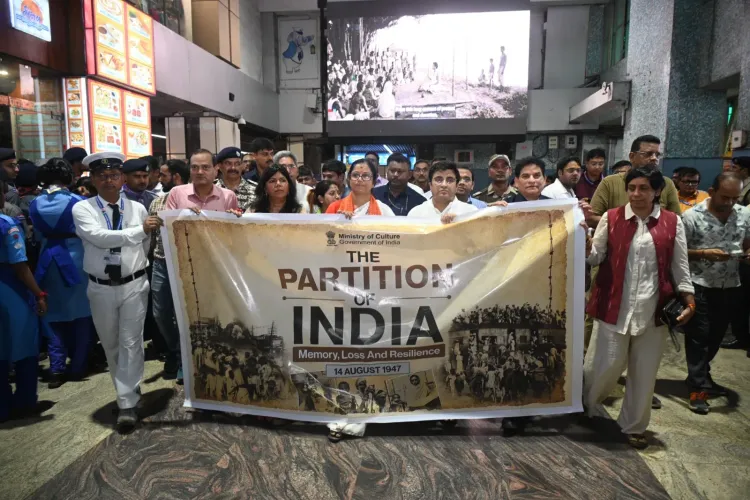
Partition memorial Bhoomi Pujan held at Kolkata's Sealdah station on Aug 14
Synopsis
On the eve of Independence Day, Kolkata's Sealdah station — where over 20,000 Partition refugees sheltered at a time between 1947 and 1950 — held a Bhoomi Pujan for a permanent memorial statue. Backed by the Union Ministry of Culture and IGNCA, the monument will be among India's few dedicated tributes to the millions displaced in one of history's largest forced migrations.
Key Takeaways
A Bhoomi Pujan for a 1947 Partition memorial statue was held at Sealdah railway station , Kolkata , on 14 August 2025 .
The event was organised with the Union Ministry of Culture and the Indira Gandhi National Centre for the Arts (IGNCA) .
At its peak between 1947 and 1950 , more than 20,000 refugees from East Pakistan were present at Sealdah at any given time.
A special photo exhibition depicting Partition-era migration and hardship was held alongside the ceremony.
Partition eyewitness Himangshu Gangopadhyay attended the event.
The memorial statue will serve as a permanent tribute to victims of one of the largest forced migrations in modern history.
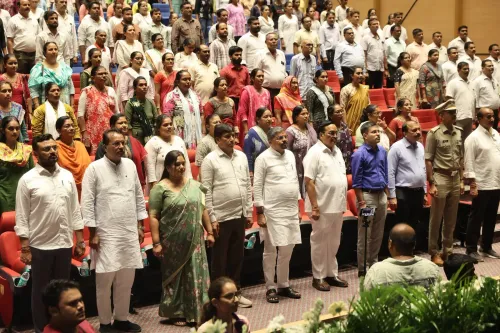
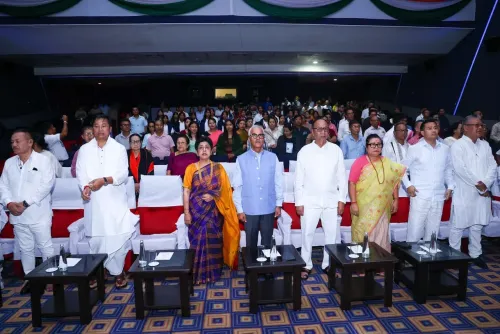
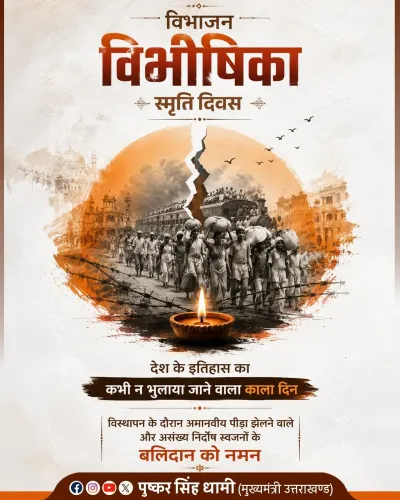
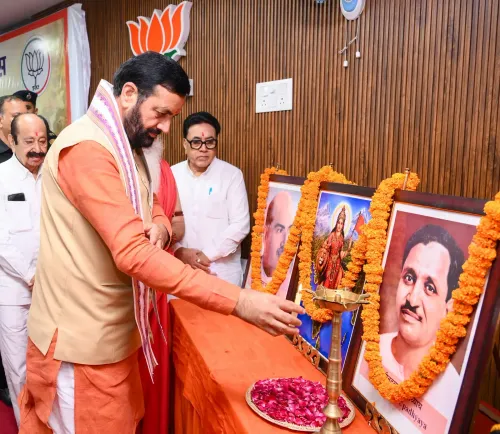
A Bhoomi Pujan ceremony for a statue honouring victims of the 1947 Partition was held at Sealdah railway station in Kolkata on 14 August 2025, marking a formal start to the installation of what will be a permanent memorial at one of independent India's most historically charged transit points. The event was organised in coordination with the Union Ministry of Culture and the Indira Gandhi National Centre for the Arts (IGNCA).
Who Attended and What Was Said
Senior officials from both the state and central governments were present. West Bengal Urban Development Minister Agnimitra Paul, Minister of State for Information and Cultural Affairs Purnima Chakraborty, and Minister Tapas Roy represented the state. On the railways side, Eastern Railway General Manager Gitika Pandey and Divisional Railway Manager (Sealdah Division) Rajeev Saxena attended, along with K. Anil Kumar, IGNCA Head of Department under the Union Ministry of Culture.
Pandey described Sealdah as 'a living witness to the history of Partition and to the immense human suffering associated with it,' adding that the memorial would serve as 'a humble tribute to those who were displaced.' Saxena said the Sealdah Division was 'deeply honoured to host this sacred memorial, which will stand as a permanent tribute to the millions who passed through these platforms under the most trying circumstances.'
Sealdah's Role in the Partition
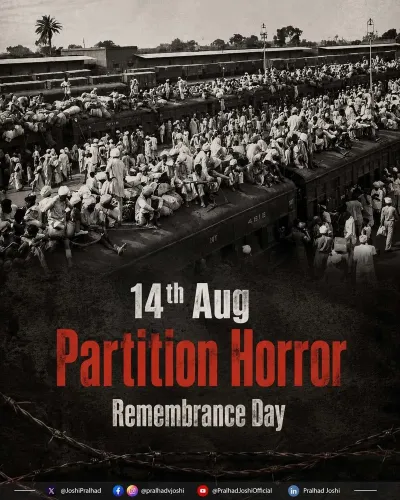
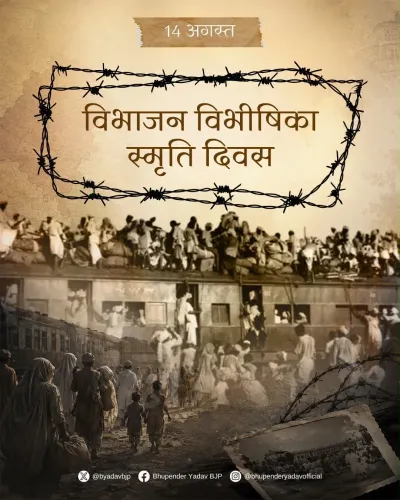
The choice of Sealdah as the site is historically significant. Between 1947 and 1950, the station served as the primary point of arrival for millions of Bengali Hindu refugees fleeing East Pakistan (present-day Bangladesh). According to contemporary accounts, more than 20,000 refugees were present at the station at any given time during that period. Many remained on the platforms for months — and in some cases years — before being relocated to camps. The influx continued, at a reduced pace, well into the late 1960s.
Partition eyewitness Himangshu Gangopadhyay was also present at the ceremony, lending a personal dimension to the commemoration.
The Photo Exhibition
A special photo exhibition, organised alongside the Bhoomi Pujan, documented the scale and human cost of Partition. The exhibition featured images of the mass migration, displaced families, and the gradual process of rebuilding lives. Officials described it as a visual tribute that underscored the courage and resilience of those who survived the upheaval.
What the Memorial Will Represent
The proposed statue is intended to be more than a monument. As one railway official put it, it will be 'a symbol of remembrance, resilience, and hope' — preserving stories from one of the largest forced migrations in modern history for future generations. The memorial will pay tribute to those who endured displacement, violence, and loss during the Partition, which uprooted an estimated 10–20 million people across the subcontinent.
With the Bhoomi Pujan complete, work on the statue's installation is expected to proceed in the coming months, adding a permanent layer of historical memory to a station that already carries it.
Point of View
State-backed memorials to Partition — a silence that has long sat uneasily alongside the scale of the tragedy. Sealdah is an apt, if overdue, choice: its platforms absorbed the raw shock of displacement in real time, and the living memory of that era is fast disappearing. The presence of eyewitness Himangshu Gangopadhyay at the ceremony underscores the urgency. What matters now is whether the memorial, once built, becomes a site of genuine historical education or a ceremonial installation that fades into the background of a busy commuter hub.
NationPress
28 Sept 2026
Frequently Asked Questions
What is the Partition memorial planned at Sealdah railway station?
It is a statue dedicated to the victims of the 1947 Partition, to be installed at Sealdah railway station in Kolkata. The Bhoomi Pujan for the memorial was held on 14 August 2025, in coordination with the Union Ministry of Culture and IGNCA.
Why was Sealdah station chosen for the Partition memorial?
Sealdah served as the primary arrival point for millions of Bengali Hindu refugees fleeing East Pakistan between 1947 and the late 1960s. Contemporary accounts indicate that more than 20,000 refugees were present at the station at any given time during the peak years of 1947–1950.
Which government bodies are involved in the Sealdah Partition memorial?
The memorial is being developed in coordination with the Union Ministry of Culture and the Indira Gandhi National Centre for the Arts (IGNCA), with Eastern Railway providing the site at Sealdah station.
What happened at the Bhoomi Pujan ceremony on 14 August?
The ceremony included the formal ground-breaking ritual for the memorial statue, attended by West Bengal ministers, Eastern Railway officials, and IGNCA representatives. A photo exhibition documenting Partition-era migration and hardship was also held alongside.
When will the Partition memorial statue at Sealdah be completed?
No official completion date has been announced. With the Bhoomi Pujan concluded on 14 August 2025, work on the statue's installation is expected to proceed in the coming months.