Chirag Paswan slams Opposition's 'selective criticism' on SIR electoral rolls
Synopsis
Chirag Paswan has turned the SIR electoral roll controversy on its head, challenging the Opposition to explain why it accepts election results in Karnataka, Kerala, and Himachal Pradesh but questions them everywhere else. With LJP-RV simultaneously declaring readiness to contest all 403 UP seats alone, Tuesday's remarks double as both a political counter-punch and a pre-election positioning statement.
Key Takeaways
Chirag Paswan on 29 September accused the Opposition of ‘selective criticism’ over the Special Intensive Revision (SIR) of electoral rolls.
He argued the Opposition does not question election outcomes in Karnataka , Himachal Pradesh , and Kerala , states it governs.
Paswan drew a parallel with past EVM controversy, saying opposition parties accepted those results only when their candidates won.
The Election Commission of India (ECI) issued a clarification the previous Saturday over reported internal differences within the poll panel.
LJP (Ram Vilas) is preparing to contest all 403 seats in Uttar Pradesh , with or without an NDA alliance.
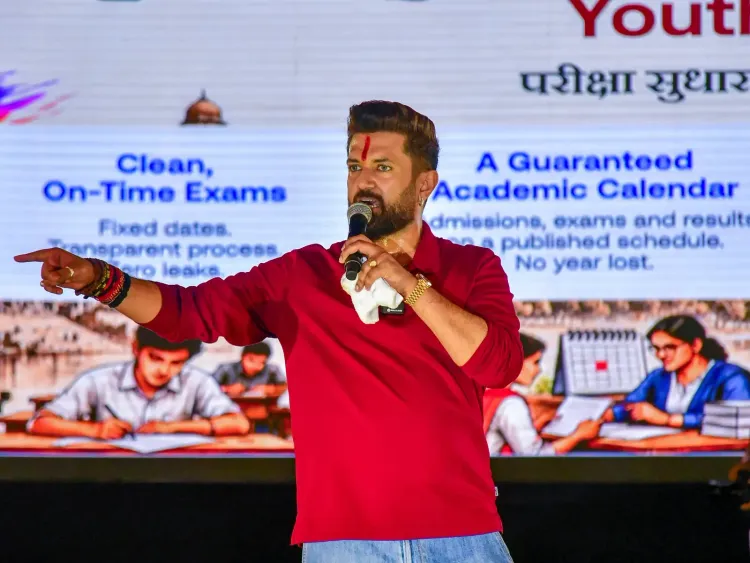
Paswan cited the ‘Yuva Yuddh’ event in Prayagraj as evidence of strong youth support for his party in UP.
Union Minister and Lok Janshakti Party (Ram Vilas) chief Chirag Paswan on Tuesday, 29 September accused the Opposition of engaging in “selective criticism” over the Special Intensive Revision (SIR) of electoral rolls, arguing that opposition parties have conspicuously avoided questioning election outcomes in states they themselves govern.
The Core Accusation
Paswan charged that the Opposition’s campaign against the Election Commission of India (ECI) and the SIR process is driven by political convenience rather than genuine democratic concern. “The way the opposition is continuously trying to spread confusion regarding the Election Commission and the SIR, I feel that several states have effectively countered this confusion. Be it the elections in Bengal or the elections here in Bihar,” he said.
He pointedly noted that if the Opposition is questioning mandates in BJP- or NDA-ruled states, it must apply the same scrutiny to results in states such as Karnataka, Himachal Pradesh, and Kerala, where opposition governments are in power. “When results go in your favour—in states where the outcome favours you—questions are not raised there. This selective criticism by the opposition is not appropriate,” Paswan said.
EVM Parallel and ECI Clarification
The Union Minister drew a parallel with past controversies over Electronic Voting Machines (EVMs), arguing that opposition parties had accepted EVM results when their own candidates won but alleged tampering whenever NDA candidates prevailed. “The EVMs were considered fine in states where their MPs or MLAs won. But where candidates from our alliance won, people would claim that we had tampered with the EVMs,” he said.
This comes amid a broader political flashpoint over the SIR process. Paswan, along with other NDA allies, had earlier sought clarification from the ECI over reports of internal differences within the poll panel. On the preceding Saturday, the ECI issued a press release following an internal meeting, clarifying the context in which a letter had been written by ECI functionaries to the Cabinet Secretary.
A Challenge to the Opposition
Paswan went further, questioning the Opposition’s continued participation in the electoral process if its dissatisfaction with the system is as fundamental as its statements suggest. “If the Opposition is still not satisfied with the ECI’s response, it is free to ask more questions. But continuing to spread confusion even after receiving answers is an attempt to set a specific narrative,” he said.
He argued that the Opposition’s approach would ultimately cost it public trust. “The problem is that unless the opposition engages in introspection instead of just trading accusations, they won’t win the trust of the public or the election,” Paswan stated.
LJP-RV Eyes 403 Seats in Uttar Pradesh
Separately, Paswan addressed his party’s plans for the upcoming Uttar Pradesh Assembly elections, signalling that the Lok Janshakti Party (Ram Vilas) is prepared to contest all 403 seats if an NDA alliance does not materialise. “Our preparations for the elections are fully complete. We will certainly contest the election in Uttar Pradesh,” he said.
He cited the turnout at the party’s ‘Yuva Yuddh’ event in Prayagraj as evidence of growing youth support. “The way a massive number of young people attended the ‘Yuva Yuddh’ event in Prayagraj leads me to believe that as of today, our party and organisation are gaining strong support in Uttar Pradesh, just like in Bihar,” he added.
With the Uttar Pradesh elections on the horizon and the SIR row showing no signs of abating, Paswan’s remarks signal that the NDA will press this ‘double standard’ argument as a key counter-narrative heading into the poll season.
Point of View
But it carries a kernel of genuine democratic tension: if electoral institutions are credible only when results are unfavourable, the Opposition does undermine its own argument. That said, the SIR process has drawn scrutiny from civil society and electoral experts beyond opposition parties alone, which Paswan’s framing conveniently sidesteps. The simultaneous announcement of LJP-RV’s readiness to contest 403 UP seats reveals the real subtext: this is as much about intra-NDA seat-sharing leverage as it is about defending the ECI. Watch whether the alliance talks materialise or whether Paswan uses this moment to extract a better deal from the BJP.
NationPress
29 Sept 2026
Frequently Asked Questions
What is the Special Intensive Revision (SIR) of electoral rolls?
The Special Intensive Revision (SIR) is a process conducted by the Election Commission of India to update and clean up voter rolls, ensuring that eligible voters are registered and ineligible entries are removed. It has recently become a flashpoint, with opposition parties alleging irregularities in how the revision is being carried out in certain states.
Why is Chirag Paswan accusing the Opposition of selective criticism?
Paswan argues that the Opposition questions the SIR process and election results only in BJP- or NDA-governed states, while accepting outcomes without complaint in states like Karnataka, Kerala, and Himachal Pradesh where they hold power. He says this inconsistency exposes the criticism as politically motivated rather than a principled stand on electoral integrity.
What did the Election Commission say about internal differences?
The Election Commission of India issued a press release on the Saturday preceding Paswan’s remarks, following an internal meeting, to clarify the context of a letter written by ECI functionaries to the Cabinet Secretary. The statement was intended to dispel reports of divisions within the poll panel.
What are LJP-RV’s plans for the Uttar Pradesh elections?
The Lok Janshakti Party (Ram Vilas) has declared it is fully prepared to contest all 403 Assembly seats in Uttar Pradesh. Paswan said the party will contest under an NDA alliance if one is formed, but is equally ready to go it alone if no alliance materialises.
What was the ‘Yuva Yuddh’ event that Paswan referenced?
The ‘Yuva Yuddh’ event was a youth-focused political rally organised by LJP (Ram Vilas) in Prayagraj, Uttar Pradesh. Paswan cited the large youth turnout at the event as evidence that his party is building significant grassroots support in UP ahead of the Assembly elections.