Chirag Paswan fires back at Opposition over Election Commission criticism
Synopsis
Union Minister Chirag Paswan fired back at the Opposition on 26 September 2026, accusing them of spreading confusion and asking why they never question the Election Commission in states where their own governments were formed by the same body.
Key Takeaways
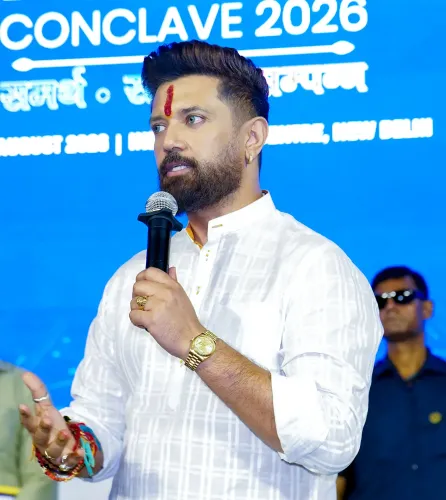
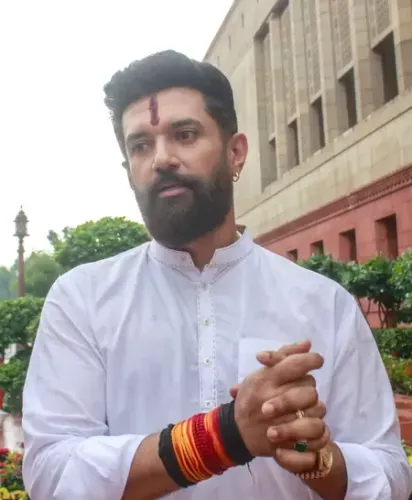
Chirag Paswan , Union Food Processing Minister and LJP (Ram Vilas) president, posted a sharp counter on 26 September 2026 targeting Opposition criticism of the Election Commission.
He accused opposition parties of 'spreading confusion among the people' on the poll body's conduct.
His core challenge: if the Election Commission of India is questioned, why do opposition parties not answer for states where the same Commission delivered them power?
Paswan referenced a letter as providing 'answers,' though the specific document has not been independently verified.
The exchange fits a recurring pattern in Indian politics where ECI credibility is contested selectively around election cycles.
As a key NDA partner, Paswan's intervention signals a coordinated effort to pre-empt an Opposition narrative on institutional trust.
A pointed political counter-offensive landed on Saturday evening when Union Food Processing Minister Chirag Paswan turned the Opposition's Election Commission criticism back on its authors, asking why parties that question the poll body's integrity stay silent about the very same Commission overseeing states where they hold power.
Posting on 26 September 2026, Paswan wrote — in a reply to his own handle — that 'virodhi dal logon ke beech bhram failane ka kaam kar rahe hain' ('opposition parties are working to spread confusion among the people'), adding that 'a letter has provided an answer somewhere.' He then threw the central question at the Opposition: if you challenge the Election Commission's conduct, why do you not answer for those states where your own governments were formed by the same body?
The asymmetry argument at the heart of the attack
The logic Paswan deploys is a well-worn but effective rhetorical lever in Indian electoral politics. The Election Commission of India (ECI) — the constitutional authority responsible for superintending and directing all elections to Parliament, state legislatures, and the offices of President and Vice-President — is the same institution, with the same machinery, whether it conducts polls in a BJP-governed state or one run by the Congress, the Trinamool Congress, or any other opposition outfit.
Paswan's implicit charge is one of selective grievance: that opposition parties invoke the Commission's alleged partiality only when results go against them, and quietly pocket its legitimacy when those same results deliver them a state government. It is a jab that forces any challenger to either defend the ECI universally or admit the criticism is situational.
A recurring fault-line in Indian electoral discourse
This exchange fits a pattern that sharpens every time elections approach or results are contested. Opposition alliances have, at various points, raised concerns about Electronic Voting Machine integrity, the timing of the Model Code of Conduct, and the perceived neutrality of Election Commissioners. The ruling side's standard rebuttal — that the Commission's credibility cannot be selectively invoked — has been deployed across party lines whenever incumbents face such challenges.
What makes this iteration notable is the reference to 'a letter' that Paswan says has provided answers. The specific document has not been independently verified, but its invocation signals that there is an active, documented back-and-forth underway — not merely a war of soundbites.
LJP (Ram Vilas) and the BJP-led coalition's electoral calculus
Chirag Paswan, who leads the Lok Janshakti Party (Ram Vilas) as its national president, is a key partner in the National Democratic Alliance (NDA). His voice on electoral credibility carries the weight of a coalition stakeholder, not just a solo player. The timing and sharpness of this post suggest the NDA is moving to pre-empt a broader Opposition narrative around institutional trust ahead of what could be a busy election calendar.
The next move belongs to the Opposition — and, perhaps more consequentially, to the Election Commission itself, whose formal response or silence will shape how this letter-driven confrontation develops.
Point of View
This is a defensive-turned-offensive move that shifts the burden of proof. The 'letter' reference is strategically vague enough to hint at documented evidence without committing to specifics, a tactic that keeps the Opposition on the back foot while the full record remains controlled. Ahead of any state elections, establishing this narrative early could blunt future institutional-credibility attacks.
NationPress
26 Sept 2026
Frequently Asked Questions
What did Chirag Paswan say about the Election Commission?
On 26 September 2026, Chirag Paswan accused the Opposition of spreading confusion about the Election Commission and asked why opposition parties, which came to power in several states through the same Commission, never question its credibility in those states.
What letter did Chirag Paswan refer to in his post?
Paswan mentioned that 'a letter has provided an answer somewhere,' suggesting a formal written exchange is underway, though the specific letter and its full contents have not been independently verified.
Why do Indian opposition parties criticise the Election Commission?
Opposition parties in India have at various times raised concerns about EVM integrity, the timing of the Model Code of Conduct, and the neutrality of Election Commissioners, typically after electoral defeats or during contentious election cycles.
Who is Chirag Paswan and what party does he lead?
Chirag Paswan is the Union Minister of Food Processing Industries and the national president of the Lok Janshakti Party (Ram Vilas), a key partner in the BJP-led National Democratic Alliance.
What is the Election Commission of India?
The Election Commission of India is a constitutional body responsible for superintending, directing, and controlling elections to Parliament, state legislatures, and the offices of President and Vice-President of India.