Sam Pitroda on 1984 riots: 'Let's build a prosperous nation, not revisit the past'
Synopsis
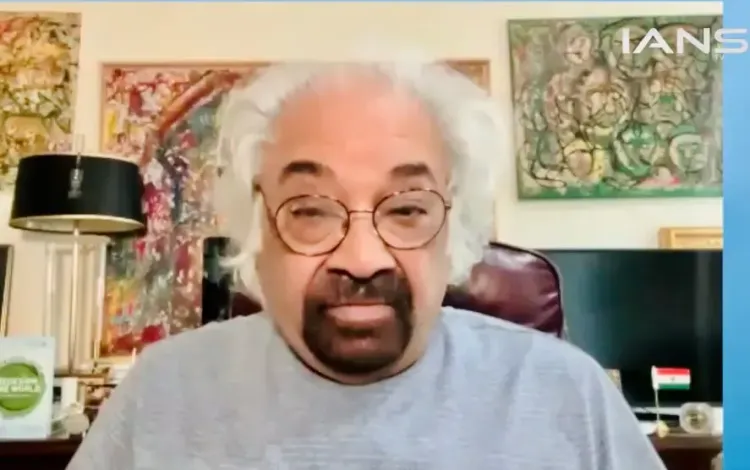
Indian Overseas Congress chief Sam Pitroda has dismissed calls for Congress to answer for the 1984 anti-Sikh riots, saying it is pointless to 'dig things up' from 40 years ago — and invoking Lord Ram and Hanuman to argue India should focus on the future instead. The remarks are set to reignite a firestorm over historical accountability and the Congress party's relationship with its own past.
Key Takeaways
Sam Pitroda , chief of the Indian Overseas Congress , said it makes 'very little sense' to keep discussing the 1984 anti-Sikh riots .
Pitroda invoked Lord Ram and Hanuman to argue the nation should stop dwelling on the past and focus on building a 'prosperous, peaceful nation' .
The 1984 riots erupted after the assassination of PM Indira Gandhi on 31 October 1984 and are described by several bodies as a Sikh genocide.
Pitroda called for national attention to shift to education , employment , skill development , and artificial intelligence .
The remarks are expected to trigger political backlash from the BJP and Sikh community organisations demanding Congress accountability.
Indian Overseas Congress chief Sam Pitroda has argued that repeatedly revisiting historical events serves little purpose, urging the country to focus instead on building a 'prosperous, peaceful nation' rather than dwelling on incidents from decades past — including the 1984 anti-Sikh riots. The remarks came in an exclusive interview conducted in New Delhi on 12 November 2026.
What Pitroda Said
When asked whether the Indian National Congress (INC) should be held accountable for the 1984 anti-Sikh riots, Pitroda questioned the relevance of continually revisiting an event that took place over four decades ago. He said courts and relevant authorities were best placed to adjudicate, and called for a collective shift in national priorities.
'That was more than 40 years ago. And this has been going on and digging, and people just do this. Let's look at the future. Let's move on. Let's design a better, prosperous, peaceful nation for everybody. That should be the agenda. Not what happened in Ram's time, or why did Hanuman go here, why did he lift the mountain?' Pitroda said.
He further added: 'What is the sense in talking about something that happened 40 years ago now? Let the people in court and others decide; it was decided 40 years ago. Everything is ok; why do we just dig things up from nowhere and throw mud? What does that have to do with today?'
Background: The 1984 Anti-Sikh Riots
The 1984 anti-Sikh riots — described by several Sikh organisations and international bodies as a genocide — involved coordinated attacks against the Sikh community across India. The violence erupted following the assassination of then Prime Minister Indira Gandhi on 31 October 1984 by her two Sikh bodyguards, Beant Singh and Satwant Singh. The assassination itself came months after the military operation at the Golden Temple in June 1984, known as Operation Blue Star. The riots remain a deeply contested chapter in Indian political history, with accountability still disputed across party lines.
Pitroda's Call for a Forward-Looking Agenda
Beyond the accountability question, Pitroda argued that national discourse was disproportionately consumed by historical grievances at the expense of forward-looking challenges. He said the country needed to devote greater attention to children's education, employment, and skill development for younger generations.
'We are still hung up on the past. We've got to look forward. We've got to see the future of our children, our grandchildren, their education, their employment, their jobs in a sense, their skill set. That is the real challenge,' he said.
He also stressed that young Indians should be more focused on artificial intelligence (AI), education reform, and future-oriented challenges rather than remaining anchored to historical disputes.
Political Significance
Pitroda's remarks are likely to draw sharp political reactions, particularly from the Bharatiya Janata Party (BJP) and Sikh community groups, which have consistently demanded greater accountability from the Congress for the 1984 violence. This is not the first time Pitroda has found himself at the centre of controversy over sensitive remarks — he has previously faced criticism for comments on inherited wealth and the nature of mob lynchings. Notably, his comments invoking Lord Ram and Hanuman in the context of dismissing focus on the past are also expected to generate significant pushback from Hindu groups and opposition parties alike.
What Comes Next
The Congress is yet to issue an official statement distancing itself from or endorsing Pitroda's remarks. With assembly elections and national political tensions running high, the interview is expected to fuel fresh debate on historical accountability, minority rights, and the Congress party's willingness to confront its past. How the party's leadership responds — or stays silent — will itself be a signal.
Point of View
Commissions, and affected communities have never fully resolved. Telling survivors and their descendants to 'move on' while simultaneously citing Lord Ram and Hanuman as examples of irrelevant history is a rhetorical double-bind: it trivialises both a documented atrocity and a living religious tradition in a single breath. This is now a recurring pattern for Pitroda — speaking in ways that hand the opposition ready-made ammunition, forcing the Congress leadership into damage-control mode. The party's silence or endorsement in the coming hours will reveal more about its internal accountability culture than any spokesperson statement can.
NationPress
12 Nov 2026
Frequently Asked Questions
What did Sam Pitroda say about the 1984 anti-Sikh riots?
Sam Pitroda said it makes little sense to keep revisiting an incident that happened over 40 years ago, arguing courts had already addressed the matter and the country should focus on the future instead. He made these remarks when asked whether the Congress should be held accountable for the 1984 violence.
What did Pitroda mean by 'Ram's time' in his interview?
Pitroda used the phrase 'what happened in Ram's time' as a rhetorical device to argue that dwelling on historical events — including the 1984 riots — is counterproductive. He also cited Hanuman as an example of mythological history he felt was being unnecessarily debated, drawing what he presented as a parallel with modern political disputes over the past.
What were the 1984 anti-Sikh riots?
The 1984 anti-Sikh riots were a series of coordinated attacks on the Sikh community across India, triggered by the assassination of Prime Minister Indira Gandhi on 31 October 1984. Several Sikh organisations and international bodies have described the violence as a genocide; accountability and justice for the victims remain contested political issues to this day.
Why are Pitroda's remarks politically significant?
The remarks are significant because they come from a senior Congress-affiliated figure and are likely to be used by the BJP and Sikh community groups to renew demands for accountability. Pitroda has previously sparked controversies with similar statements, and his comments on Lord Ram and Hanuman are expected to draw additional criticism from Hindu organisations and opposition parties.
What agenda did Pitroda advocate for India's future?
Pitroda called for national focus to shift to children's education, employment, skill development, and emerging technologies such as artificial intelligence (AI). He argued these forward-looking priorities should replace what he characterised as an unproductive preoccupation with historical grievances.