CM Mohan Yadav demands Congress atone for 1984 Sikh massacre
Synopsis
On the 42nd anniversary of the 1984 anti-Sikh riots, MP CM Dr. Mohan Yadav demanded Congress repent and apologise for the pogroms, sharply contrasting the party's protest activities on 1 November 2026 with what he called an unmet moral obligation.
Key Takeaways
Madhya Pradesh CM Dr.
Mohan Yadav posted on 1 November 2026 — the 42nd anniversary of the 1984 anti-Sikh riots — demanding Congress offer repentance and a national apology.
The 1984 anti-Sikh pogroms erupted after the assassination of PM Indira Gandhi and killed thousands, primarily in New Delhi , with long-standing allegations of political complicity against Congress leaders.
In August 2005 , PM Dr.
Manmohan Singh issued a formal apology in the Lok Sabha — the most significant official acknowledgement to date — though critics called it insufficient.
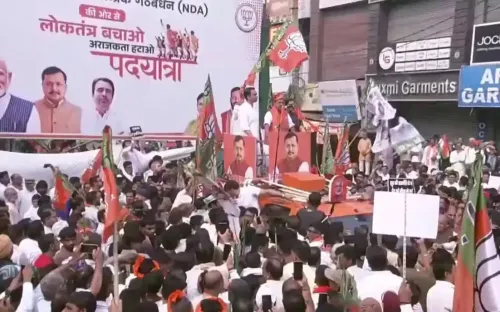
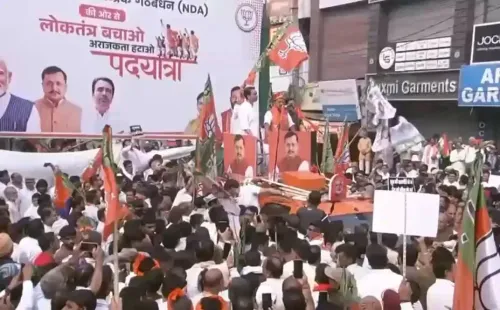
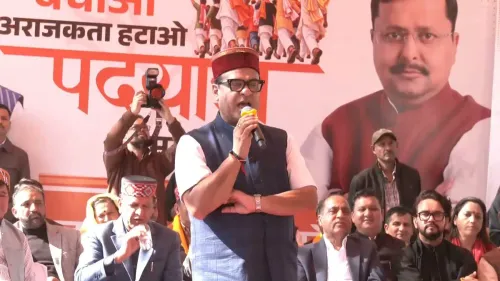
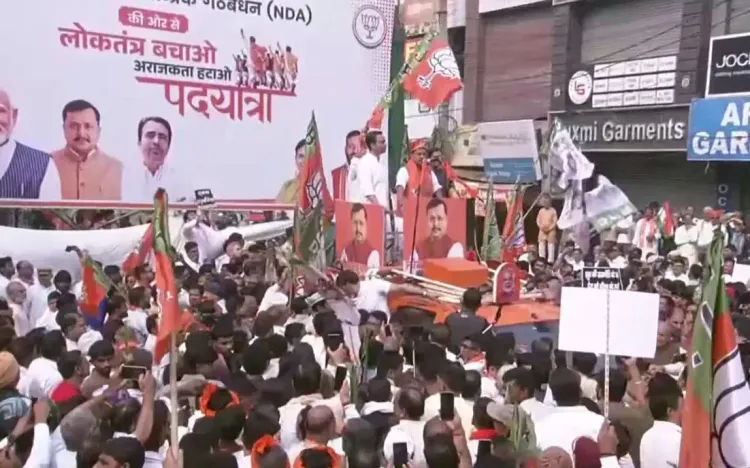
Yadav framed Congress's decision to hold protests on the anniversary date as an act of moral inconsistency, citing the hashtag #SaveDemocracyRemoveAnarchy .
The statement is attributed to the BJP national president Shri Nitin Nabin , signalling a coordinated party communication rather than a solo remark.
BJP's invocation of 1984 against Congress is a recurring pattern, typically deployed during periods when the opposition presses the ruling party on democratic accountability.
On the 42nd anniversary of the 1984 anti-Sikh riots, Madhya Pradesh Chief Minister Dr. Mohan Yadav turned the political spotlight squarely on the Indian National Congress, demanding repentance and a public apology for the pogroms that killed thousands of Sikh citizens — while pointedly noting that Congress leaders chose instead to hold protests on Sunday, 1 November 2026.
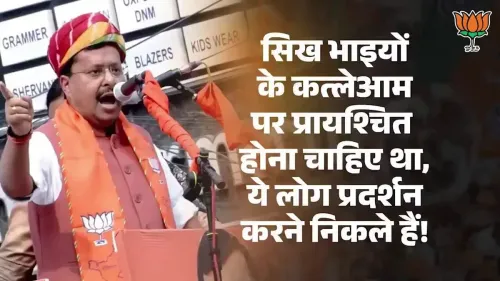
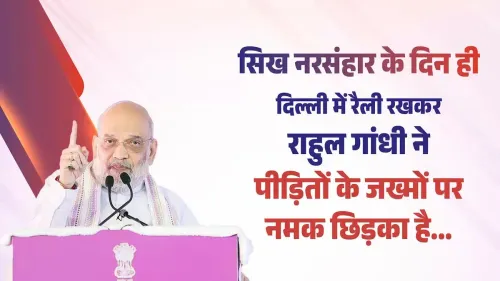
Quoting what he attributed to the BJP's national president, Shri Nitin Nabin, Dr. Yadav wrote in Hindi: 'Aaj hi ke din 1984 mein hamare Sikh bhaiyon ke saath jo katleaam hua aur jo atyachaar kiye gaye, uske liye Congress ko prayashchit karna chahiye tha aur desh se maafi maangni chahiye thi, lekin ve aaj pradarshan karne nikle hain.' ('On this very day in 1984, the massacre and atrocities committed against our Sikh brothers demanded repentance and an apology from Congress to the nation — yet today they are out holding protests.')
Forty-two years of unanswered reckoning
The 1984 anti-Sikh riots erupted across India — most lethally in New Delhi — following the assassination of then-Prime Minister Indira Gandhi on 31 October 1984. Thousands of Sikh men and boys were killed in days of organised violence, with long-standing allegations of complicity by Congress leaders at the ground level. The wounds have never fully healed, and criminal accountability has remained contested across decades of inquiries and court proceedings.
The most significant official acknowledgement came in August 2005, when then-Prime Minister Dr. Manmohan Singh tendered a formal apology on the floor of the Lok Sabha on behalf of the Congress-led government — a moment widely noted as historic, though critics argued it stopped short of naming or prosecuting those responsible. For the BJP, that apology has never been regarded as sufficient closure, and references to November 1984 surface with particular intensity each year at this time.
The political arithmetic of protest day
Dr. Yadav's post is framed around a sharp irony: that on the very calendar date associated with mass anti-Sikh violence carried out under a Congress-era government, the party is staging protests — in the post tagged #SaveDemocracyRemoveAnarchy — rather than observing any act of contrition. The BJP has long deployed the 1984 riots as a counter-narrative tool whenever Congress attacks the ruling dispensation on democratic norms or institutional integrity, and this post follows that well-worn rhetorical path.
The hashtag and the reference to the BJP's national president signal this is a coordinated party messaging effort, not a lone intervention — designed to reframe the news cycle on a day the opposition had sought to dominate.
Point of View
The BJP is clearly running a coordinated counter-narrative rather than an organic comment. The 2005 Manmohan Singh apology complicates the picture for Congress: it exists as a matter of public record, yet the absence of criminal convictions means the political wound remains open and exploitable. With opposition protests dominating the news cycle in early November 2026, this is as much a message-management operation as a genuine call for accountability.
NationPress
1 Nov 2026
Frequently Asked Questions
What happened in the 1984 anti-Sikh riots?
The 1984 anti-Sikh riots were a series of organised pogroms that erupted across India — most severely in New Delhi — following the assassination of Prime Minister Indira Gandhi on 31 October 1984 . Thousands of Sikh civilians were killed over several days, and long-standing allegations have implicated Congress leaders in facilitating or failing to stop the violence.
Did Congress ever apologise for the 1984 Sikh riots?
Yes. In August 2005 , then-Prime Minister Dr. Manmohan Singh issued a formal apology in the Lok Sabha on behalf of the Congress-led government. Critics, however, have argued the apology was insufficient because it was not accompanied by meaningful criminal accountability for those responsible.
Why is CM Mohan Yadav bringing up 1984 now?
Dr. Mohan Yadav posted his remarks on 1 November 2026 , the 42nd anniversary of the pogroms, specifically contrasting the Congress party's decision to hold protests that day with what he described as an unmet obligation to seek forgiveness. The BJP has historically invoked 1984 as a counter-narrative during periods of Congress-led opposition pressure.
Who is Nitin Nabin, mentioned in CM Yadav's post?
CM Yadav's post attributes the statement to Shri Nitin Nabin , described as the BJP's national president. Details about his specific tenure and organisational role have not been widely established in public records available before this post.
What is the significance of the hashtag #SaveDemocracyRemoveAnarchy?
The hashtag #SaveDemocracyRemoveAnarchy appears to be associated with the BJP's coordinated response to opposition protests around early November 2026, framing Congress's political activities as contrary to democratic values while redirecting attention to the party's own historical record.