What is the plight of Christian girls in Pakistan after abduction and forced conversion?
Synopsis
This article sheds light on the troubling issue of forced conversions in Pakistan, focusing on the case of a 21-year-old Christian girl abducted and coerced into Islam. It delves into systemic discrimination faced by minorities and critiques the failure of legal protections against such heinous acts.
Key Takeaways
Forced conversions are a prevalent issue in Pakistan, particularly affecting young Christian and Hindu girls.
Minorities face systemic discrimination and bias in educational institutions.
The legal system often fails to protect victims of forced conversions.
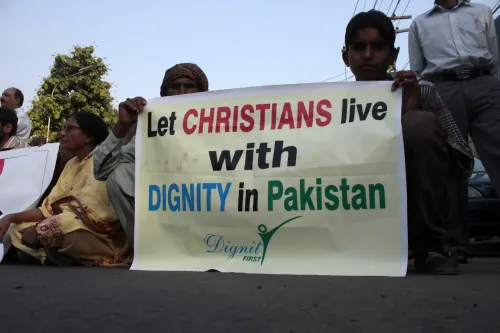
Community organizations are advocating for minority rights and legal reforms.
The international community's attention is crucial for addressing these human rights abuses.
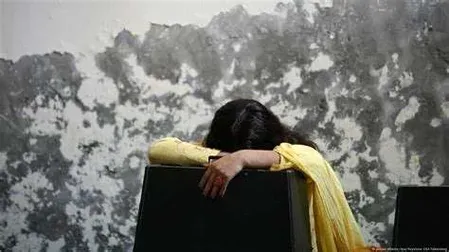
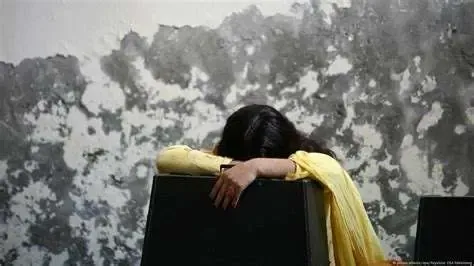
Islamabad, Jan 5 (NationPress) A 21-year-old Christian woman from Rawalpindi vanished from her residence last November and was forcibly converted to Islam, as reported on Monday, highlighting the ongoing crisis of forced conversions in Pakistan.
Monica Jennifer testified in a local court that she had converted to Islam and wed her neighbor. However, her family disclosed to the Pakistan Christian Post that Monica had indeed been abducted and coerced into conversion.
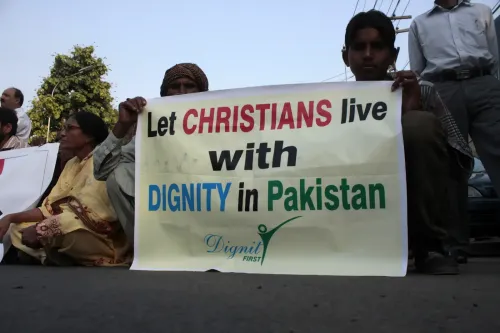
A Protestant pastor, Imran Amanat, remarked that Christian girls are perpetually at risk in Pakistan, a sentiment echoed in an article by The Catholic Weekly, based in Australia.
“The legal framework prohibits underage marriages and court marriages lacking parental consent, yet extremists manipulate Islamic Sharia to rationalize these abuses,” The Catholic Weekly cited Amanat.
Local authorities have dismissed such accounts as mere “propaganda.” Nevertheless, a shocking report from Pakistan’s own National Commission on the Rights of the Child, titled 'Children from Minority Religions in Pakistan', corroborates Amanat’s grim observations. Approximately 4 percent of Pakistanis belong to minority faiths, predominantly Christians and Hindus.
The report indicates that these communities face “systemic discrimination,” particularly affecting their children. At educational institutions, they confront bias from both peers and educators; the curriculum fosters negative stereotypes against their faith. Many eventually abandon their education. However, the most alarming concern is the issue of forced conversions,” stated The Catholic Weekly.
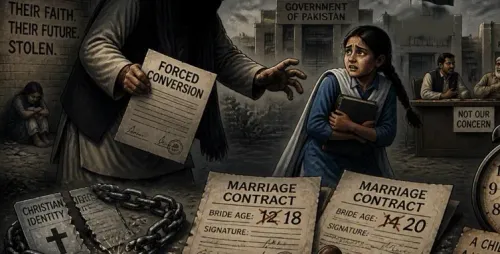
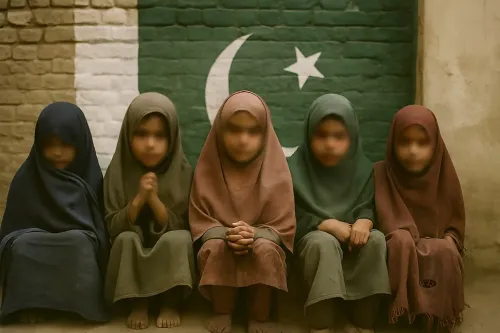
As detailed in the report, young girls, frequently minors, are abducted and coerced into converting to Islam, followed by forced marriages to older males. This disturbing trend is prevalent in Sindh and southern Punjab, where religious minorities reside.
“Once taken captive, these girls face coercion, threats, and at times violence, compelling them to renounce their beliefs. The legal system frequently fails to safeguard these girls due to ineffective law enforcement and societal biases. Courts sometimes endorse these conversions and marriages, accepting dubious claims of voluntary conversion, even when clear evidence of coercion exists,” the report elaborated.
The United Nations has heavily criticized the forced conversions occurring in Pakistan. Nonetheless, the report asserts that the nation’s inability to implement previous recommendations has permitted these incidents to persist.
Recently, a prominent minority rights organization expressed grave concerns regarding the Pir Sarhandi shrine in Umerkot, which has become infamously recognized as a center for the conversion of Hindu girls and women in Sindh, particularly those from impoverished and lower-caste communities.
According to the Voice of Pakistan Minority (VOPM), Hindu families from indigenous groups, including Bheel, Meghwar, and Kohli across Sindh, have long accused the shrine of being directly involved in the abduction and forced conversion of their daughters, many of whom are minors, some as young as 12 to 15 years old.
“In a region where Hindus constitute over 50 percent of the population, the Sarhandi shrine has become a source of anxiety for minority families, with many fearing that any daughter venturing outside risks never returning home,” VOPM shared on X.
At the heart of this controversy is the shrine’s cleric, Pir Muhammad Ayub Jan Sarhandi, who boasts of overseeing “thousands” of conversions, predominantly involving Hindu girls, with his brother, Pir Waliullah, echoing similar claims.
“These conversions typically follow a disturbing pattern: a Hindu girl disappears—whether lured or abducted—then reappears at the Sarhandi shrine already converted and married to a Muslim man, without proper age checks or consent verification,” VOPM detailed.
“The shrine’s madrassa, Gulzar-i-Khalil, is characterized as a rapid conversion pipeline. Ceremonies occur instantaneously, and critics argue this speed serves a single purpose: to provide legal cover for abductors before families can intervene,” it concluded.
Point of View
It is our responsibility to provide an unbiased perspective on this serious matter. We stand with the victims of forced conversions and emphasize the need for stronger legal protections for religious minorities in Pakistan. It's crucial for society to recognize and address these injustices.
NationPress
25 Sept 2026
Frequently Asked Questions
What is the current situation for Christian girls in Pakistan?
Christian girls in Pakistan face a significant risk of abduction and forced conversion to Islam, often resulting in forced marriages to older men.
How does the legal system in Pakistan address forced conversions?
The legal system often fails to protect victims due to societal biases and ineffective enforcement of laws regarding marriage and conversion.
What organizations are working on this issue?
Various minority rights organizations, including the Voice of Pakistan Minority (VOPM), actively raise awareness and seek justice for victims of forced conversions.
Are there any government reports on the situation?
Yes, Pakistan’s National Commission on the Rights of the Child has published reports highlighting systemic discrimination and the issue of forced conversions faced by minority communities.
What can be done to protect minority rights in Pakistan?
Stronger legal protections, public awareness campaigns, and international pressure are vital for safeguarding minority rights in Pakistan.