PM Modi Addresses Global Supply Chain Disruptions and Semiconductor Resilience
Synopsis
In a recent address, Prime Minister Narendra Modi highlighted the pressing global supply chain issues stemming from recent crises, stressing the need for a robust semiconductor ecosystem. His remarks underscore India's ambition to lead in critical sectors, ensuring resilience and self-reliance in the face of ongoing challenges.
Key Takeaways
Global Supply Chain Issues: Recent crises have disrupted key supply chains.
India's Ambition: Aiming for leadership in semiconductors and critical sectors.
Strategic Initiatives: India Semiconductor Mission focuses on self-reliance.
Investment Surge: Significant investments are being made in semiconductor projects.
Critical Minerals Focus: National initiatives are underway to boost critical minerals production.
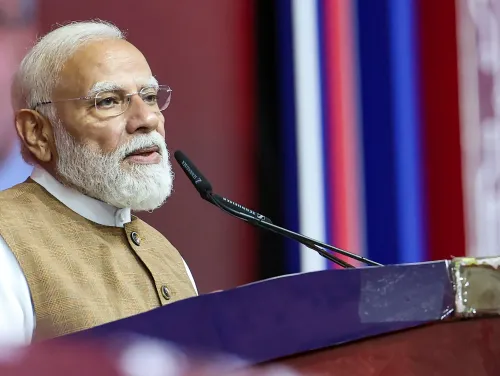
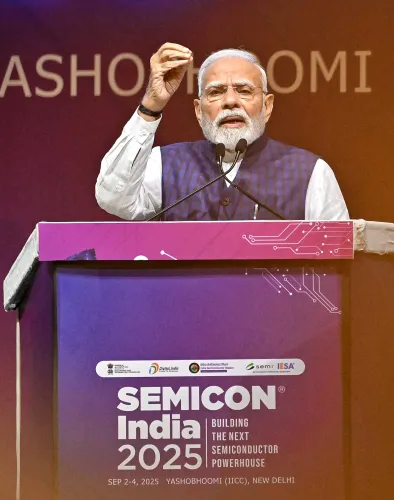
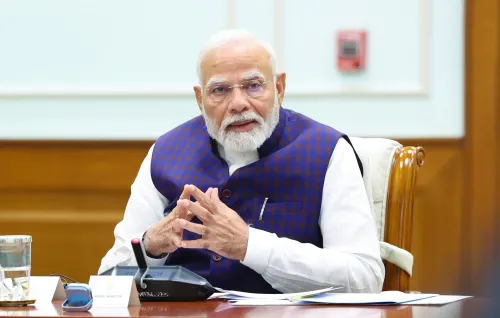
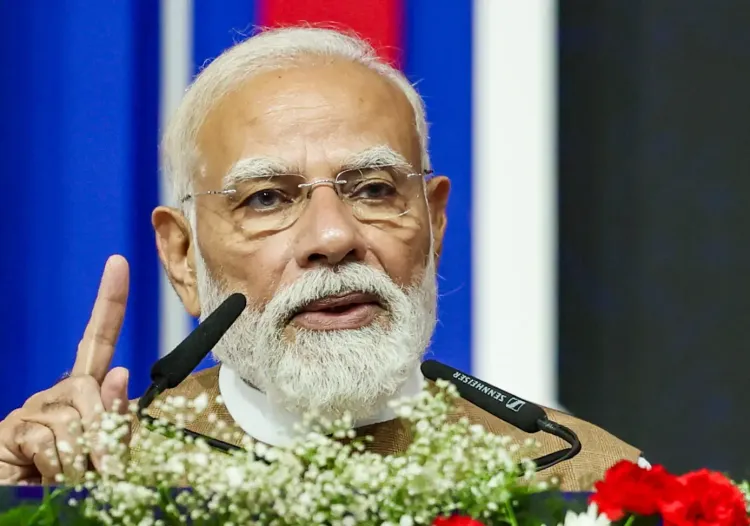
Sanand, March 31 (NationPress) Prime Minister Narendra Modi stated on Tuesday that the global crises experienced in recent years have caused significant disruptions in supply chains. He underscored the importance of establishing secure and resilient frameworks, particularly in vital sectors like semiconductors, energy, and minerals.
Speaking at the inauguration of Kaynes Semicon's OSAT facility in Sanand, the Prime Minister pointed out that the 21st century has introduced numerous challenges, including the pandemic and ongoing geopolitical conflicts, which have adversely affected the global flow of goods and raw materials.
“From chips to rare earth minerals and energy, all industries have faced setbacks due to these conflicts,” he remarked, highlighting that such disruptions are intertwined with the rapid advancement of human society.
“Disruptions in supply chains can jeopardize the progress of humanity,” emphasized PM Modi, noting the critical need for India to assume a leadership role in ensuring continuity and resilience in these essential sectors.
He reminisced about India's strategic move during the Covid-19 pandemic to bolster self-reliance and position itself as a global leader in semiconductors, while also advancing in areas like artificial intelligence, clean energy, electric vehicles, defense, and electronics.
Referring to policy initiatives, the Prime Minister mentioned that the India Semiconductor Mission, launched in 2021, symbolizes India's aspirations and confidence.
“This initiative is not merely an industrial policy; it is a declaration of India's self-assurance. Its effects are evident to all,” he stated.
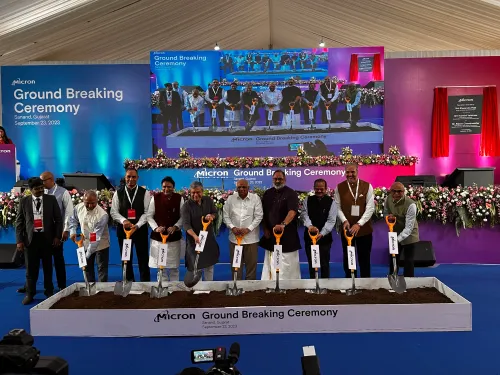
This mission encompasses 10 semiconductor projects worth ₹1.6 lakh crore across six states, including initiatives by Kaynes Semicon and Micron Technology.
PM Modi also announced that the forthcoming phase, India Semiconductor Mission 2.0, revealed in this year’s Union Budget, will prioritize the domestic production of semiconductor materials and equipment, aimed at establishing a comprehensive semiconductor ecosystem within the country.
The Prime Minister further highlighted the importance of global collaborations to fortify supply chains, mentioning India's involvement in Pax Silica.
“To achieve self-sufficiency in critical minerals, India has launched the National Critical Minerals Mission, which concentrates on the mining and production of these essential resources,” he remarked.
Additionally, a ₹1,500 crore scheme has been initiated for mineral recycling, alongside a rare earth corridor that will span Odisha, Andhra Pradesh, Tamil Nadu, and Kerala, integrating mining, refining, and manufacturing sectors.
PM Modi stated that India is in the process of creating a national repository for critical minerals and is advancing these initiatives in a mission-driven manner.
“It would have been advantageous if this work had commenced 30–40 years ago, but now India is advancing with a mission-oriented approach. This decade belongs to India,” he concluded.
Point of View
It is crucial to recognize the significance of PM Modi's statements on supply chains and semiconductor ecosystems. His emphasis on resilience and self-reliance speaks to a broader trend in global economics and technological advancement. India's proactive measures underscore a nation-first approach aimed at securing its place in the global market.
NationPress
1 Oct 2026
Frequently Asked Questions
What are the key sectors affected by supply chain disruptions?
The key sectors affected include semiconductors, energy, and minerals, which are critical for various industries.
What is the India Semiconductor Mission?
Launched in 2021, the India Semiconductor Mission aims to establish India as a global hub for semiconductor manufacturing and innovation.
How much investment is being made in semiconductor projects?
Currently, 10 semiconductor projects worth ₹1.6 lakh crore are underway across six states in India.
What is the focus of India Semiconductor Mission 2.0?
India Semiconductor Mission 2.0 will focus on the domestic production of semiconductor materials and equipment.
What initiatives are being taken for critical minerals?
The National Critical Minerals Mission has been launched to enhance the mining and production of essential minerals in India.