Has PM Modi Launched a Groundbreaking Rural Employment Scheme?
Synopsis
Under the stewardship of Prime Minister Modi, the NDA government has unveiled a revolutionary rural employment scheme. This initiative, the VB–G RAM G Act, promises to link employment directly with rural development, ensuring a holistic approach to uplift rural India. Discover how this scheme contrasts with past efforts and its potential impact on the communities.
Key Takeaways
VB–G RAM G Act offers a legal guarantee of 125 days of employment.
Employment is directly linked to village development projects .
Utilizes technology for monitoring and accountability.
Favorable funding ratio for Himalayan states .
Significant increase in employment generation compared to previous governments.
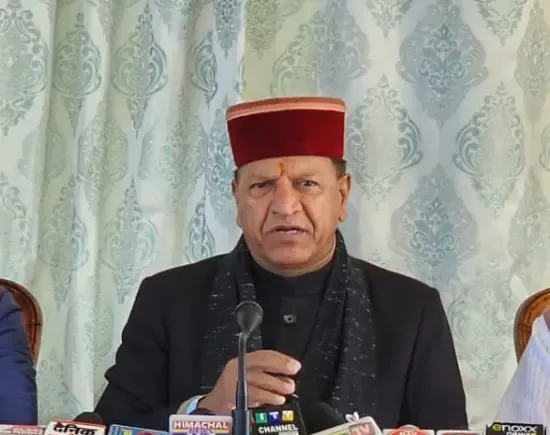
Shimla, January 7 (NationPress) The President of Himachal Pradesh BJP, Rajeev Bindal, stated on Wednesday that under the guidance of Prime Minister Narendra Modi, the NDA government has initiated a groundbreaking and timely rural employment initiative nationwide.
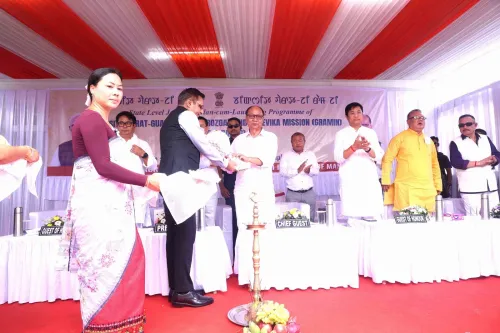
“The Viksit Bharat Guarantee for Employment and Livelihood Mission (VB–G RAM G Act) aims to introduce a transformative approach for rural India. This program goes beyond merely offering jobs; it is designed to establish a robust and results-driven framework that directly connects employment with rural development,” Bindal explained to reporters here.
He noted that since Independence, various administrations have introduced multiple programs targeted at rural employment.
“Starting from the Rural Manpower Programme (1960-61) to the Mahatma Gandhi National Rural Employment Guarantee Act (MGNREGA) in 2005, many initiatives have been rolled out. MGNREGA is set to continue from 2005 until 2025. However, considering the evolving socio-economic landscape, the accumulated experiences, and existing challenges, there arose a compelling need for a new, more impactful and development-centric scheme. This need paved the way for the launch of the VB–G RAM G Act.
Bindal clarified that while MGNREGA assured 100 days of employment, the actual average employment provided was merely 50.4 days.
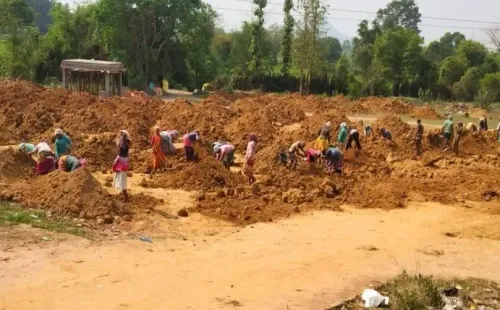
“In contrast, the VB–G RAM G scheme offers a legal guarantee of 125 days of employment, directly tied to development projects. Under this initiative, a village development plan will be crafted at the Gram Sabha level, progressed through block and district levels, and integrated with the PM Gati Shakti platform. Employment opportunities will be generated to implement this development plan, ensuring the comprehensive development of villages,” he elaborated.
Bindal emphasized that a significant advantage of this scheme is its complete reliance on technology. “Its features include biometric attendance, digital multi-level monitoring, a six-month review system, and clearly defined time-bound payments. If employment or payment is delayed, there is a provision for compensation to the beneficiaries, ensuring accountability,” he mentioned.
According to him, the Congress party is attempting to create confusion regarding the scheme's funding mechanism, while the reality is that for Himalayan states like Himachal Pradesh, the Centre-state funding ratio is established at 90:10, which is extremely advantageous for the state. For other states, the ratio stands at 60:40. The Centre has made this arrangement considering the distinct geographical challenges faced by different states.
In a comparative analysis, Bindal pointed out that the Congress-led UPA government allocated Rs 2.13 lakh crore to MGNREGA from 2006 to 2014, while the NDA government has invested over Rs 8.53 lakh crore from 2014 to 2025. In terms of employment generation, 1,660 million mandays were generated during the UPA era, whereas 3,210 million mandays have been created under the Modi administration. The number of completed projects was 153 lakh during the UPA period, which surged to 862 lakh during the NDA tenure, clearly demonstrating the commitment of the BJP government.
Point of View
I believe the launch of the VB–G RAM G Act marks a pivotal moment in rural employment policy. It reflects the government's commitment to not just provide jobs, but to integrate employment with essential development projects, ensuring sustainable growth for rural communities across India.
NationPress
18 Oct 2026
Frequently Asked Questions
What is the VB–G RAM G Act?
The VB–G RAM G Act, or Viksit Bharat Guarantee for Employment and Livelihood Mission, is a new rural employment initiative launched by the NDA government under Prime Minister Modi, providing a legal guarantee of 125 days of employment linked to development projects.
How does this scheme differ from MGNREGA?
While MGNREGA guaranteed 100 days of employment, the VB–G RAM G scheme guarantees 125 days and directly connects employment with village development projects, making it more effective.
What technology will be used in the VB–G RAM G scheme?
The scheme will utilize biometric attendance, digital monitoring, and a review mechanism to ensure timely payments and accountability for employment.
What is the funding ratio for Himachal Pradesh?
For Himalayan states like Himachal Pradesh, the Centre-state funding ratio is set at 90:10, making it highly beneficial for the state.
How has employment generation changed under the NDA government?
Under the NDA government, 3,210 million mandays of employment have been created, compared to 1,660 million mandays during the UPA period, showcasing significant progress.