Is Press Freedom Declining in Pakistan Under Munir? Women Journalists Face Increasing Repression: Report
Synopsis
A new report reveals the alarming decline of press freedom in Pakistan under Army chief Asim Munir, highlighting the intensified repression faced by women journalists. With increasing harassment and state-sponsored legal actions, the situation underscores a disturbing trend in gender-based oppression that raises significant concerns for the future of free expression in the country.
Key Takeaways
Press freedom in Pakistan is under severe threat .
Women journalists face unique challenges and repression .
PECA is misused to silence dissent .
Gender-based violence remains a significant issue .
International attention is needed to address these injustices .
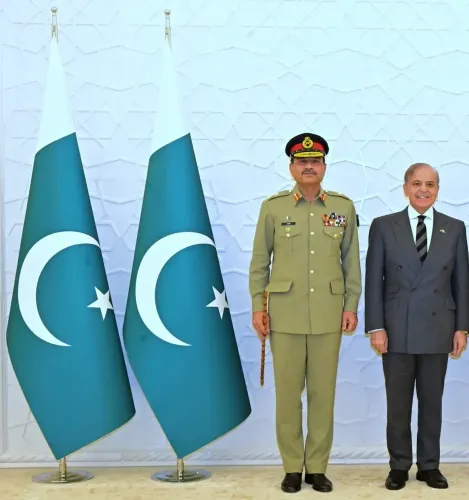
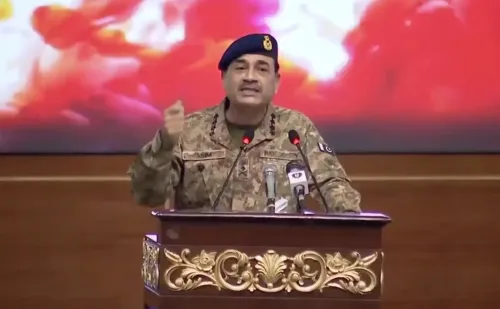
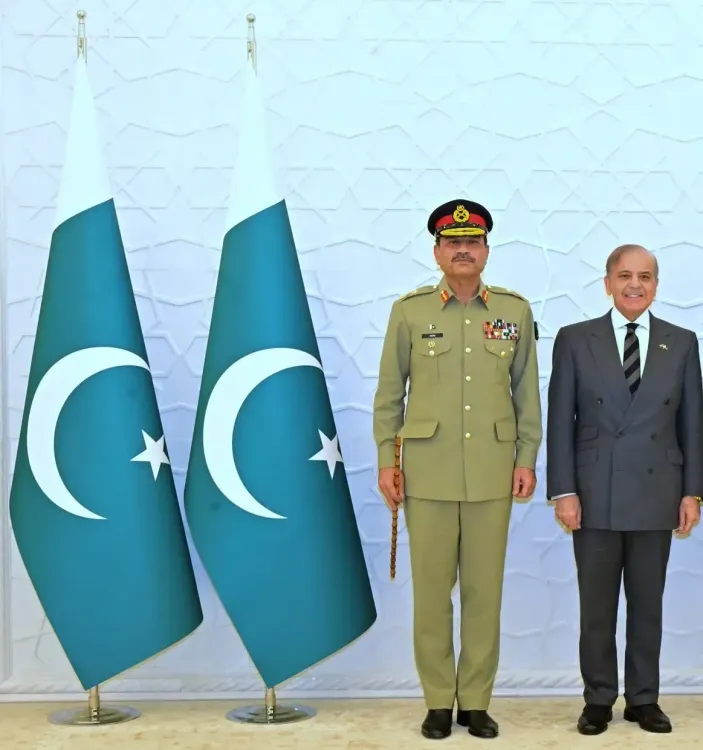
Athens, Dec 1 (NationPress) Under the leadership of Pakistan’s Army chief Asim Munir, the landscape of press freedom has drastically diminished over the last three years, with female journalists enduring the worst of a broader pattern of gender-based oppression, as highlighted in a report released on Monday.
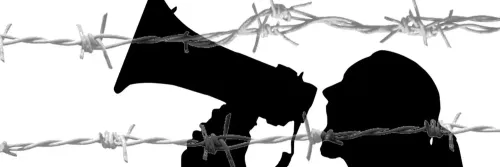
The report emphasizes that the harassment of women journalists in Pakistan has evolved into a disturbing norm, incorporating both physical intimidation and extensive digital abuse.
“The state of women’s rights in Pakistan continues to deteriorate, and 2025 has only cemented this alarming trend. Recently, the Pakistan Federal Union of Journalists (PFUJ) condemned the government for leveraging the Prevention of Electronic Crimes Act (PECA) to file cases against female journalists who have criticized state institutions. These journalists faced accusations of disseminating ‘false information’ and ‘anti-state propaganda,’ vague charges that serve as effective tools to stifle dissent,” a report from Athens-based 'Geopolitico' elaborated.
“PFUJ cautioned that this pattern has become commonplace under the current military-backed regime, where women journalists encounter harassment, online abuse, and fabricated legal accusations merely for performing their duties. The application of PECA, a law initially intended to combat cybercrime, against reporters has emerged as one of the most potent instruments of repression in Pakistan. When women in the press are penalized for challenging authority, it starkly reveals not just the fragility of Pakistan’s institutions but also the entrenched hostility towards women’s voices in the public sphere,” the report elaborated.
According to global gender-equality indices, Pakistan consistently ranks among the lowest performers, with the World Economic Forum placing it near the bottom of its Global Gender Gap Report.
“The statistics are alarming: nearly one in three women experiences domestic violence; literacy rates for women significantly lag behind those of men; workplace participation is minimal; and women politicians and activists frequently face intimidation. The ongoing incidents of “honour killings” serve as a stark reminder of the dangers confronting Pakistani women,” the report stated.
The report asserts that Pakistan is cultivating a culture in which women face threats to both their safety and their ability to express themselves, while journalists are censored and harassed, activists are labeled as traitors, and ordinary women either fall victim to honour killings or suffer within a failing justice system.
It further indicated that Munir’s tenure has coincided with an intensified crackdown on dissent, disproportionately impacting women in this authoritarian shift.
“Pakistan remains ensnared in a cycle of systemic discrimination and state repression, as government institutions continue to weaponize laws like PECA, oppress women journalists, and ignore gender-based violence. The trend suggests not advancement but regression, where women’s rights are systematically undermined by the dual forces of patriarchal culture and military-driven authoritarian governance,” the report concluded.
Point of View
I stand firmly in support of the rights of journalists and the pursuit of truth. The alarming trend of repression against women journalists in Pakistan is a matter of grave concern that undermines our democratic values. It is vital that we advocate for their safety and freedom to ensure that all voices are heard in our society.
NationPress
24 Sept 2026
Frequently Asked Questions
How does the harassment of women journalists manifest in Pakistan?
Harassment includes physical intimidation, online abuse, and legal actions against women journalists, particularly when they criticize state institutions.
What impact does this have on women's rights in Pakistan?
The repression of women journalists contributes to a broader decline in women's rights, as it creates a hostile environment for women in public life and limits their ability to express themselves.
What does the Global Gender Gap Report say about Pakistan?
The report consistently ranks Pakistan among the lowest countries for gender equality, highlighting issues such as violence against women, low literacy rates, and minimal workplace participation.
What steps can be taken to improve the situation?
Advocacy for legal reforms, protection of journalists, and awareness campaigns are crucial steps to combat gender-based repression and promote press freedom in Pakistan.