Punjab deploys e-rickshaws in 3,440 villages to fight drug abuse
Synopsis
Punjab is fighting its drug crisis one village at a time — literally. The Mann government's e-rickshaws are now rolling through 3,440 villages across 23 districts, collecting anonymous drug tips and building community dialogue. It is a low-tech, high-reach bet on grassroots mobilisation, and the June review cycle will reveal whether it is moving the needle.
Key Takeaways
Punjab's 'Yudh Nashean Virudh' campaign has deployed e-rickshaws across 3,440 villages — roughly one-third of the state's total hamlets.
The pilot covers 23 districts , with one Assembly segment per district and one e-rickshaw covering 40 villages per segment.
E-rickshaws spread anti-drug awareness and collect anonymous tips on drug peddlers and those needing de-addiction support.
Village Defence Committees (VDCs) are monitoring effectiveness and reporting increased public engagement and participation.
A structured four-week review in June will culminate in Chief Minister Bhagwant Mann personally assessing campaign progress and setting the road map ahead.
Health Minister Balbir Singh credited the initiative with turning the government programme into a 'people's movement'.
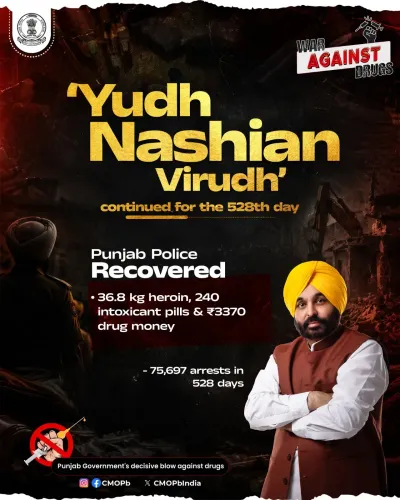
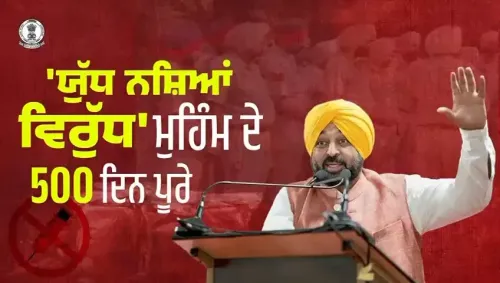
The Punjab government's anti-drug campaign 'Yudh Nashean Virudh', led by Chief Minister Bhagwant Mann, is reaching the state's remotest hamlets through a fleet of specially-designated e-rickshaws that travel village to village spreading awareness and collecting anonymous tips on drug peddlers. The initiative, already active across 3,440 villages — roughly one-third of all villages in Punjab — marks a deliberate pivot from conventional outreach to community-level mobilisation.
How the E-Rickshaw Initiative Works
Under the pilot project, one Assembly segment has been selected in each of 23 districts across Punjab, with one e-rickshaw assigned to cover 40 villages per segment. In total, the vehicles are operational across 86 Assembly segments of the border state. Each unit is tasked not only with broadcasting anti-drug messaging but also with informing residents about rehabilitation avenues and enabling them to report drug-related concerns anonymously.
The e-rickshaws are specifically designed to penetrate communities that are difficult to reach through mainstream awareness channels — a critical gap in a state where drug abuse has historically been concentrated in rural and semi-urban pockets.
Village Defence Committees Drive Feedback Loop
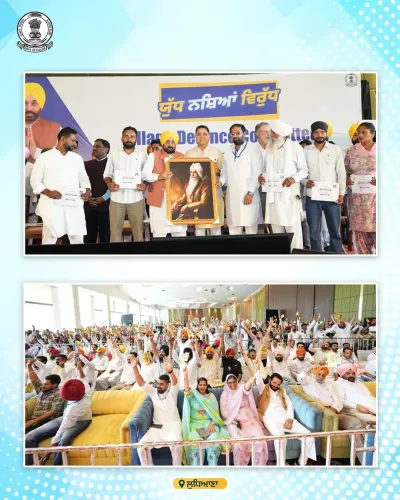
Village Defence Committees (VDCs), established at the grassroots level, are central to monitoring the campaign's effectiveness. According to feedback received from several districts, VDC members have reported increased public engagement in awareness programmes, higher participation in village-level meetings, and improved communication between residents and local authorities on drug-related concerns.
This feedback is feeding into a structured review mechanism scheduled across June 2025. Assembly segment-level meetings in the first week will be attended by local MLAs, government functionaries, and VDC conveners. The second week will see block-level VDC meetings reviewing earlier complaints and evaluating new ones. By the third week, Punjab government ministers alongside civil and police administration will assess the status of registered complaints. In the final week, Chief Minister Mann himself will review overall campaign progress, address escalated complaints, and chart the road map ahead.
What the Government Said
Health Minister Balbir Singh described the initiative as a milestone for the Aam Aadmi Party (AAP) government's outreach strategy. “The e-rickshaw campaign is another feather in the Mann government’s cap. In addition to collecting tip-offs from the community in a safe and anonymous manner, the e-rickshaws are also helping in initiating dialogue at the community level about the social and financial consequences of drug addiction and how to get rid of it,” he said.
Singh added: “Local residents have shown keen interest in the outreach activities conducted through these mobile units, turning the government’s ‘Yudh Nashean Virudh’ initiative into a people’s movement.”
Significance for Punjab's Anti-Drug Effort
Punjab has long grappled with one of India’s most acute drug abuse crises, particularly in districts bordering Pakistan. The e-rickshaw model is notable for its dual function: it delivers outreach while simultaneously building an intelligence network through anonymous community tips. This comes amid broader state-level efforts that include de-addiction centres, police crackdowns, and school-level awareness drives. The June review cycle, culminating in a Chief Minister-level assessment, signals that the government intends to treat this as an accountability-driven programme rather than a one-time publicity exercise.
Whether the pilot’s reach can be scaled beyond the current 23 districts and 3,440 villages to cover all of Punjab’s roughly 12,000-plus villages will be the defining test of the initiative’s long-term impact.
Point of View
440 villages is a headline number; what matters is how many actionable tips led to arrests, and how many referrals converted to completed de-addiction. The four-week June review cycle, if genuinely data-driven rather than ceremonial, could set a replicable template. If it is not, this risks becoming another well-photographed outreach drive that does not dent Punjab's structural drug problem.
NationPress
16 Sept 2026
Frequently Asked Questions
What is Punjab's 'Yudh Nashean Virudh' e-rickshaw campaign?
It is a grassroots anti-drug initiative by the Bhagwant Mann-led Punjab government that deploys specially-designated e-rickshaws across villages to spread awareness about drug abuse and collect anonymous tips on drug peddlers. The pilot currently covers 3,440 villages across 23 districts.
How many villages does the e-rickshaw campaign cover?
The initiative is active across 3,440 villages in Punjab, which is roughly one-third of all villages in the state. Each e-rickshaw is assigned to cover 40 villages within a designated Assembly segment.
What role do Village Defence Committees play in this campaign?
Village Defence Committees (VDCs) monitor the campaign's effectiveness at the grassroots level and provide feedback to the government. Members have reported increased public engagement, higher village-meeting attendance, and better communication between residents and authorities on drug concerns.
What is the review schedule for the campaign in June?
A four-week review cycle runs through June: the first week involves MLA-led Assembly segment meetings; the second week focuses on block-level VDC reviews; the third week sees ministers and the civil-police administration assess complaints; and in the final week, Chief Minister Bhagwant Mann reviews overall progress and sets the future road map.
Why is Punjab using e-rickshaws specifically for anti-drug outreach?
E-rickshaws can reach rural and semi-urban communities that are difficult to access through conventional awareness channels. They also enable residents to report drug-related concerns anonymously — a key feature in areas where fear of reprisal may deter open reporting.