Qatar Strongly Denies Iran's Missile Claims and Issues Warning
Synopsis
In a recent statement, Qatar's Prime Minister categorically rejected Iran's claims regarding missile strikes, emphasizing evidence to the contrary. The escalating tensions raise serious concerns about regional stability and global energy security.
Key Takeaways
Qatar rejects Iran's missile attack claims .
Evidence suggests strikes targeted civilian areas .
Prime Minister warns of potential responses .
Escalation linked to U.S.-Iran military tensions .
Global oil security concerns rise amid conflict .
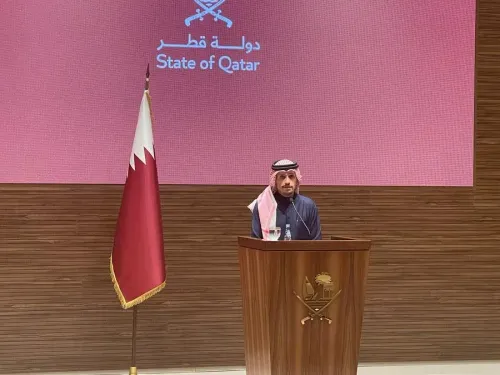
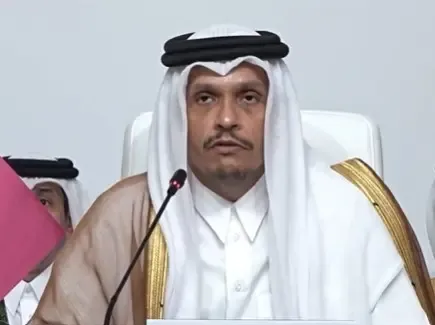
Doha, March 4 (NationPress) Qatar's Prime Minister and Minister of Foreign Affairs, Sheikh Mohammed bin Abdulrahman bin Jassim Al-Thani, has categorically dismissed Iran's assertion that the recent missile strikes were not aimed at Qatar, asserting that evidence from the ground tells a different story.
This response came during a phone conversation on Wednesday between the Prime Minister and Iran's Foreign Minister, Abbas Araghchi.
As reported by Qatar's Ministry of Foreign Affairs, Araghchi claimed that the missile attacks were directed at American interests and did not target Qatar.
Sheikh Mohammed countered this narrative by highlighting that civilian and residential zones in Qatar were indeed hit.
He pointed out that the areas affected included the vicinity surrounding Hamad International Airport, significant infrastructure, industrial zones, and facilities linked to liquefied natural gas production.
Sheikh Mohammed characterized the strikes as a “blatant violation” of Qatar's sovereignty and international law. He noted that the assaults involved not just missiles but also persistent drone operations and unauthorized aircraft, which were intercepted by Qatari military forces.
He remarked that these Iranian maneuvers reflect a “provocative approach” and indicate a lack of genuine intent to de-escalate or find solutions. He accused Tehran of trying to undermine its neighbors and drag them into a conflict that does not concern them.
The Prime Minister called for an immediate halt to attacks on regional nations seeking to remain uninvolved in the conflict, urging all parties to put the broader interests of their citizens first.
He stressed that while Qatar advocates for dialogue and diplomacy, it will take action in response to any infringement upon its sovereignty, security, or territorial integrity.
He warned that such aggressions would not go unanswered, emphasizing Qatar's right to self-defense as outlined in Article 51 of the UN Charter.
The escalation commenced on February 28, when the United States and Israel executed coordinated military operations against Iran, dubbed “Operation Epic Fury,” leading to the deaths of Iran's Supreme Leader Ayatollah Ali Khamenei and various senior commanders.
Washington stated that the strikes were a preemptive measure to weaken Iran's nuclear and missile capabilities after diplomatic discussions in Geneva fell short. U.S. envoy Steve Witkoff mentioned that Tehran had turned down a proposal to dismantle its missile program and cease support for proxy groups.
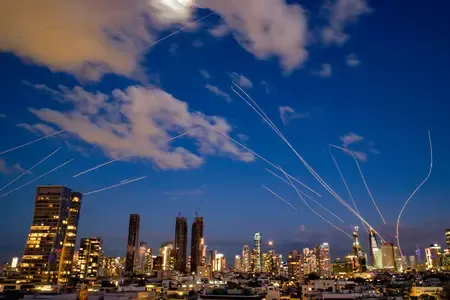
In retaliation, Iran initiated missile and drone attacks on U.S. assets and bases in several Gulf nations, including Kuwait, Qatar, the UAE, and Bahrain.
This situation has directly embroiled several Gulf Arab states hosting significant U.S. military installations, compelling them to navigate sovereignty concerns amid the risk of becoming targets themselves.
The crisis has heightened global anxiety over the Strait of Hormuz, a critical passage for approximately 20 percent of the world's oil, as disruptions to tanker traffic and escalating energy prices ensue.
Point of View
The situation underscores the significance of regional stability. Qatar's firm stance against Iran's claims reflects a broader commitment to safeguarding national sovereignty while advocating for peaceful dialogue.
NationPress
29 Sept 2026
Frequently Asked Questions
What sparked the recent tensions between Qatar and Iran?
The tensions were heightened following missile strikes in the region, with Qatar rejecting Iran's claims that the attacks were not directed at its territory.
What areas in Qatar were affected by the missile strikes?
The missile strikes impacted civilian and residential areas, including the vicinity of Hamad International Airport and infrastructure related to liquefied natural gas production.
How has Qatar responded to these acts?
Qatar's Prime Minister has condemned the attacks as violations of sovereignty and emphasized the country's right to self-defense.
What was the international context of the missile strikes?
The strikes followed U.S. and Israeli military operations against Iran, aimed at degrading its nuclear and missile capabilities.
What implications does this crisis have for global oil markets?
The crisis raises concerns over the Strait of Hormuz, a vital route for oil transport, potentially impacting global energy prices.