Did Vice President Radhakrishnan Honor Rani Velu Nachiyar and Visit a Temple in Tamil Nadu?
Synopsis
Vice President C. P. Radhakrishnan's recent visit to Tamil Nadu not only honored Rani Velu Nachiyar's legacy but also emphasized the significance of linguistic diversity in India's democratic framework. His efforts to enhance accessibility to the Constitution showcase a commitment to cultural continuity.
Key Takeaways
Vice President Radhakrishnan honors historical figures like Rani Velu Nachiyar.
Promotes constitutional accessibility through regional languages .
Highlights the importance of mother tongues in cultural identity.
Engages with descendants of significant historical figures.
Supports the idea of a Viksit Bharat .
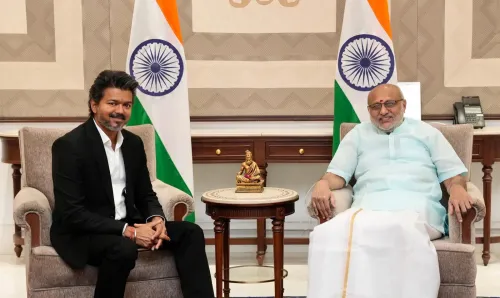
Chennai, Feb 22 (NationPress) Vice President C. P. Radhakrishnan on Sunday honored Veeramangai Rani Velu Nachiyar in Sivaganga, Tamil Nadu, as per official reports.
The Vice President remarked that the courage and sacrifices of Rani Velu Nachiyar are celebrated nationwide.
He emphasized that her life and legacy will serve as an inspiration for the nation’s progress towards a Viksit Bharat.
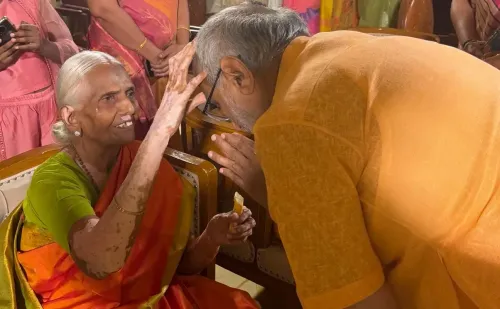
Moreover, he engaged with the descendants of Veeramangai Rani Velu Nachiyar.
In a separate event, he paid floral tributes to Raja Muthu Vijaya Raghunatha Sasivarna Periya Udaya Thevar at Sivaganga Palace.
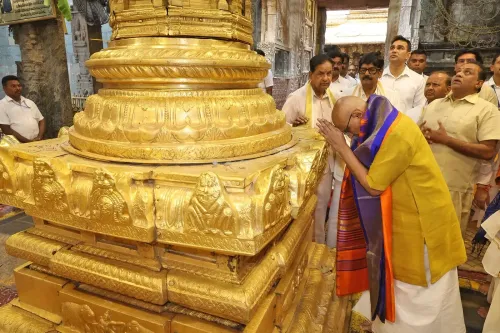
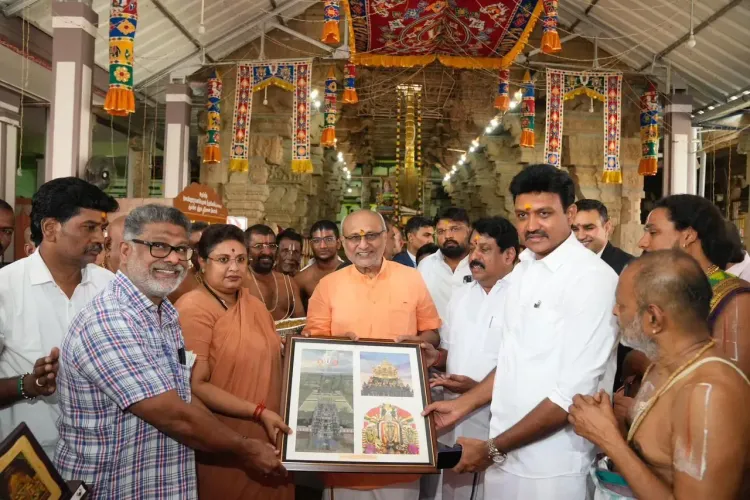
Radhakrishnan also visited the Sowmyanarayana Perumal Temple in Thirukoshtiyur, Sivaganga, offering prayers for peace, prosperity, and the welfare of all, according to a statement on social media.
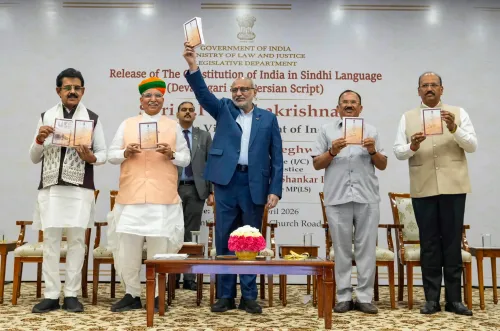
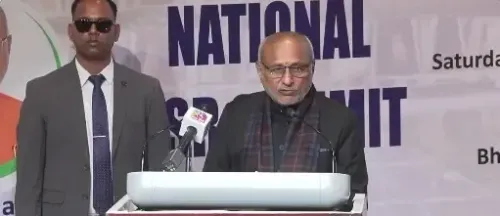
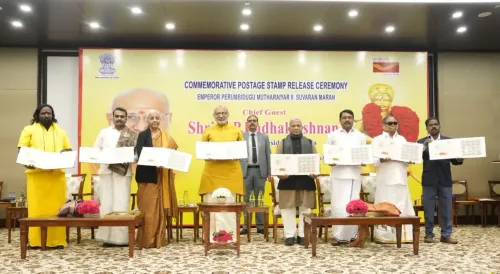
On the previous day, coinciding with International Mother Language Day, Vice President Radhakrishnan unveiled updated versions of the Constitution of India in Tamil and Gujarati, along with the eighth edition of the Legal Glossary (English–Hindi).
He described Tamil as one of the world's most ancient classical languages, rich in literary heritage, and Gujarati as a language with deep cultural and philosophical roots. He noted that this initiative aims to bring the Constitution closer to the people in their native languages, thereby enhancing democratic participation and awareness.
The Vice President commended the Ministry of Law and Justice for the significant efforts made in producing these translations, which improve accessibility for citizens across the nation, as stated on social media.
He expressed great pleasure in releasing these updated versions on International Mother Language Day, highlighting the importance of mother tongues in shaping identity, thought, and cultural continuity.
Pointing out India’s linguistic diversity, Radhakrishnan remarked that every language, from Tamil to Kashmiri, Gujarati to Assamese, embodies centuries of heritage.
He noted that the Constitution of India acknowledges this diversity and celebrates multilingualism as a national strength.
He emphasized that there is no other country in the world where the Constitution is available in such an array of languages.
Point of View
Vice President Radhakrishnan's actions reflect a deep commitment to honoring historical figures and promoting linguistic diversity. This approach not only acknowledges India's rich heritage but also aims to foster a more inclusive society. The celebration of Rani Velu Nachiyar's legacy resonates with the nation's broader goals of unity and progress.
NationPress
29 Sept 2026
Frequently Asked Questions
Who did Vice President Radhakrishnan pay tribute to?
Vice President Radhakrishnan paid tribute to Veeramangai Rani Velu Nachiyar in Sivaganga, Tamil Nadu.
What was the significance of the visit to the Sowmyanarayana Perumal Temple?
The visit involved offering prayers for peace, prosperity, and the well-being of all.
What was released on International Mother Language Day?
Updated versions of the Constitution in Tamil and Gujarati were released, along with the eighth edition of the Legal Glossary .
Why is the release of the Constitution in multiple languages important?
It enhances accessibility and promotes democratic participation among diverse linguistic communities.
How does Radhakrishnan view India's linguistic diversity?
He sees it as a strength that enriches the nation's cultural identity and heritage.