How does Rahul Gandhi support workers and farmers during Bharat Bandh?
Synopsis
As nationwide protests unfold against the government's labour and economic policies, Rahul Gandhi's unwavering support for workers and farmers highlights critical concerns about rights and livelihoods. With farmers and laborers uniting for their voices to be heard, this movement could mark a decisive moment in India's socio-political landscape.
Key Takeaways
Rahul Gandhi shows solidarity with protesting workers and farmers.
Concerns over labour codes and international trade agreements persist.
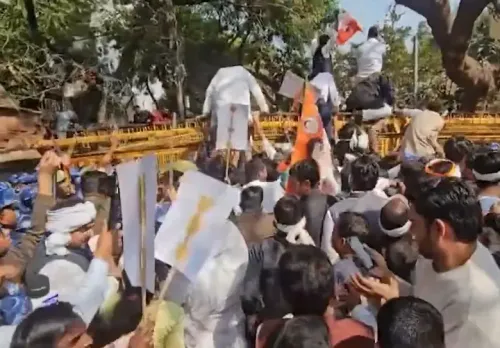
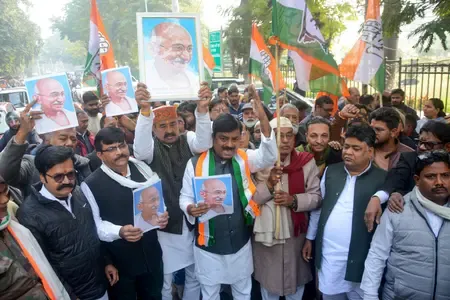
Protests are organized nationwide, indicating widespread discontent.
Key demands include the withdrawal of new labour codes and protections for agriculture.
MNREGA is viewed as crucial for rural employment stability.
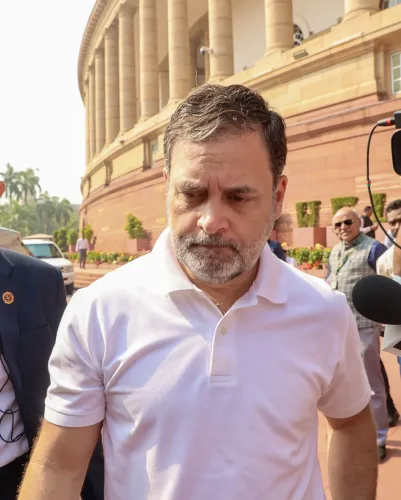
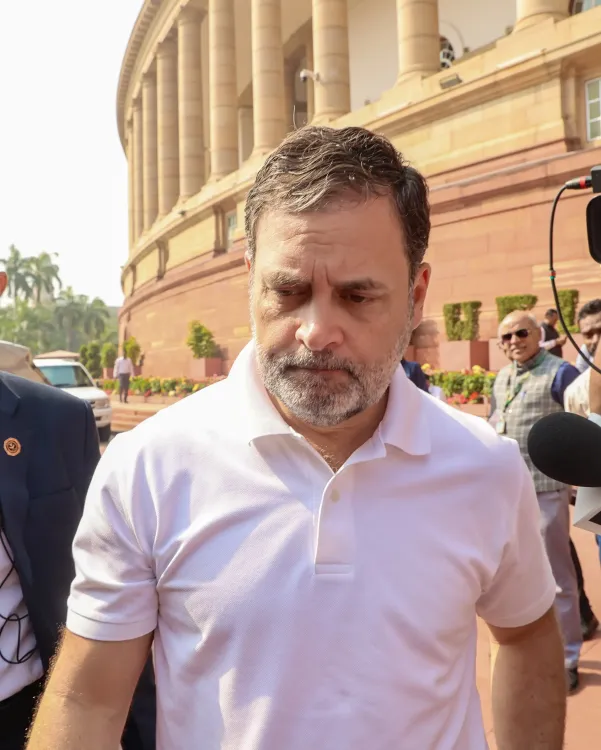
New Delhi, Feb 12 (NationPress) In response to the announcement of nationwide protests by the collective of central trade unions against the government's labour and economic policies, Congress leader Rahul Gandhi expressed his unwavering support on Thursday, affirming his commitment to the issues and challenges faced by workers and farmers.
Gandhi articulated concerns that the four labour codes may erode workers' rights, while farmers are apprehensive that the India-US trade agreement could jeopardize their livelihoods.
In a statement on social media platform X, he remarked, “Today, millions of laborers and farmers across the nation are protesting to assert their rights. Workers are worried that the four labour codes will undermine their entitlements. Farmers are anxious that the trade agreement will adversely affect their means of living.”
He cautioned that any move to dilute or abolish the Mahatma Gandhi National Rural Employment Guarantee Act (MNREGA) could strip villages of their last bastion of support.
“Diminishing or eliminating MNREGA could remove the final lifeline for rural areas. Their voices were overlooked when decisions about their future were made. Will Modiji heed their concerns now? Or is there someone who has a firm control over him? I stand resolutely with the issues and struggles of the workers and farmers,” Gandhi declared.
Farmer unions, represented by the SKM, have initiated nationwide protests, labeling the interim India-US trade framework as a direct threat to Indian agriculture, dairy, and rural livelihoods. They have organized demonstrations nationwide, culminating in a general strike.
The unions argue that the framework contradicts repeated assurances from Commerce Minister Piyush Goyal that agriculture and dairy would remain excluded from Free Trade Agreements (FTAs). They have also expressed concerns regarding terms in other recent FTAs, including those with New Zealand, the European Union (EU), and the UK.
Farmer organizations have further indicated that tariffs on Indian goods entering the US have escalated to 18% compared to the period prior to US President Donald Trump's implementation of reciprocal tariffs.
The unions are urging the government to clarify its position on agriculture and dairy in trade negotiations and to safeguard domestic farmers and rural workers from potential negative consequences.
Meanwhile, Tamil Nadu is poised for disruptions in banking, public services, and segments of transport operations on Thursday as trade unions across the state join the nationwide general strike demanding the Union government to retract critical labour reforms and policy decisions.
This strike, observed across nearly 600 districts nationwide, has been organized by ten central trade unions, including the All India Trade Union Congress (AITUC) and the Centre of Indian Trade Unions (CITU).
Trade union leaders claim that close to 30 crore workers are participating in the protests.
In Tamil Nadu, the ruling DMK's trade union branch, the Workers Progressive Association (WPA), has extended its support for the strike.
Farmer groups, under the Joint Kisan Morcha, along with several student organizations, have also lent their support to the agitation, thereby broadening its base.
The protesters are calling for the retraction of the four new labour codes, alleging that they were enacted without sufficient consultation with state governments and trade unions. Other significant demands include halting amendments to the Electricity Act, ensuring a five-day work week for bank employees, preventing the privatization of public sector undertakings, and opposing changes made to the rural employment guarantee scheme.
The Aam Aadmi Party (AAP) has also voiced support for the nationwide Bharat Bandh, urging all workers, farmers, shopkeepers, small traders, and citizens across Punjab and the nation to make the Bharat Bandh a success in a peaceful manner.
The party emphasized that this bandh transcends any single political entity, focusing on the dignity, justice, and rights of millions of hardworking individuals, reaffirming that the AAP is at the forefront of this struggle.
The AAP condemned the BJP-led Union government's “anti-worker labour policies and anti-farmer economic decisions,” announcing that its members throughout Punjab and the entire country would join the shutdown in solidarity with workers and farmers.
Point of View
The ongoing protests reflect a significant moment in India's socio-economic discourse. As workers and farmers unite for their rights, it is crucial to recognize the implications of government policies on their livelihoods. The collective action signifies a demand for accountability and a call for inclusive dialogue in shaping policies that affect millions.
NationPress
28 Sept 2026
Frequently Asked Questions
What are the main concerns of the protesting workers?
Protesting workers are primarily worried that the four new labour codes will undermine their rights and entitlements, potentially leading to job insecurity.
What do farmers fear regarding the trade agreements?
Farmers fear that the India-US trade agreement could threaten their livelihoods and contradict previous assurances that agriculture would remain protected from Free Trade Agreements.
How many workers are estimated to participate in the protests?
It is estimated that nearly 30 crore workers are participating in the nationwide protests organized by various trade unions.
What are the demands of the protesting farmers and workers?
The protesters are demanding the withdrawal of the four new labour codes, a halt to amendments in the Electricity Act, and an assurance of a five-day work week for bank employees, among other issues.
What is the significance of MNREGA in this context?
The Mahatma Gandhi National Rural Employment Guarantee Act (MNREGA) is seen as a vital support system for rural areas, and any weakening or elimination of this act could adversely affect the livelihoods of villagers.