Indian Railways diesel use drops 63% as electrification hits 99.6%: Amit Shah
Synopsis
Indian Railways has slashed diesel consumption by 185 crore litres in under a decade and pushed electrification to 99.6% — second only to Switzerland globally. Home Minister Amit Shah, speaking in Ahmedabad, set 'zero diesel' as the final target, framing the transformation as one of the Modi government's most measurable infrastructure achievements.
Key Takeaways
Indian Railways diesel consumption fell from 293 crore litres in 2015-16 to 108 crore litres in 2024-25 — a drop of 185 crore litres .
Annual electrification pace rose from 75 km in 2010-11 to 7,188 km in 2023-24 .
India's railway electrification stands at 99.6 per cent , second globally after Switzerland at 100 per cent.
Railway safety budget and locomotive production capacity rose by 67 per cent and 66 per cent respectively.
Gujarat's annual railway allocation grew from ₹589 crore (2009-14 average) to ₹17,366 crore for 2026-27 , according to Shah.
The government's stated target is to bring diesel use for traction down to zero .
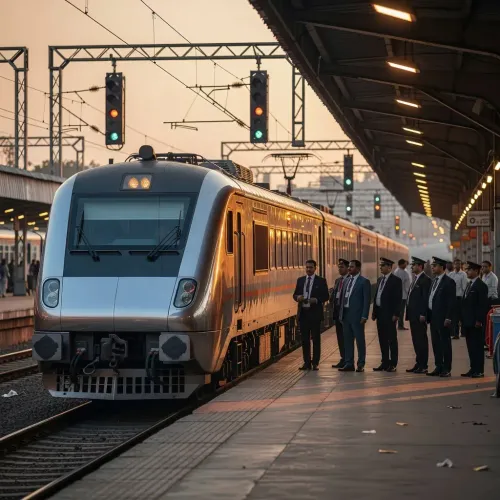
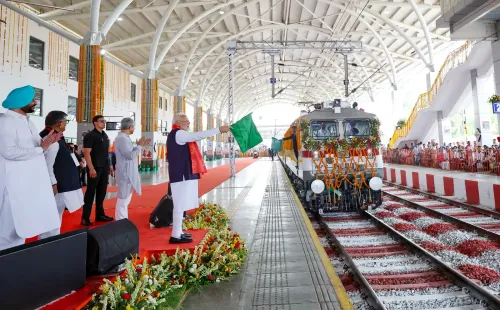
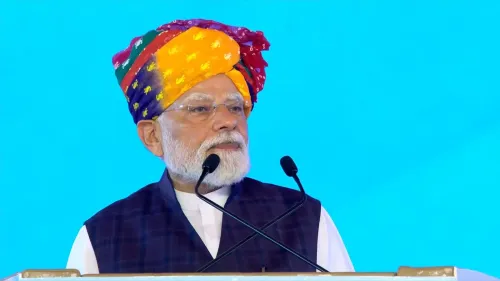
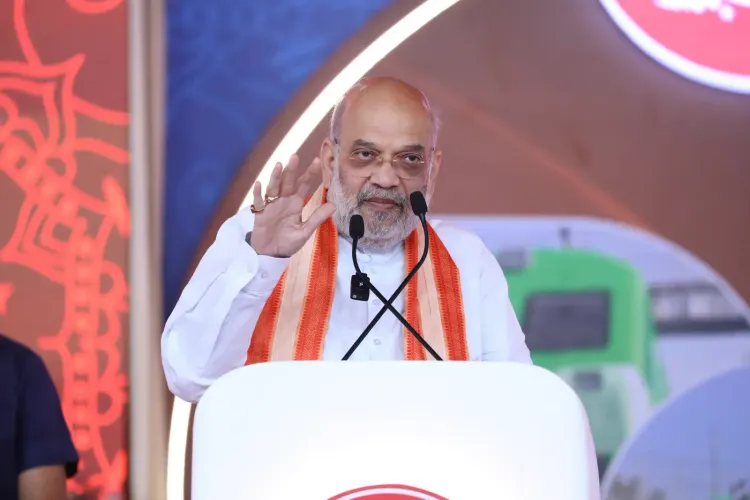
Union Home Minister Amit Shah on Sunday, 27 September 2026, highlighted a dramatic reduction in diesel consumption by Indian Railways, saying it had fallen from 293 crore litres in 2015-16 to 108 crore litres in 2024-25 — a decline of 185 crore litres — as railway electrification across the country approaches near-total coverage. Speaking at a railway programme in Sabarmati, Ahmedabad, Shah attributed the transformation to the Modi government's emphasis on electrification, indigenous manufacturing, and infrastructure investment since 2014.
Key Developments on Electrification
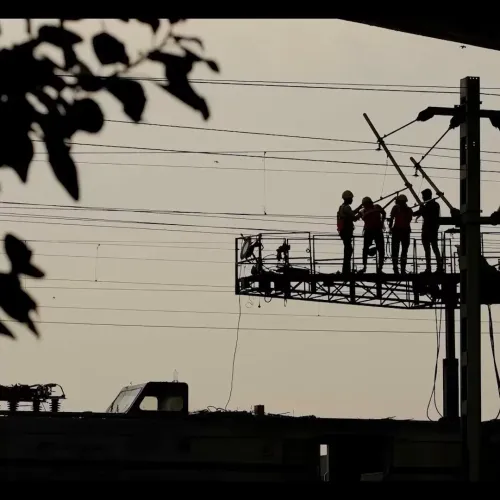
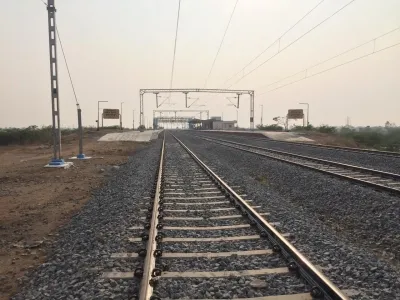
Shah said the eventual target is to bring diesel use for traction down to 'zero'. The pace of electrification has accelerated sharply: only around 75 km of track was electrified annually in 2010-11, compared with 7,188 km in 2023-24 — a nearly 96-fold increase in annual electrification pace. According to Railway Ministry data, India's electrification level now stands at 99.6 per cent, placing it second globally after Switzerland at 100 per cent, and ahead of China at 82 per cent, Spain at 67 per cent, France at 60 per cent, and the United Kingdom at 39 per cent.
Safety, Production and Modernisation Figures
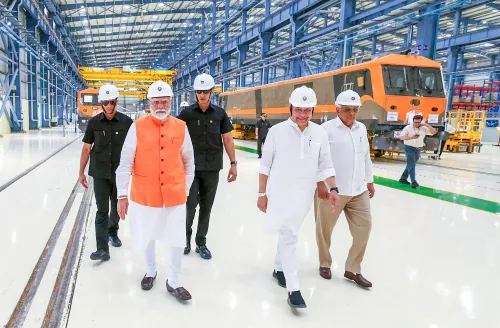
The Home Minister also cited improvements in railway safety and manufacturing capacity. He said the railway safety budget had risen by 67 per cent and locomotive production capacity had grown by 66 per cent. Shah further claimed that 97 per cent of bio-toilet installations and 87 per cent of LHB coach production had taken place during the tenure of the Modi government, underscoring a shift in both passenger safety standards and rolling-stock quality.
Gujarat's Railway Investment Surge
Shah specifically highlighted the growth in railway investment for his home state of Gujarat. The state received an average of ₹589 crore annually during the 2009-14 period under the previous government, compared with a railway allocation of ₹17,366 crore for 2026-27 — a more than 29-fold increase, according to Shah's remarks. This figure has not been independently verified and is attributed to the Home Minister's statement.
Context and Broader Significance
The figures cited by Shah are broadly consistent with data released by the Railway Ministry, which confirms the 185 crore litre reduction in diesel consumption for traction between 2015-16 and 2024-25, attributed primarily to the expansion of electric traction. This comes amid India's broader push to decarbonise its public transport infrastructure ahead of its net-zero targets. Notably, Indian Railways is one of the world's largest rail networks by route length and among the largest consumers of energy in India's public sector — making the electrification milestone strategically significant beyond operational efficiency alone. The reduction in diesel dependency also carries implications for India's import bill, given that diesel is an internationally traded commodity.
With electrification at 99.6 per cent, the focus is expected to shift toward energy source mix — specifically, whether the electricity powering these trains comes from renewable sources — as the next frontier in the network's green transition.
Point of View
And the pace acceleration — from 75 km to 7,188 km annually — is one of the more verifiable infrastructure transformations of the last decade. But the harder question, which Shah did not address, is what powers that electricity: if the grid supplying traction energy remains coal-heavy, swapping diesel locomotives for electric ones shifts the emission source without eliminating it. The 'zero diesel' target is a meaningful engineering goal, but a credible green railways story requires a parallel commitment to renewable-powered traction — something India's railway decarbonisation narrative has so far underplayed.
NationPress
27 Sept 2026
Frequently Asked Questions
By how much has Indian Railways reduced diesel consumption?
Indian Railways reduced diesel consumption for traction from 293 crore litres in 2015-16 to 108 crore litres in 2024-25 — a reduction of 185 crore litres — according to Railway Ministry data cited by Home Minister Amit Shah. The reduction is attributed primarily to the rapid expansion of electric traction across the network.
What is India's current railway electrification percentage?
India's railway electrification stands at 99.6 per cent, according to Railway Ministry data, placing it second globally after Switzerland at 100 per cent. This compares favourably with China at 82 per cent, Spain at 67 per cent, France at 60 per cent, and the United Kingdom at 39 per cent.
How fast has India's railway electrification expanded?
The annual pace of railway electrification grew from approximately 75 km in 2010-11 to 7,188 km in 2023-24, a nearly 96-fold increase, according to figures cited by Home Minister Amit Shah at the Sabarmati railway event.
What is the government's target for diesel use on Indian Railways?
The government's stated target is to bring diesel consumption for railway traction down to zero, Home Minister Amit Shah said. The shift to full electric traction is seen as a key step in reducing the railway network's carbon footprint and fuel import costs.
How much has Gujarat's railway investment grown since 2014?
According to Amit Shah, Gujarat received an average of ₹589 crore annually in railway investment during 2009-14, compared with an allocation of ₹17,366 crore for 2026-27 — a more than 29-fold increase. The figure is attributed to Shah's remarks and has not been independently verified.