India's electrified railway network now world's largest: Vaishnaw
Synopsis
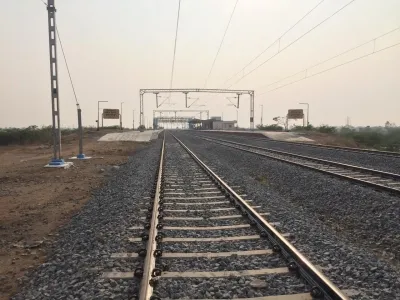
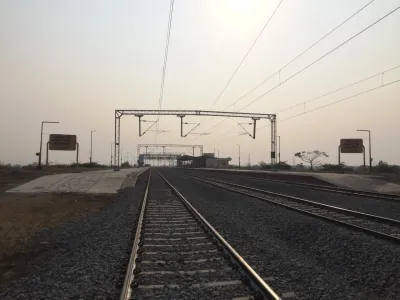
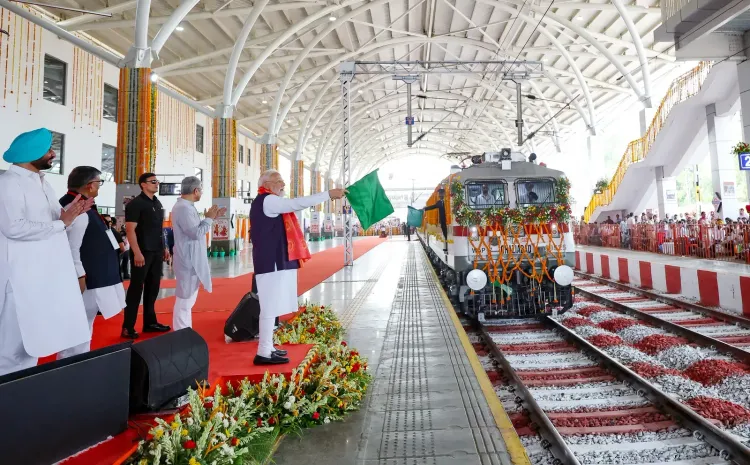
India has overtaken China, Europe, and Japan to hold the world's largest electrified railway network by coverage — with 99.6% of its broad gauge track electrified. The achievement is underpinned by a mission-mode push that electrified more track between 2014 and 2026 than in the previous six decades combined, slashing diesel consumption by 185 crore litres in the process.
Key Takeaways
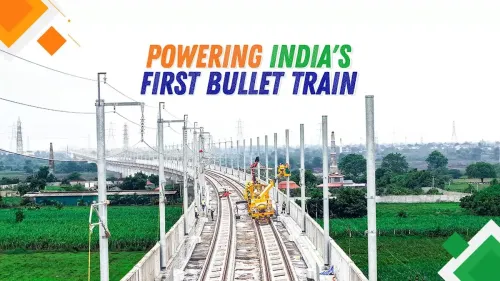
India now has the world's largest electrified railway network, with 99.6% of its broad gauge track electrified as of 22 July .
48,072 route km were electrified between 2014 and 2026 — more than double the 21,801 route km electrified in the prior 60 years .
Diesel consumption for traction fell from 293 crore litres in 2015-16 to 108 crore litres in 2024-25 , saving 185 crore litres .
India's electrification rate exceeds China (82%) , Spain (67%) , Japan (64%) , France (60%) , and the UK (39%) .
Over 1,260 MW of solar and wind capacity has been commissioned to power low-carbon rail operations.
Rail emits approximately 89% less CO2 than road transport, according to ministry data.
India has claimed the top position globally for the largest electrified railway network, with 99.6% of its broad gauge track network now electrified, Union Railway Minister Ashwini Vaishnaw told the Lok Sabha on 22 July. The only country ahead on electrification percentage is Switzerland at 100%, though its network is significantly smaller in scale.
India Ahead of China, Europe, and Japan
India's electrification rate surpasses that of several major rail-operating nations. China stands at 82%, followed by Spain at 67%, Japan at 64%, France at 60%, and the United Kingdom at 39%. Unlike many of these countries, which have focused electrification efforts on their busiest passenger and freight corridors, India has pursued electrification of its entire broad gauge network.
Mission-Mode Push Since 2014
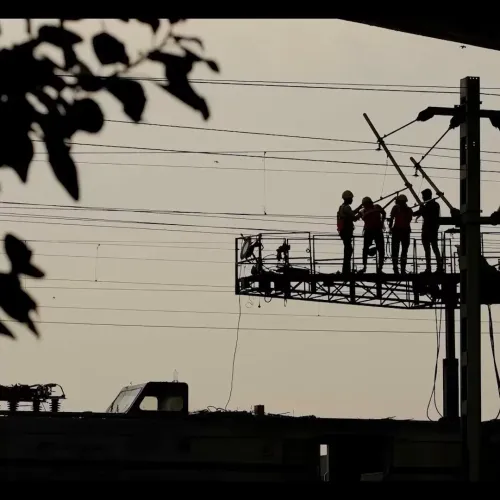
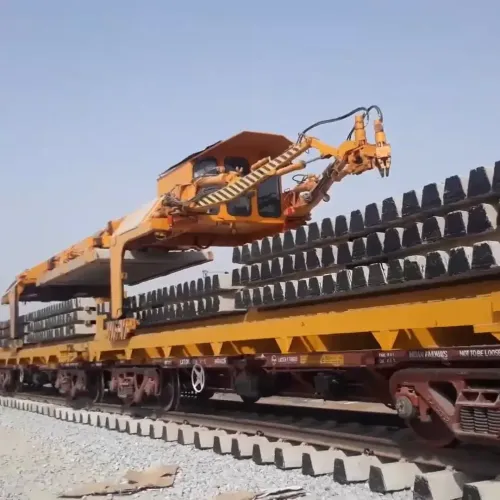
The scale of the achievement becomes clearer in historical context. Indian Railways electrified 48,072 route km between 2014 and 2026 — more than double the 21,801 route km electrified in the preceding 60 years. Vaishnaw described this as one of the fastest railway electrification programmes undertaken anywhere in the world, carried out in what he termed 'mission mode'.
Fuel Savings and Carbon Impact
The environmental and economic dividends are already measurable. Diesel consumption for railway traction has fallen sharply — from 293 crore litres in 2015-16 to 108 crore litres in 2024-25, a reduction of 185 crore litres. This has translated into significant savings in foreign exchange that would otherwise have been spent on fuel imports, the minister stated. Rail transport emits approximately 89% less carbon dioxide than road transport, according to the ministry's figures.
Renewable Energy Integration
Beyond electrification, Indian Railways has commissioned over 1,260 MW of solar and wind power capacity to support low-carbon traction operations. Electrified rail infrastructure is particularly well-suited to absorbing renewable energy, the minister noted, making it a more effective platform for integrating solar and wind power than diesel-dependent systems. The ministry has indicated that strategic power procurement planning will underpin continued progress toward near-total renewable-backed operations.
What This Means Going Forward
The milestone positions Indian Railways as a benchmark for large-scale rail electrification in the developing world. With renewable capacity being added alongside electrification, the network is structurally better placed to reduce its carbon footprint further. The next phase will likely test whether procurement and grid integration can keep pace with the infrastructure already laid.
Point of View
Verifiable outcome, not a capacity target. The harder question now is whether the 1,260 MW of renewable capacity being integrated can keep pace with traction demand as the network expands and freight volumes grow. Electrification without a credible renewable-backed power procurement plan risks swapping diesel dependency for coal-grid dependency — a trade-off the ministry has not yet fully addressed in public disclosures.
NationPress
21 Oct 2026
Frequently Asked Questions
Does India have the largest electrified railway network in the world?
Yes, as of July 2026, India holds the world's largest electrified railway network by coverage, with 99.6% of its broad gauge track electrified. The only country with a higher electrification percentage is Switzerland at 100%, but its network is far smaller in total route kilometres.
How much track did Indian Railways electrify between 2014 and 2026?
Indian Railways electrified 48,072 route km between 2014 and 2026 — more than double the 21,801 route km electrified in the 60 years before that period. The government has described this as one of the fastest railway electrification programmes in the world.
How has railway electrification reduced India's diesel consumption?
Diesel consumption for railway traction fell from 293 crore litres in 2015-16 to 108 crore litres in 2024-25, a reduction of 185 crore litres. This has generated significant foreign exchange savings by reducing dependence on imported fuel.
How does India's railway electrification compare to China and Europe?
India's 99.6% electrification rate surpasses China (82%), Spain (67%), Japan (64%), France (60%), and the United Kingdom (39%). Unlike several of these nations, India has electrified its entire broad gauge network rather than only high-traffic corridors.
What role does renewable energy play in Indian Railways' electrification plan?
Indian Railways has commissioned over 1,260 MW of solar and wind power capacity to support low-carbon traction. Electrified rail infrastructure is well-suited to integrating renewable energy, and the ministry has indicated that strategic power procurement will drive further decarbonisation.