Indian Railways to four-lane 7 high-density corridors spanning 11,000 km

Synopsis
India's seven busiest rail corridors — just 16% of the network but carrying 41% of all traffic — are being four-laned under a sweeping capacity push. With some sections already over 100% utilisation, the expansion is less an upgrade and more a structural necessity. The Delhi–Guwahati inclusion signals a rare northeast dividend from the programme.
Key Takeaways
Indian Railways plans to four-lane seven high-density corridors spanning nearly 11,000 km .
These corridors represent just 16% of the network but carry nearly 41% of total rail traffic.
The seven routes are Delhi–Howrah , Howrah–Chennai , Chennai–Mumbai , Mumbai–Delhi , Delhi–Chennai , Mumbai–Howrah , and Delhi–Guwahati .
Capacity utilisation has reportedly crossed 100% on several sections of these corridors.
The Delhi–Guwahati corridor's inclusion is expected to provide an economic boost to the northeastern states.
Detailed timelines and capital outlay figures have not yet been publicly disclosed.
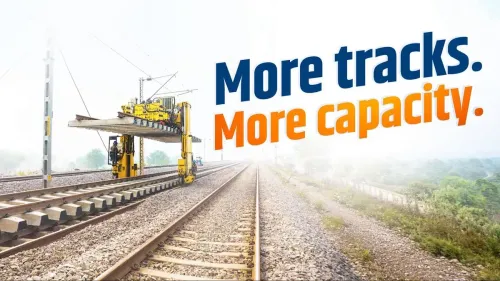
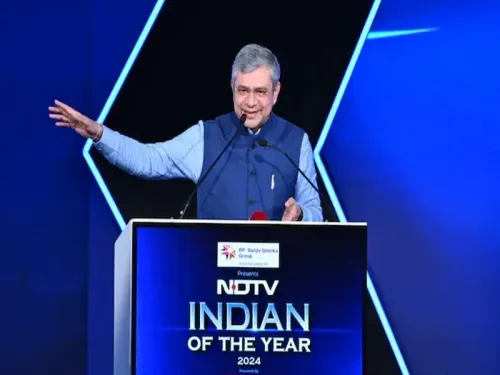
Indian Railways is moving ahead with plans to four-lane its seven high-density rail corridors, covering nearly 11,000 km and carrying 41% of the country's total rail traffic, Railway Minister Ashwini Vaishnaw announced on 26 August. The initiative, framed as part of Prime Minister Narendra Modi's broader infrastructure vision, aims to dramatically expand capacity on some of the busiest and most congested routes in the national network.
The Seven Corridors
The high-density routes targeted for four-laning connect India's largest cities and economic hubs: Delhi–Howrah, Howrah–Chennai, Chennai–Mumbai, Mumbai–Delhi, Delhi–Chennai, Mumbai–Howrah, and Delhi–Guwahati. Together, these corridors span approximately 11,000 km — just 16% of the total railway network — yet account for nearly 41% of all rail traffic in the country.
Why Capacity Is Stretched
According to officials, some stretches on these corridors already operate on three lines. However, capacity utilisation has reportedly crossed 100% on several sections, making delays, congestion, and scheduling conflicts a persistent operational challenge. The four-laning push is designed to relieve that pressure and create headroom for future passenger and freight growth.
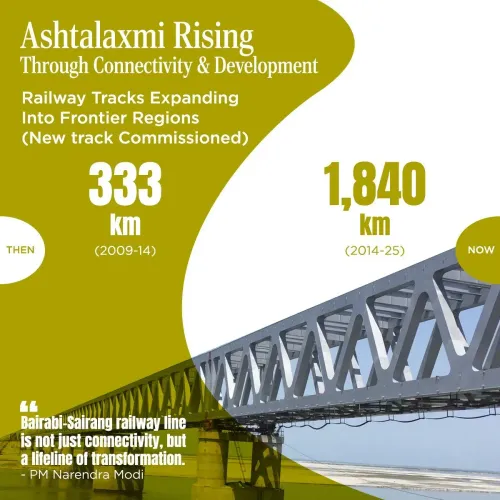
Notably, the Delhi–Guwahati corridor's inclusion is seen as particularly significant for the northeastern region, which has historically lagged in rail connectivity. Officials said the expansion will provide a direct economic boost to the northeastern states by improving both passenger mobility and freight movement.
Environmental and Economic Case for Rail
Vaishnaw also highlighted the environmental credentials of the push. With the vast majority of India's railway network now electrified, rail transport is positioned as a cleaner alternative to road and air. The minister argued that lower transport costs via rail would support broader economic development, particularly for freight-intensive industries.
'The expansion of these high-density routes is significant as it will help create more capacity across the railway network and support the future growth of passenger and freight traffic,' Vaishnaw said. He added that four-laning is 'part of a larger effort to build a railway network with greater capacity, lower transport costs and cleaner mobility.'
Larger Infrastructure Context
This announcement fits within a pattern of large-scale railway investment under the current government, which has sharply increased the capital expenditure budget for Indian Railways over successive years. The four-laning of high-density corridors complements other ongoing projects including dedicated freight corridors and high-speed rail development. As these routes carry a disproportionate share of national traffic, even incremental capacity additions on them can have outsized network-wide effects.
Detailed timelines and project-wise capital outlay for the four-laning programme have not yet been publicly disclosed. The government is expected to release further specifics as planning progresses.
Point of View
No phased timeline, and no independent traffic modelling have been made public. India's high-density corridors have operated above designed capacity for years, and the four-laning ambition, while sound in principle, faces the same land acquisition and execution bottlenecks that have slowed past rail expansion. The inclusion of Delhi–Guwahati is politically and economically meaningful for the northeast, but the real test will be whether funding is ring-fenced in successive Union budgets or remains an aspirational line item. Announcements of this scale deserve a credible delivery framework — something that has been absent so far.
NationPress
11 Oct 2026
Frequently Asked Questions
Which are the seven high-density railway corridors to be four-laned?
The seven corridors are Delhi–Howrah, Howrah–Chennai, Chennai–Mumbai, Mumbai–Delhi, Delhi–Chennai, Mumbai–Howrah, and Delhi–Guwahati. Together they span nearly 11,000 km and carry approximately 41% of India's total rail traffic.
Why is four-laning of these rail corridors necessary?
Capacity utilisation on several sections of these corridors has reportedly exceeded 100%, causing chronic congestion and scheduling pressure. Four-laning will add track capacity to accommodate growing passenger and freight demand.
What share of the railway network do these corridors cover?
The seven high-density corridors cover just 16% of India's total railway network but account for nearly 41% of all rail traffic, making them the most critical and overstretched routes in the system.
How will the Delhi–Guwahati corridor benefit the northeast?
Officials said the inclusion of the Delhi–Guwahati route will improve passenger mobility and freight movement to and from the northeastern states, providing a direct boost to the region's economic connectivity.
When will the four-laning project be completed?
Detailed timelines and project-wise capital outlay have not yet been publicly disclosed. The government is expected to release further specifics as planning and approvals progress.