Rajasthan AQI worsens as winter sets in; Sawai Madhopur hits 306
Synopsis
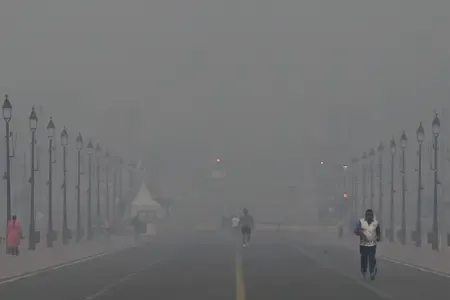
Rajasthan's air has turned dangerous as winter tightens its grip — Sawai Madhopur hit an AQI of 306 on 7 November, entering the 'very poor' zone, while twelve other cities logged 'poor' readings above 200. With the Rajasthan government already banning construction near Delhi-NCR and vulnerable populations at acute risk, the state's pollution crisis is intensifying weeks before the seasonal peak.
Key Takeaways
Sawai Madhopur recorded the highest AQI in Rajasthan at 306 ('very poor') on 7 November 2026 , with PM2.5 as the primary pollutant.
Bikaner (273) , Dausa (232) , Churu (231) , and Jaipur (207) among twelve cities logging 'poor' AQI above 200 .
Cities including Tonk , Jodhpur , and Bharatpur are in the moderate band ( AQI 101–200 ).
Children, senior citizens , and those with asthma or heart disease are at heightened risk; residents advised to reduce outdoor exposure.
The Rajasthan government has banned construction and demolition in districts close to Delhi-NCR in response to the regional pollution emergency.
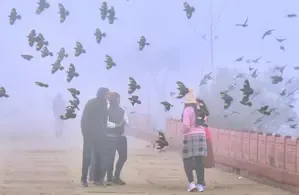
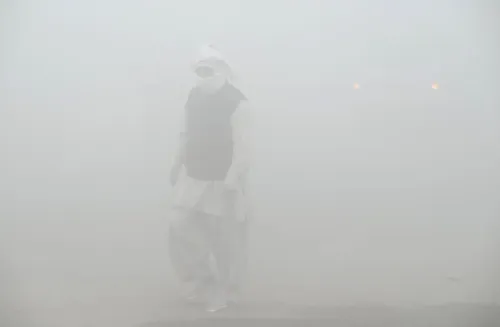
Air pollution levels across Rajasthan have climbed sharply with the onset of winter, with Sawai Madhopur emerging as the state's most polluted city at an Air Quality Index (AQI) of 306 — firmly in the 'very poor' category — according to the latest state air quality bulletin released on 7 November 2026. PM2.5 has been identified as the primary pollutant in Sawai Madhopur, raising concerns over respiratory health across vulnerable groups.
Cities in the 'Poor' and 'Very Poor' Band
Bikaner recorded the second-highest AQI at 273, with PM10 flagged as its chief pollutant. Close behind were Dausa (232), Churu (231), Sikar (227), Nagaur (225), Alwar (224), Jhunjhunu (224), Karauli (215), Sri Ganganagar (213), Jaisalmer (210), and Jaipur (207) — all registering in the 'poor' range of 201–300, where breathing discomfort becomes a real risk, particularly for those with pre-existing ailments.
Moderate Pollution Across Southern and Central Districts
Several cities fell in the moderate band (AQI 101–200), including Tonk (196), Jodhpur (192), Hanumangarh (186), Deeg (185), Pali (184), and Bharatpur (179). Cities such as Jhalawar, Kota, Chittorgarh, Bundi, Bhilwara, Udaipur, and Sirohi also reported moderate readings. While less alarming, these levels can still affect sensitive individuals over sustained exposure.
Who Is Most at Risk
Health authorities have flagged children, senior citizens, and those living with asthma, chronic lung disease, or heart conditions as the most vulnerable. AQI levels between 301 and 400 — the band Sawai Madhopur currently occupies — can trigger respiratory illnesses with prolonged outdoor exposure, while readings between 201 and 300 cause breathing discomfort even in otherwise healthy individuals. Authorities have advised residents across the state to limit non-essential outdoor activity, especially in cities reporting poor or very poor air quality.
Delhi-NCR Spillover Triggers Construction Ban
The deteriorating air quality is not confined to local sources. The Rajasthan government has banned construction and demolition activities in districts bordering the Delhi-NCR region, responding to the broader pollution emergency gripping north India. This comes amid seasonal factors — cooler temperatures, lower wind speeds, and stubble-burning residue drifting from neighbouring states — that annually worsen particulate matter concentrations across the Indo-Gangetic plain. Notably, Rajasthan's northern and eastern districts tend to be first affected by this annual cycle, consistent with the current readings in Bikaner, Churu, and Sikar.
What Residents and Authorities Should Watch
Winter air quality in Rajasthan typically deteriorates through November and December before easing slightly in January. With multiple cities already in the poor category on the first week of November, the trajectory suggests conditions could worsen before they improve. The state bulletin and national air quality monitoring systems will continue tracking readings daily; any spike past AQI 400 in heavily populated cities would trigger stricter emergency-level restrictions under GRAP (Graded Response Action Plan) norms.
Point of View
Not a surprise. Twelve cities already above AQI 200 by mid-autumn signals that the state's air quality management framework — focused largely on construction bans and advisories — is reactive rather than preventive. The northern districts of Bikaner, Churu, and Sri Ganganagar sit squarely in the cross-fire of trans-boundary particulates from Punjab and Haryana stubble burning, yet inter-state coordination on this remains weak. Until source apportionment is translated into actionable emission controls at the district level, Rajasthan will repeat this cycle every November.
NationPress
7 Nov 2026
Frequently Asked Questions
What is the AQI of Sawai Madhopur today?
Sawai Madhopur recorded an AQI of 306 on 7 November 2026, placing it in the 'very poor' category. PM2.5 is the identified primary pollutant, posing a heightened risk of respiratory illness with prolonged exposure.
Which cities in Rajasthan have the worst air quality right now?
As of 7 November, Sawai Madhopur leads at AQI 306, followed by Bikaner (273), Dausa (232), Churu (231), Sikar (227), Nagaur (225), Alwar and Jhunjhunu (224 each), Karauli (215), Sri Ganganagar (213), Jaisalmer (210), and Jaipur (207) — all in the 'poor' or 'very poor' range.
What health precautions should Rajasthan residents take?
Authorities have advised residents to limit prolonged outdoor exposure, especially in cities with 'poor' or 'very poor' AQI readings. Children, senior citizens, and individuals with asthma, lung disease, or heart conditions are considered most vulnerable and should stay indoors as much as possible.
Why has Rajasthan banned construction activities near Delhi-NCR?
The Rajasthan government has banned construction and demolition in its districts bordering the Delhi-NCR region in response to the severe pollution episode gripping north India. Such bans are part of emergency-level measures under GRAP norms triggered when regional air quality deteriorates sharply.
When does Rajasthan's air quality typically worsen each year?
Air quality in Rajasthan, particularly in its northern and eastern districts, typically worsens from late October through December. Cooler temperatures, lower wind speeds, and particulate matter from stubble burning in neighbouring states are the main seasonal drivers.