Rajasthan CM Bhajanlal Sharma pushes fuel conservation as mass movement at Energy Conclave
Synopsis
Rajasthan CM Bhajanlal Sharma arrived at the state's Energy Conclave in an EV and called for a people's movement on fuel saving — but the bigger story is the numbers behind the rhetoric: 828 GW of solar potential, 47 GW already installed, and a 115 GW target by 2030 that would make Rajasthan one of India's most consequential green energy states.
Key Takeaways
Rajasthan CM Bhajanlal Sharma called for a mass public movement on fuel conservation at the Rajasthan Energy Conclave in Jaipur on 15 May 2025 .
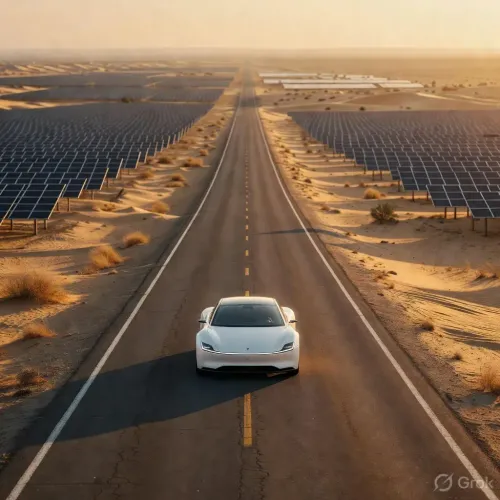
Sharma arrived at the conclave in an electric vehicle , signalling the state's push for green mobility.
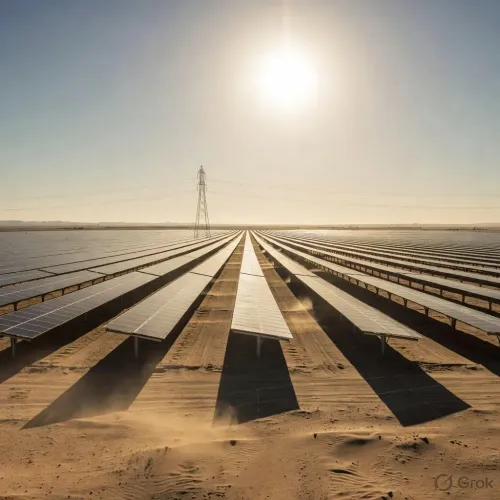
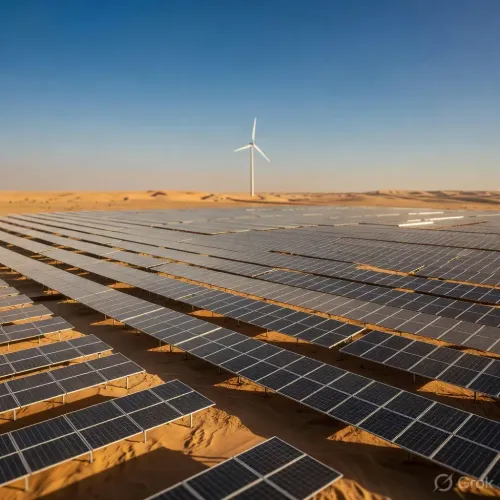
Rajasthan has installed more than 47 gigawatts of renewable energy capacity, with solar potential estimated at 828 gigawatts .
The state targets 115 gigawatts of renewable capacity and 10 gigawatts of energy storage by 2030 , scaling to 290 gigawatts by 2047 .
Over 4,000 megawatts of PM-KUSUM solar projects commissioned; 250 EV charging locations identified under the PM E-Drive Scheme .
The Rajasthan Integrated Clean Energy Policy 2024 has been introduced to attract investment in solar, wind, green hydrogen, and energy storage.
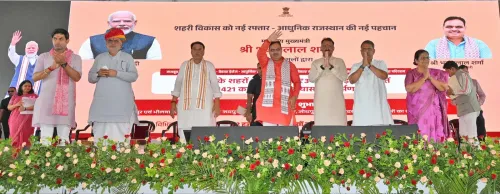
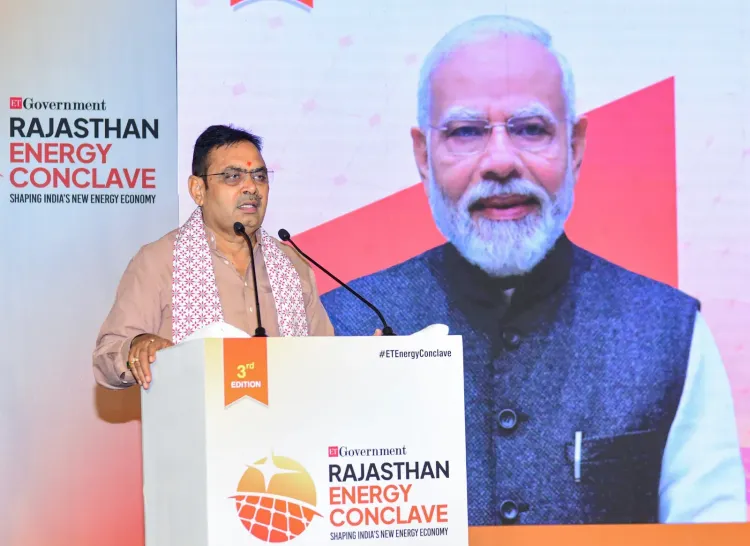
Rajasthan Chief Minister Bhajanlal Sharma on Friday, 15 May called for transforming energy conservation and fuel saving into a people-driven mass movement, addressing the Rajasthan Energy Conclave in Jaipur. Sharma stressed that reducing dependence on petrol and diesel is an urgent national priority, and that future energy security can only be built on clean and alternative energy sources.
Key Developments at the Conclave
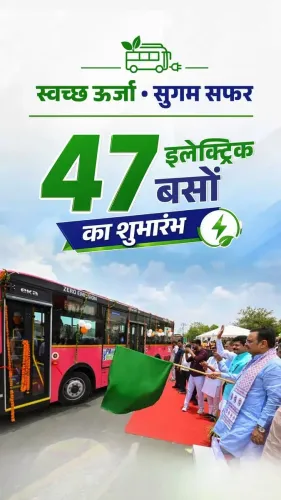
Sharma arrived at the conclave in an electric vehicle (EV), a symbolic gesture underlining his government's push for green mobility and fuel conservation. He said EV adoption would significantly cut carbon emissions and strengthen environmental protection across the state.
Citing Prime Minister Narendra Modi's 'Nation First' vision and his directive to conserve 'every single drop' of fuel, Sharma said the state government has already issued guidelines promoting restrained use of government vehicles and broader energy conservation practices.
Rajasthan's Renewable Energy Ambitions
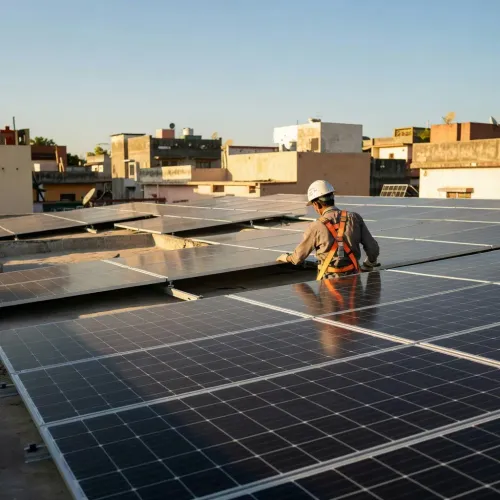
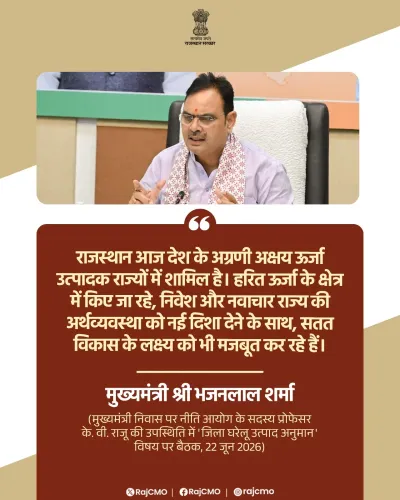
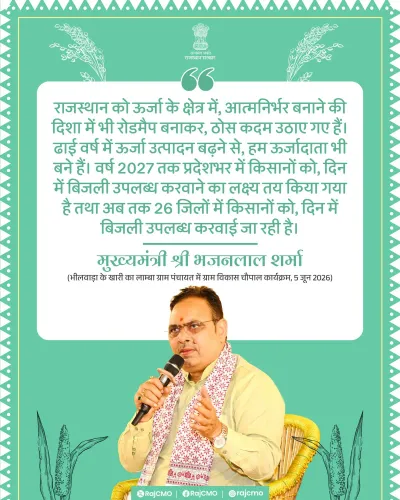
Sharma highlighted Rajasthan's formidable renewable energy credentials. The state holds an estimated solar energy potential of 828 gigawatts and wind energy potential of 284 gigawatts. More than 47 gigawatts of renewable energy capacity have already been installed, establishing Rajasthan as a national leader in solar project implementation.
Renewable energy capacity in the state has grown by 24,410 megawatts during the current government's tenure. The government has set a target of 115 gigawatts of renewable energy capacity along with 10 gigawatts of energy storage by 2030, rising to 290 gigawatts by 2047 — aligned with PM Modi's vision of a 'Developed India by 2047'.
On-Ground Progress and Policy Framework
Under the PM-KUSUM scheme, small-scale solar projects on agricultural land have already commissioned more than 4,000 megawatts, with an additional 6,500 megawatts allocated. Solar parks totalling 4,670 megawatts have been established through state enterprises and joint ventures, while projects exceeding 12,000 megawatts are currently under construction.
The government has also solarised more than 1,000 government buildings and plans solar plants of 600 megawatts through virtual and net metering systems. Under the PM E-Drive Scheme, 250 locations across Rajasthan have been identified for EV charging station installation.
To attract investment across renewable energy, biofuels, energy storage, and green hydrogen, the state has introduced the Rajasthan Integrated Clean Energy Policy 2024. Allocations have been made for 6,000 megawatts of battery storage capacity, with 6,400 megawatts of projects currently under implementation.
Investor Outreach and Political Messaging
Sharma invited investors to participate in Rajasthan's energy sector, describing the state as among the most investment-friendly in the country and promising full government support. He said large-scale investment proposals in solar, wind, bio-energy, pumped storage, and green hydrogen reflect the success of the government's policies and signal a new economic era for the state.
State Minister of State for Energy (Independent Charge) Hiralal Nagar said energy conservation and fuel efficiency have become a collective responsibility following the Prime Minister's appeal, with the government focusing on electric mobility, expanded solar usage, and fast-charging infrastructure. Chief Secretary V. Srinivas, energy sector experts, investors, and several dignitaries were also present at the conclave.
With India's national target of 500 gigawatts of renewable energy capacity by 2030 and Net Zero emissions by 2070 as the broader backdrop, Rajasthan's conclave signals an accelerating race among states to lead the green energy transition.
Point of View
But the harder question is execution: Rajasthan's 828 GW solar potential has been cited for years, yet the state still grapples with grid absorption constraints and transmission bottlenecks that limit how much installed capacity actually reaches consumers. The 115 GW target by 2030 is ambitious — India's entire installed renewable base today is roughly 200 GW — and achieving it will require private capital at a scale that political conclaves alone cannot unlock. The Rajasthan Integrated Clean Energy Policy 2024 is a necessary signal to investors, but without transparent project commissioning timelines and grid infrastructure upgrades, the gap between announced and operational capacity will remain the story behind the headline.
NationPress
30 Sept 2026
Frequently Asked Questions
What did Rajasthan CM Bhajanlal Sharma announce at the Energy Conclave?
CM Bhajanlal Sharma called for turning fuel conservation and energy saving into a mass public movement at the Rajasthan Energy Conclave in Jaipur on 15 May 2025. He also outlined the state's renewable energy targets, invited investors, and arrived at the event in an electric vehicle to underscore the green energy message.
What is Rajasthan's renewable energy target by 2030?
Rajasthan has set a target of 115 gigawatts of renewable energy capacity along with 10 gigawatts of energy storage by 2030, rising to 290 gigawatts by 2047. The state has already installed more than 47 gigawatts of renewable capacity.
What is the Rajasthan Integrated Clean Energy Policy 2024?
It is a state policy introduced to attract investment in renewable energy, biofuels, energy storage, and green hydrogen in Rajasthan. The policy provides a framework to encourage large-scale projects across solar, wind, pumped storage, and green hydrogen sectors.
How is the PM-KUSUM scheme progressing in Rajasthan?
Under the PM-KUSUM scheme, more than 4,000 megawatts of small-scale solar projects on agricultural land have already been commissioned in Rajasthan, with an additional 6,500 megawatts allocated. The scheme aims to meet power demand in the farming sector through decentralised solar generation.
What is the significance of Rajasthan's solar and wind energy potential?
Rajasthan holds an estimated solar energy potential of 828 gigawatts and wind energy potential of 284 gigawatts — among the highest of any Indian state. This positions it as a critical contributor to India's national target of 500 gigawatts of renewable energy capacity by 2030 and Net Zero emissions by 2070.