Rajasthan High Court takes suo motu cognisance of 21-metre dome collapse risk in Jodhpur
Synopsis
The Rajasthan High Court has turned the lens on its own building — registering a PIL over a 21-metre dome that experts warn could suddenly collapse. With 40 per cent of inspected areas vulnerable to concrete spalling and repair costs estimated at ₹57.65 crore, this is a rare instance of a court ordering emergency action on its own crumbling infrastructure.
Key Takeaways
The Rajasthan High Court took suo motu cognisance of structural safety concerns at its Jodhpur principal seat, directing the matter be registered as a PIL .
The 21-metre central dome is at the centre of concerns, with experts warning of a risk of sudden concrete collapse.
An IIT Bombay audit found approximately 40 per cent of inspected areas vulnerable to concrete spalling, with rebar corrosion and elevated chloride levels identified as key threats.
Multiple ceiling and plaster collapses have been reported since 2023 , including in Courtrooms 2, 9, 14, 16, and 19, and most recently in a corridor in November 2025 .
The RSRDC has estimated repair and retrofitting costs at approximately ₹57.65 crore .
The area beneath the dome has been barricaded and movement restricted as an immediate precautionary measure.
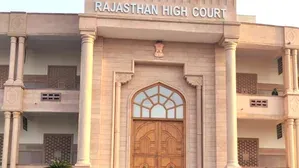
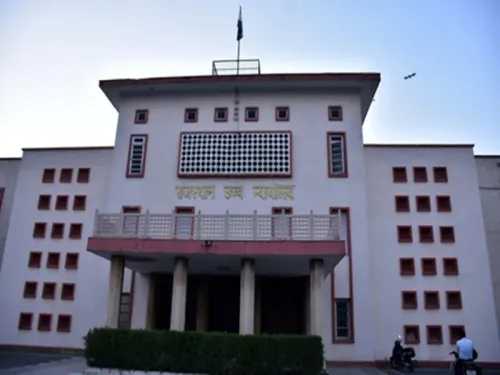
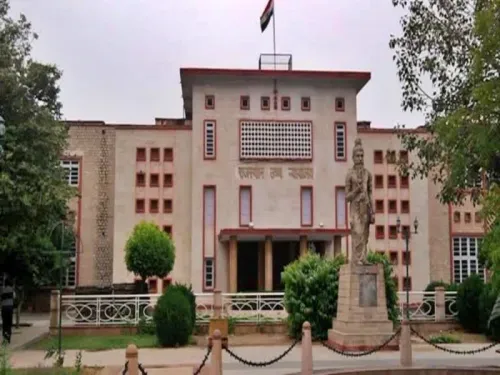
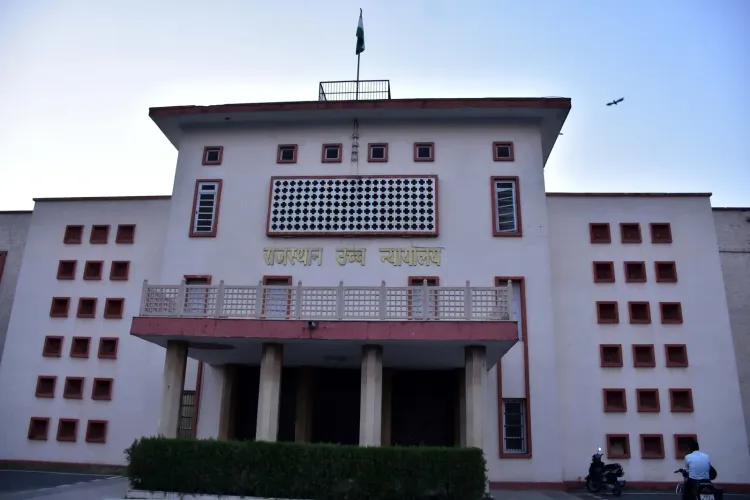
The Rajasthan High Court has taken suo motu cognisance of serious structural safety concerns at its principal seat building in Jodhpur, with particular alarm raised over the approximately 21-metre-high central dome. A division bench comprising Justice Dr. Pushpendra Singh Bhati and Justice Praveer Bhatnagar has directed that the matter be registered as a Public Interest Litigation (PIL), acting on expert findings that point to structural deficiencies and a risk of sudden concrete collapse.
A Building With a Troubled History
Structural work on the High Court building was completed by the end of 2013, and the building was handed over in December 2019 before being inaugurated in the presence of senior constitutional dignitaries. Within a few years of occupation, however, recurring incidents of ceiling, plaster, and false ceiling collapses began to surface across multiple sections of the premises.
According to the Court's own account, incidents have been reported since 2023 in Courtrooms 2, 9, and 16, as well as Chamber 16. On 20 February 2023, a false ceiling collapsed in Courtroom 14. On 29 April 2023, a portion of the dome itself fell. Further collapses were reported in the Civil Miscellaneous Appeal Section, Bill Section, an area near the lift, Courtroom 19, and other parts of the building. In November 2025, a false ceiling reportedly collapsed in the corridor leading to the Registrar General's office.
What the Expert Audits Found
An expert committee from IIT Jodhpur inspected portions of the building in 2023 and identified severe rusting in the concrete cover of slabs, corrosion of steel reinforcement, cracks in the concrete, and deficiencies in the roof waterproofing system. The committee recommended a comprehensive structural audit.
A subsequent audit by IIT Bombay deepened those concerns. The report flagged rebar corrosion, carbonation, and elevated chloride levels as major contributors to structural deterioration. Critically, approximately 40 per cent of the inspected areas were reportedly found vulnerable to concrete spalling. The IIT Bombay report warned that increased moisture and seepage could accelerate corrosion and potentially trigger sudden collapse in weakened sections.
Water samples taken from the building were also found to contain chloride levels above permissible limits — a factor that accelerates corrosion of steel reinforcement embedded in concrete.
The Repair Estimate and Immediate Steps
The Rajasthan State Road Development and Construction Corporation (RSRDC) prepared a repair and retrofitting estimate based on the available technical reports, pegging the cost at approximately ₹57.65 crore. The proposed scope covers repairs to structural elements including beams, columns, and slabs, along with remediation of seepage, deteriorating walls, and other deficiencies.
Following the High Court's directions, the circular open area beneath the central dome has been barricaded and movement in the affected zones restricted as a precautionary measure. The RSRDC Project Director has been directed to prepare a retrofitting plan and to immediately address seepage and plumbing leaks.
What the Court Has Emphasised
The bench has made clear that the safety of judges, advocates, court staff, and members of the public within the High Court premises cannot be compromised. The Court's intervention underscores the urgency of remedial action at a building that serves as one of Rajasthan's most consequential judicial institutions.
With the PIL now registered and technical agencies directed to act, the pace and quality of the remediation effort will be closely watched in the weeks ahead.
Point of View
The authority, and the overseer of remediation. What the Rajasthan High Court's suo motu action reveals is a systemic failure of quality assurance in public infrastructure: a building completed in 2013, handed over in 2019, and already showing 40 per cent spalling vulnerability within six years of use. The ₹57.65 crore repair tag is significant, but the harder question is accountability — who signed off on a structure that IIT Jodhpur and IIT Bombay both found deficient? Without a parallel inquiry into construction oversight and contractor compliance, the PIL risks becoming a remediation exercise that fixes the dome without fixing the process that broke it.
NationPress
25 Sept 2026
Frequently Asked Questions
Why has the Rajasthan High Court taken suo motu cognisance of its own building?
The Rajasthan High Court acted after expert audits by IIT Jodhpur and IIT Bombay identified serious structural deficiencies — including rebar corrosion, concrete spalling, and elevated chloride levels — at its principal seat in Jodhpur. The court registered a PIL to ensure urgent remedial action, citing the safety of judges, staff, advocates, and the public.
What is the risk posed by the 21-metre central dome?
Experts have warned that continued moisture ingress and seepage could accelerate corrosion of steel reinforcement inside the dome's concrete, potentially leading to sudden collapse. The IIT Bombay audit found approximately 40 per cent of inspected areas vulnerable to concrete spalling.
How many incidents have already occurred at the building?
Multiple ceiling, plaster, and false ceiling collapses have been reported since 2023, affecting Courtrooms 2, 9, 14, 16, and 19, Chamber 16, and several other sections. A portion of the dome itself fell on 29 April 2023, and a false ceiling collapsed in a corridor near the Registrar General's office in November 2025.
What is the estimated cost of repairs?
The Rajasthan State Road Development and Construction Corporation (RSRDC) has estimated the repair and retrofitting work at approximately ₹57.65 crore, covering structural elements such as beams, columns, and slabs, as well as seepage and waterproofing remediation.
What immediate steps have been taken?
The circular open area beneath the central dome has been barricaded and movement in affected zones restricted. The RSRDC Project Director has been directed to prepare a retrofitting plan and to immediately address seepage and plumbing leaks across the building.