Rajasthan Welcomes Entrepreneurs: A Call for Investment and Growth
Synopsis
Rajasthan's Chief Minister Bhajan Lal Sharma invites entrepreneurs to invest in the state's promising industrial landscape, emphasizing the importance of collective growth towards a developed nation by 2047. With substantial policy reforms and investment opportunities, the state aims to enhance its economic trajectory.
Key Takeaways
Industry and Investment: Key drivers of economic growth in Rajasthan.
Entrepreneurial Opportunities: Entrepreneurs are encouraged to invest and establish businesses.
Policy Reforms: Continuous reforms are creating a favorable industrial environment.
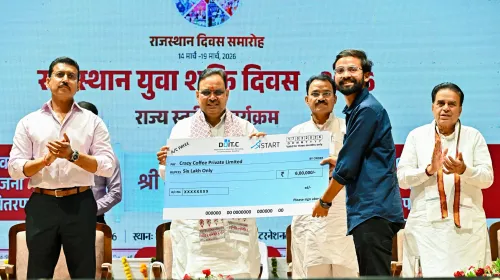
Rajasthan Day: Celebrated annually, marking the establishment of Greater Rajasthan.
Investment Initiatives: New policies and infrastructure projects aimed at enhancing economic development.
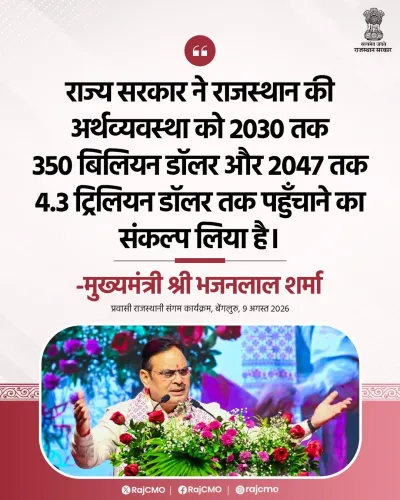
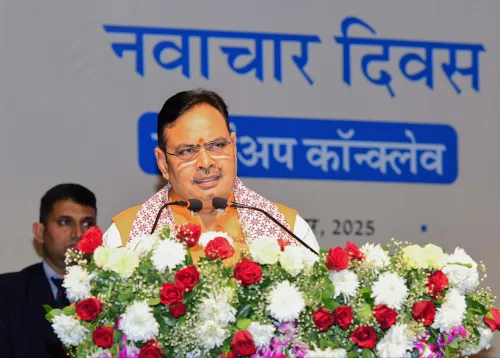
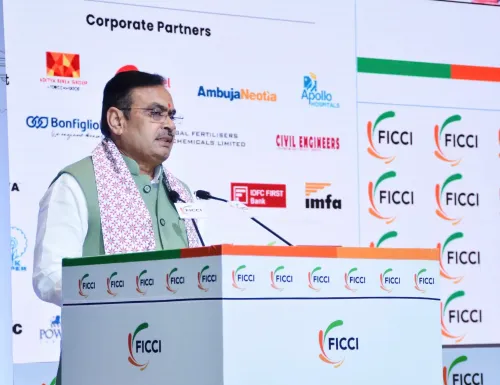
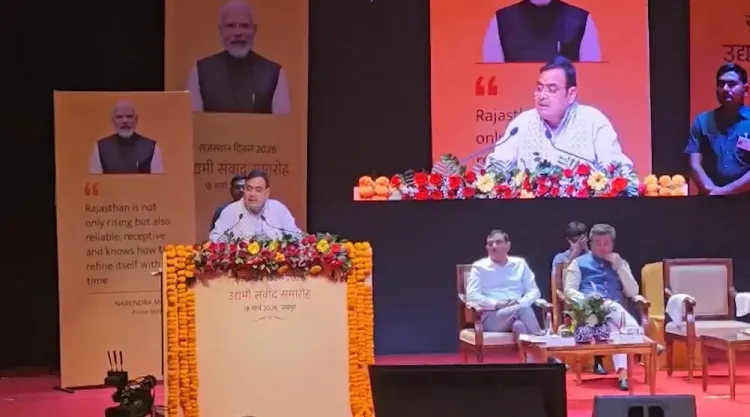
On March 18, in Jaipur, Chief Minister Bhajan Lal Sharma of Rajasthan emphasized that industry and investment are crucial for fostering economic growth. He highlighted the role of entrepreneurs in not only advancing their own businesses but also in propelling the economic progress of Rajasthan.
Sharma pointed out that the state government has fostered a supportive industrial climate through ongoing policy reforms, positioning Rajasthan to initiate a significant phase in industrial evolution.
Encouraging entrepreneurs to seize the investment opportunities within the state, Sharma urged them to establish new enterprises and engage actively in the developmental narrative of Rajasthan.
He reiterated that this united endeavor would contribute to the vision of a 'Viksit Bharat, Viksit Rajasthan'. Furthermore, he assured the public that there is no scarcity of LPG cylinders, with a steady supply being guaranteed for all consumers.
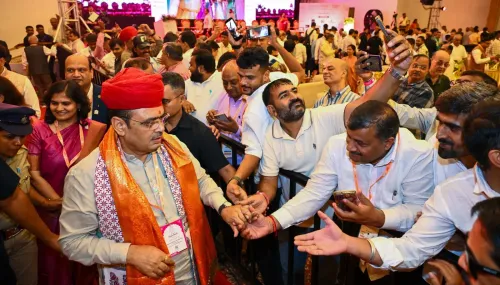
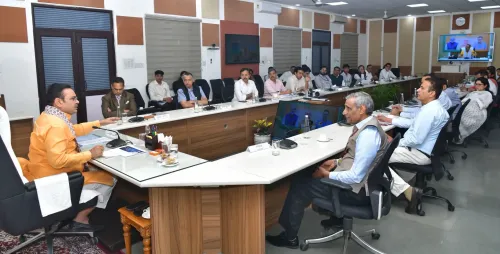
The Chief Minister addressed the gathering during the ‘Entrepreneur Dialogue’ event, which was part of the Rajasthan Day festivities at the Rajasthan International Centre on Wednesday.
He reflected on the legacy of Sardar Vallabhbhai Patel, the 'Iron Man of India,' who established 'Greater Rajasthan' (Brihad Rajasthan) on March 30, 1949, coinciding with Chaitra Shukla Pratipada, which marks the Indian New Year under the favorable Revati Nakshatra and Indra Yoga.
Consequently, Rajasthan Day is commemorated on Chaitra Shukla Pratipada, and this year’s celebrations will take place statewide on March 19 with great zeal and enthusiasm.
Sharma asserted that under the insightful leadership of Prime Minister Narendra Modi, India is achieving remarkable milestones across various sectors and is steadily progressing towards becoming a developed nation by 2047. He noted that the Prime Minister is dedicated to the upliftment of the poor, youth, women, and farmers, and that the state government is proactively executing initiatives aligned with this vision.
Highlighting the swift transformation of the industrial landscape, the Chief Minister mentioned that within its inaugural year, the government successfully hosted the ‘Rising Rajasthan Global Investment Summit.’ From the MoUs valued at Rs 35 lakh crore signed during this summit, projects worth Rs 8 lakh crore have already commenced.
He announced the establishment of industrial parks in Bikaner, Pali, Kishangarh, and Jodhpur, with new industrial zones in Alwar, Bhilwara, Chittorgarh, and Ajmer now open for land allotment. Logistics parks have also been set up at Salarpur and Bichun, adjacent to the Delhi-Mumbai Industrial Corridor.
Sharma stressed that Rajasthan is swiftly emerging as a favored investment hub due to its investor-friendly policies. Under ‘RIPS 2024,’ enhancements to investment incentives have been implemented, with the land use conversion timeline shortened from 60 to 30 days.
The integration of the ‘RajNivesh’ portal with the National Single Window System has made over 143 services from 14 departments accessible through a single platform. He further stated that youth empowerment is being enhanced through the State Skill Policy and Rajasthan Youth Policy, resulting in approximately 3 lakh employment opportunities in the private sector. The Chief Minister indicated that the 2026-27 Budget contains extensive provisions aimed at boosting industrial growth and attracting investments.
A ‘Direct Allotment Policy’ has been introduced, and ‘Plug-and-Play’ facilities will be developed at all divisional headquarters. Additionally, he revealed plans to develop 3,600 hectares of land in the Jodhpur-Pali-Marwar region with an investment of Rs 600 crore.
A new Department for Domestic and Overseas Rajasthani Affairs has been established to cater to the Rajasthani diaspora. Future initiatives include the implementation of Single Window 2.0, the integration of IFMS and RIPS portals, the extension of interest subvention benefits to the service sector under RIPS-2024, and the creation of an Energy Transition Skilling Cluster to further streamline investment processes.
In a comparative analysis, Sharma noted that significant progress has been made in industrial development over the past two years, surpassing the accomplishments of the previous administration during its entire term.
He highlighted that RIICO has developed 31 industrial areas in two years, in contrast to 16 in the same duration previously. Furthermore, 2,453 industrial plots have been allocated, with Rs 2,007 crore invested in industrial infrastructure, showcasing a substantial increase from previous figures.
Over 11.61 lakh MSMEs have been established during this timeframe, indicating a significant surge in entrepreneurial activity. He also mentioned that in the past two and a quarter years, the government has introduced 34 new policies, creating a more conducive environment for investment and entrepreneurship.
Point of View
Rajasthan's proactive approach under Chief Minister Bhajan Lal Sharma signifies a commitment to industrial development and investment. The state's ongoing reforms and initiatives reflect a determination to foster a robust economic environment, aiming for a collective vision of progress and prosperity.
NationPress
23 Sept 2026
Frequently Asked Questions
What is the significance of Rajasthan Day?
Rajasthan Day commemorates the establishment of 'Greater Rajasthan' on March 30, 1949, marking a significant milestone in the state's history.
How is the Rajasthan government supporting entrepreneurs?
The Rajasthan government is implementing various policies and reforms to create an investor-friendly environment, including the introduction of the 'Direct Allotment Policy' and the 'RajNivesh' portal for streamlined services.
What are the key investment areas in Rajasthan?
Key investment areas include industrial parks in Bikaner, Pali, Kishangarh, and Jodhpur, as well as new industrial zones in Alwar, Bhilwara, Chittorgarh, and Ajmer.
What are the employment opportunities available in Rajasthan?
Approximately 3 lakh employment opportunities have been created in the private sector through initiatives aligned with the State Skill Policy and Rajasthan Youth Policy.
How has industrial development progressed in Rajasthan?
In the past two years, Rajasthan has seen the development of 31 industrial areas and the establishment of over 11.61 lakh MSMEs, reflecting a significant expansion in entrepreneurial activity.