Rajasthan man beats alcohol addiction via NAPDDR centre, earns ₹500 a day
Synopsis
A 29-year-old from Rajasthan's Dausa district walked out of a government-funded de-addiction centre sober, self-employed, and earning ₹500 a day — a small but telling proof-of-concept for India's NAPDDR network of 765 centres, as alcohol dependence affects an estimated 15.10 crore adults nationwide.
Key Takeaways
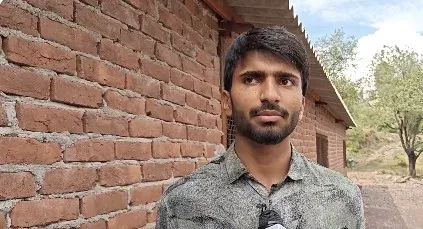
Dara Singh (name changed), 29 , from Dausa district, Rajasthan , overcame alcohol dependence through Nasha Mukti Kendra, Didwana .
He is now fully abstinent and earns approximately ₹500 a day through self-employment.
Recovery involved daily counselling, yoga, medical care, and regular follow-up under the NAPDDR framework.
India's first national substance-use survey found approximately 15.10 crore alcohol users among adults aged 18–75 years .
The government supports 765 de-addiction and rehabilitation facilities across India under NAPDDR .
A 29-year-old man from Dausa district, Rajasthan, has overcome years of alcohol dependence and returned to a productive life, thanks to treatment and rehabilitation support from Nasha Mukti Kendra, Didwana — an Integrated Rehabilitation Centre for Addicts funded under the Union Ministry of Social Justice and Empowerment's de-addiction programme. The case was highlighted by a ministry official on Saturday, 19 September 2026.
The individual, identified as Dara Singh (name changed for privacy), is now completely abstinent, has rebuilt family relationships, and earns approximately ₹500 a day through self-employment, according to an official statement.
Years of Dependence and Its Toll
For several years, alcohol dependence severely affected Dara Singh's physical and mental health. He experienced emotional instability, chronic stress, and diminished self-esteem, while his family endured domestic conflict, social stigma, and mounting financial pressure. As household income was increasingly diverted toward alcohol consumption, the family's economic stability deteriorated and community relationships frayed.
Despite these hardships, Dara Singh harboured a desire to rebuild — to regain stability, restore family trust, and reintegrate socially. His family remained supportive throughout and sought professional help as the situation worsened.
Treatment and Recovery at Nasha Mukti Kendra
On admission to Nasha Mukti Kendra, Didwana, Dara Singh actively participated in the centre's structured programme, which included daily counselling, yoga, medical care, behavioural guidance, and rehabilitation activities. Awareness sessions on livelihood opportunities helped him develop healthier habits and a future-oriented outlook.
Regular follow-up interventions reinforced his commitment to an alcohol-free life. The outcome, according to the ministry, illustrates how a combination of family support, professional counselling, medical care, and sustained rehabilitation can help individuals overcome substance dependence.
'The treatment and counselling gave me the strength to leave alcohol behind and begin my life again. Today, I am healthy, earning for my family and living with dignity,' Dara Singh said.
The National Framework Behind the Support
The ministry is implementing a comprehensive, evidence-based approach under the National Action Plan for Drug Demand Reduction (NAPDDR). The strategy is grounded in findings from India's first National Survey on the Extent and Pattern of Substance Use, conducted by the National Drug Dependence Treatment Centre (NDDTC) at AIIMS, New Delhi.
The survey, whose findings were shared by the ministry in July, estimated that alcohol remains the most widely consumed substance among adults aged 18 to 75 years, with approximately 15.10 crore users across the country — underscoring the scale of the challenge the government is attempting to address.
Scale of the De-Addiction Network
The government currently supports 765 de-addiction and rehabilitation facilities nationwide under the NAPDDR. These centres provide integrated care spanning medical detoxification, psychological counselling, vocational guidance, and community reintegration support.
Cases such as Dara Singh's are being highlighted by the ministry to demonstrate how timely intervention can reverse the health, social, and economic damage caused by substance dependence — and to encourage others to seek help. With alcohol dependence affecting crores of Indians, the scalability of such models remains a critical question for policymakers going forward.
Point of View
The infrastructure-to-need ratio is starkly inadequate. Highlighting one success story, however genuine, cannot substitute for a public accounting of how many people these 765 centres actually serve, their recovery rates, and what happens to patients post-discharge. Until NAPDDR publishes outcome data — not just anecdotes — it is difficult to assess whether the programme is scaling impact or scaling optics.
NationPress
19 Sept 2026
Frequently Asked Questions
What is the NAPDDR programme and how does it help addiction recovery?
The National Action Plan for Drug Demand Reduction (NAPDDR) is the Union Ministry of Social Justice and Empowerment's evidence-based strategy to tackle substance abuse in India. It funds 765 de-addiction and rehabilitation centres nationwide that provide detoxification, counselling, medical care, and vocational support to help individuals overcome drug and alcohol dependence.
Who is Dara Singh and what is his recovery story?
Dara Singh (name changed) is a 29-year-old man from Dausa district, Rajasthan, who overcame years of alcohol dependence after being admitted to Nasha Mukti Kendra, Didwana — an Integrated Rehabilitation Centre for Addicts. He is now fully abstinent, has rebuilt family relationships, and earns roughly ₹500 a day through self-employment.
How widespread is alcohol dependence in India?
According to India's first National Survey on the Extent and Pattern of Substance Use, conducted by NDDTC at AIIMS New Delhi, approximately 15.10 crore adults aged 18 to 75 years consume alcohol — making it the most widely used substance in the country. The survey findings were shared by the Ministry of Social Justice and Empowerment in July.
What treatment does Nasha Mukti Kendra provide?
Nasha Mukti Kendra, Didwana, is an Integrated Rehabilitation Centre for Addicts that offers a structured programme combining daily counselling, yoga, medical care, behavioural guidance, awareness about livelihood opportunities, and regular follow-up interventions to support sustained recovery.
How many de-addiction centres does the Indian government operate?
The government supports 765 de-addiction and rehabilitation facilities across India under the NAPDDR. These centres provide integrated care from medical detoxification and psychological counselling to community reintegration support.