Rajasthan CS orders statewide road safety overhaul after Dausa Expressway crash
Synopsis
A fatal crash on the Delhi-Mumbai Expressway in Dausa has triggered a top-level state response: Rajasthan's Chief Secretary has ordered ALS ambulance upgrades, reflector-tape enforcement drives, encroachment removal, and FSL-backed accident probes — all in one sitting. The scale of the directive signals that the state views this accident as a systemic failure, not an isolated incident.
Key Takeaways
Srinivas chaired a high-level review on 2 July following the fatal accident on the Delhi-Mumbai Expressway in Dausa district .
A multi-agency investigation will cover vehicle fitness, insurance, pending challans, bus body structure, fire cause, and the FSL inquiry.
BLS ambulances on national highways are to be upgraded to ALS ambulances in a phased manner for on-site critical care.
District Collectors as heads of District Road Safety Task Forces must regularly monitor highways and act against encroachments.
The Transport Department has been ordered to enforce mandatory reflector tapes on all heavy and commercial vehicles, with challans for violations.
Large signboards before curves on all national highways and improved lighting at black spots have been directed immediately.
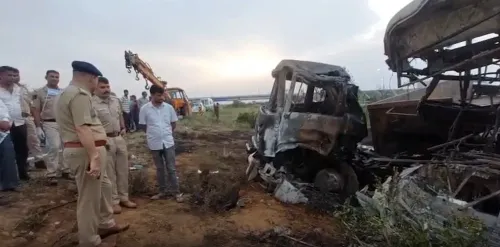
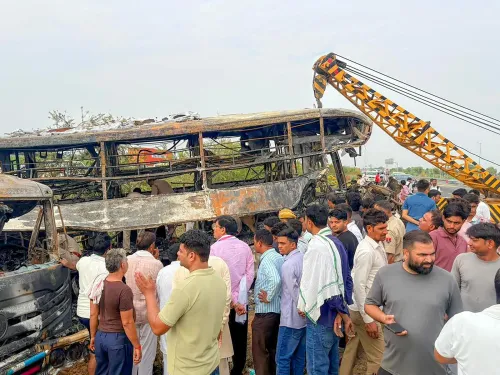
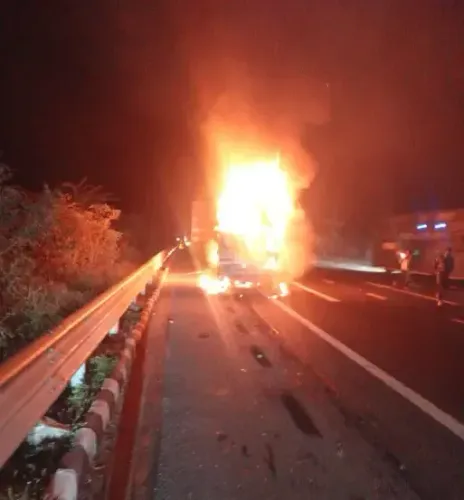
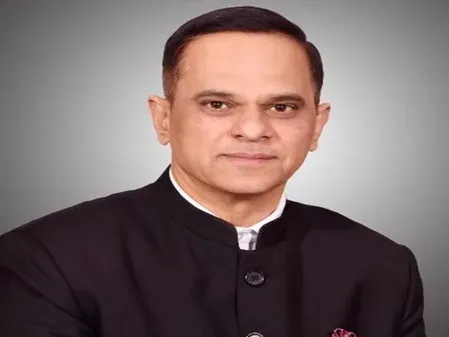
Rajasthan Chief Secretary V. Srinivas on Thursday, 2 July chaired a high-level review meeting at the Government Secretariat, Jaipur, to examine the circumstances of the fatal accident on the Delhi-Mumbai Expressway in Dausa district. Describing the tragedy as a wake-up call, Srinivas ordered sweeping corrective measures across departments to prevent a repeat.
Key Directives from the Review Meeting
The Chief Secretary directed a thorough investigation into every dimension of the accident — covering the sequence of events, the condition of the bus and trailer involved, vehicle registration, fitness certificates, insurance status, pending challans, and the backgrounds of vehicle owners and drivers. Officials were also asked to examine the bus body structure, fire safety aspects, the cause of the blaze, and the status of the Forensic Science Laboratory (FSL) inquiry.
Srinivas reviewed CCTV and PTZ camera footage from the accident site, scrutinising trailer visibility, lane discipline, night-time visibility, reflector tape usage, lighting, route indicators, and signage at the trumpet interchange for compliance with Indian Roads Congress (IRC) standards. He ordered the installation of large, clearly visible signboards at adequate distances before curves on all national highways.
Emergency Response Under the Scanner
A detailed review of post-accident rescue and relief operations assessed response times of police, the NHAI control centre, ambulances, fire services, and other emergency agencies. The Chief Secretary examined how quickly damaged vehicles were cleared, how soon the injured reached hospitals, and the availability of trauma care facilities.
'The loss of precious lives in road accidents is unacceptable. Our objective should be to continuously reduce accidents and fatalities and work towards the goal of zero road deaths,' Srinivas said.
To strengthen emergency medical care, he directed that Basic Life Support (BLS) ambulances deployed on national highways be upgraded to Advanced Life Support (ALS) ambulances in a phased manner, enabling critical care at the accident site itself. He also called for a comprehensive action plan ensuring trauma centres, fire tenders, cranes, and other emergency resources are available at scientifically determined intervals along highways.
Highway Safety and Enforcement Measures
The Chief Secretary ordered a statewide special campaign to remove encroachments along national highways. District Collectors, in their capacity as chairpersons of District Road Safety Task Forces, were instructed to regularly monitor highways, identify encroachments and illegal parking points, and ensure time-bound corrective action.
The Transport Department was directed to launch a special drive ensuring all heavy and commercial vehicles on national and state highways are fitted with mandatory reflector tapes, with strict enforcement action — including challans — against violators. Preventive action was also ordered against vehicles with a high number of pending challans on the Vahan portal. Transport authorities were further directed to hold regular meetings with transport unions and bus operators to enforce road safety compliance.
What Comes Next
The multi-agency investigation is being conducted in coordination with transport authorities of other states. Lighting improvements at identified black spots and vulnerable stretches are expected to be fast-tracked. With ALS ambulance upgrades, encroachment drives, and enhanced signage all ordered simultaneously, the pace of implementation across Rajasthan's highway network will be closely watched in the weeks ahead.
Point of View
Ambulance upgrades, encroachment drives, and reflector-tape enforcement — reflects how much ground the state concedes was left uncovered before the Dausa crash. The more pointed question is why IRC-standard signage, ALS ambulances, and reflector enforcement were not already in place on a flagship expressway corridor. Ordering these measures after a tragedy, rather than before, is a familiar pattern in Indian highway governance. The real test will be whether District Collectors, now formally accountable as Task Force chairs, follow through with time-bound action or whether the directives fade into routine circulars.
NationPress
1 Oct 2026
Frequently Asked Questions
What happened in the Dausa Expressway accident?
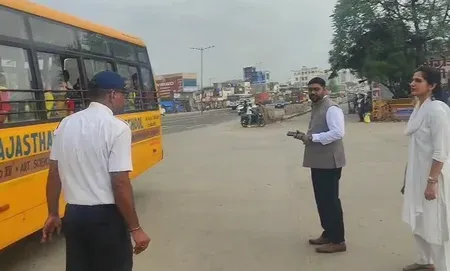
A fatal accident occurred on the Delhi-Mumbai Expressway in Dausa district, Rajasthan, involving a bus and a trailer. The crash triggered a state-level site inspection and a high-level review chaired by Chief Secretary V. Srinivas on 2 July.
What safety measures has Rajasthan ordered after the Dausa crash?
The state has ordered ALS ambulance upgrades on national highways, mandatory reflector tapes on heavy vehicles, large signboards before curves, improved lighting at black spots, encroachment removal drives, and a comprehensive FSL-backed investigation into the accident.
What will the accident investigation cover?
The investigation will examine the sequence of events, vehicle condition, registration, fitness certificates, insurance, pending challans, bus body structure, fire safety, the cause of the blaze, and FSL findings — in coordination with transport authorities of other states.
How will emergency response be improved on Rajasthan highways?
Basic Life Support ambulances on national highways will be upgraded to Advanced Life Support ambulances in phases, enabling critical care at accident sites. Trauma centres, fire tenders, and cranes are also to be positioned at scientifically determined intervals along highways.
Who is responsible for monitoring highways under the new directives?
District Collectors, in their role as chairpersons of District Road Safety Task Forces, have been made responsible for regularly monitoring highways, identifying encroachments and illegal parking, and ensuring time-bound corrective action.