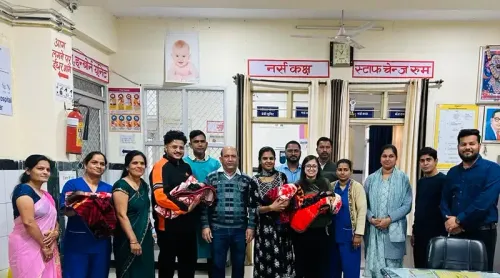
Rajasthan woman delivers quadruplets — 3 daughters, a son — in Jhalawar
Synopsis
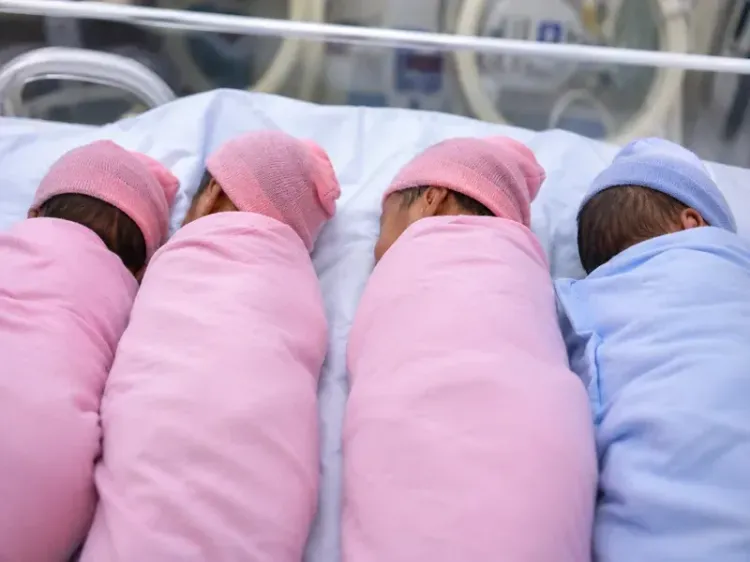
A Jhalawar woman delivered three daughters and a son in a single Caesarean birth — a quadruplet delivery so rare that the attending doctor called it a first in his career. All four babies, born at just 29 weeks and weighing barely over a kilogram each, are fighting for health in the NICU. Their progress over the next few days will be closely watched.
Key Takeaways
Jyoti Kashyap of Jhalawar, Rajasthan , delivered quadruplets — three daughters and a son — on Wednesday at Hira Kunwar Ba Women's Hospital .
All four babies were born via Caesarean section at approximately 29 weeks of gestation and admitted to the NICU .
Three infants weigh around 1.1 kg each; the fourth baby girl weighs approximately 1.2 kg — well below the healthy full-term benchmark of 2.5 kg .
Paediatrician Dr Naresh Meena confirmed the babies have underdeveloped lungs and require respiratory support.
Resident doctor Dr Vishal Nagar described it as the first quadruplet delivery he had witnessed in his medical career.
The mother is in stable condition and has been shifted to the gynaecology ward.
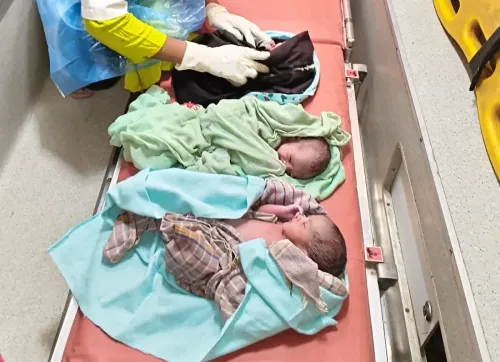
A woman in Jhalawar district, Rajasthan, gave birth to quadruplets — three daughters and a son — at Hira Kunwar Ba Women's Hospital on Wednesday, in what doctors have described as an exceptionally rare obstetric event. The babies were delivered via Caesarean section at approximately 11:50 am and have since been placed under intensive neonatal care.
The Mother and the Birth
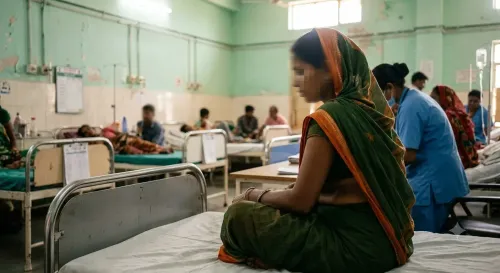
Jyoti Kashyap, wife of Arun Kashyap and a resident of Bhoi Mohalla in Jhalawar city, was undergoing her second pregnancy when she delivered the four infants. The couple already has a four-year-old daughter. Hospital authorities confirmed that Jyoti is currently in stable condition and has been moved to the gynaecology ward.
Condition of the Newborns
All four babies were born at approximately 29 weeks of gestation — roughly 11 weeks before a standard full-term delivery — and have been admitted to the Neonatal Intensive Care Unit (NICU) due to premature birth and low birth weight. Three of the infants weigh approximately 1.1 kg each, while the fourth baby girl weighs around 1.2 kg. A healthy full-term newborn typically weighs 2.5 kg or more, underscoring the medical fragility of the four children.
Paediatrician Dr Naresh Meena noted that the infants have underdeveloped lungs and require specialised respiratory support alongside round-the-clock monitoring. Resident doctors Dr Vishal Nagar and Dr Vijay Bakoliya are among the specialists overseeing the newborns' care.
What Doctors Said
Dr Vishal Nagar described the delivery as unlike anything he had encountered in his career. 'Quadruplet pregnancies are uncommon and occur only in a very small number of cases. This is the first time in my medical career that I have witnessed the birth of four babies in a single delivery,' he said.
Doctors remain cautiously optimistic but stressed that the coming days will be critical, given the combination of premature birth and low birth weight across all four neonates.
Medical Context
Quadruplet births are among the rarest natural obstetric events globally. While assisted reproductive technologies have increased the incidence of multiple pregnancies in recent decades, spontaneous quadruplet conceptions remain statistically uncommon. Preterm birth at 29 weeks carries significant risk, with survival and long-term outcomes heavily dependent on the quality of NICU care available — making the facilities at Hira Kunwar Ba Women's Hospital central to the prognosis for all four infants.
What Happens Next
The newborns will continue to receive intensive care in the NICU, with close observation of respiratory function, weight gain, and neurological development. Doctors have not yet indicated a projected discharge timeline, given the early stage of recovery. The case is expected to draw wider medical attention in Rajasthan.
Point of View
Where NICU capacity outside metro hospitals is often stretched. The survival odds for these four infants will depend not just on medical skill but on equipment availability and sustained specialist attention over weeks, not days. Cases like this also quietly spotlight the uneven distribution of advanced neonatal care across Rajasthan — a state that has made strides in maternal health but still faces gaps at the sub-divisional level. Whether this family's story ends in celebration or tragedy will hinge on resources that rarely make headlines.
NationPress
8 Oct 2026
Frequently Asked Questions
Where did the rare quadruplet birth in Rajasthan take place?
The quadruplets were born at Hira Kunwar Ba Women's Hospital in Jhalawar district, Rajasthan, on Wednesday at approximately 11:50 am. The delivery was performed via Caesarean section.
What is the current condition of the quadruplet babies?
All four babies — three daughters and a son — are in the Neonatal Intensive Care Unit (NICU) due to premature birth at 29 weeks and low birth weight ranging from 1.1 kg to 1.2 kg. They require respiratory support for underdeveloped lungs and are under continuous specialist monitoring.
Who is the mother of the quadruplets?
The mother is Jyoti Kashyap, wife of Arun Kashyap, a resident of Bhoi Mohalla in Jhalawar city. This was her second pregnancy; the couple already has a four-year-old daughter. Jyoti is reported to be in stable condition in the gynaecology ward.
How rare are quadruplet births?
Quadruplet pregnancies are extremely uncommon. Attending doctor Dr Vishal Nagar stated it was the first such delivery he had witnessed in his medical career, describing it as an exceptionally rare event. Spontaneous quadruplet conceptions are statistically very infrequent even globally.
What are the risks for premature babies born at 29 weeks?
Babies born at 29 weeks face significant risks including underdeveloped lungs, low birth weight, and vulnerability to infection and neurological complications. According to Dr Naresh Meena, the Jhalawar quadruplets require specialised respiratory support and close observation, with the coming days considered critical to their prognosis.