India stands with Nepal amid floods: BJP's Ram Madhav in Kathmandu
Synopsis
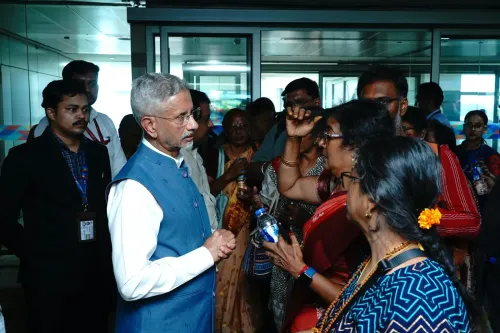
BJP National Vice-President Ram Madhav flew into a flood-stricken Kathmandu on 27 August and arrived with a second Indian relief aircraft right behind his plane — a symbolic and practical statement of solidarity. His remarks at the NDTV Anviksha dialogue ranged from Nepal's political upheaval and student protests in both countries to a candid acknowledgement that India-China trade at $159 billion outpaces India-US trade, even as he insisted Nepal's sovereign choices are its own.
Key Takeaways
BJP National Vice-President Ram Madhav visited Kathmandu on 27 August to express India's solidarity with flood-hit Nepal.
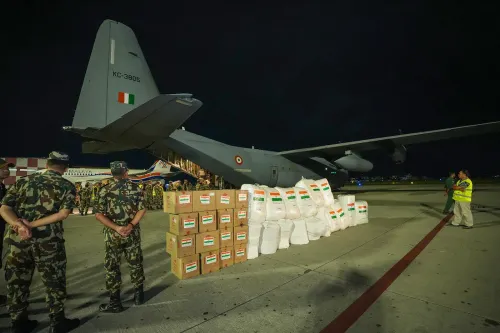
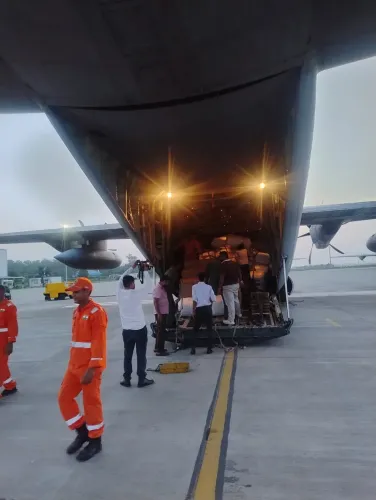
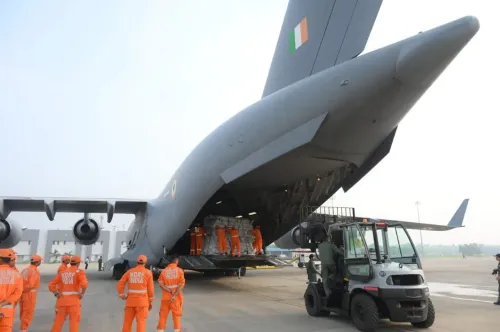
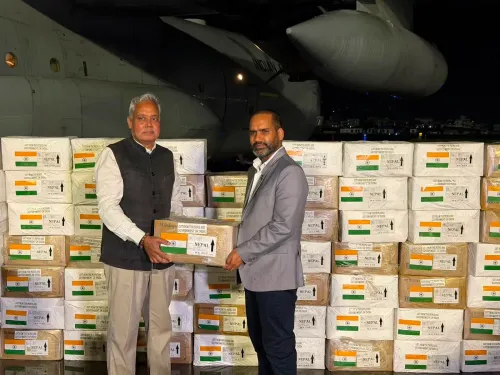
India dispatched at least two relief aircraft to Nepal — one on Wednesday and a second that landed alongside Ram Madhav's flight on Thursday .
Ram Madhav described India-Nepal disagreements as 'family quarrels,' firmly rejecting the idea of widespread anti-India sentiment in Nepal.
On Nepal-China ties, he said Nepal has sovereign rights to engage any country and India cannot dictate its neighbours' foreign policy priorities.
India-China bilateral trade stands at $159 billion , exceeding India-US trade when services are excluded, Ram Madhav noted.
He said the Modi government addressed Delhi student protesters' concerns last month and remains willing to engage with India's youth.
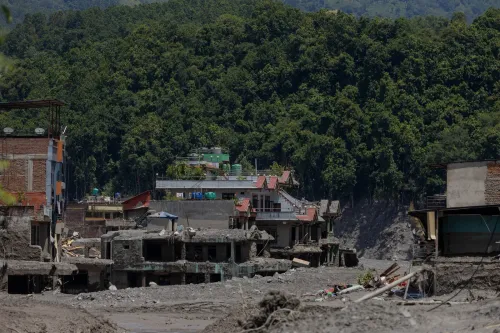
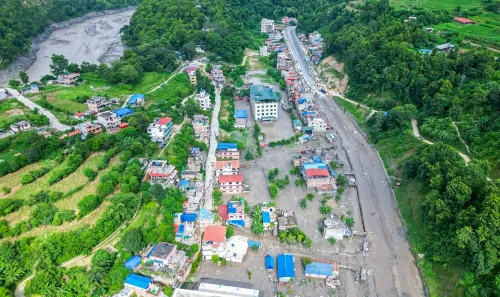
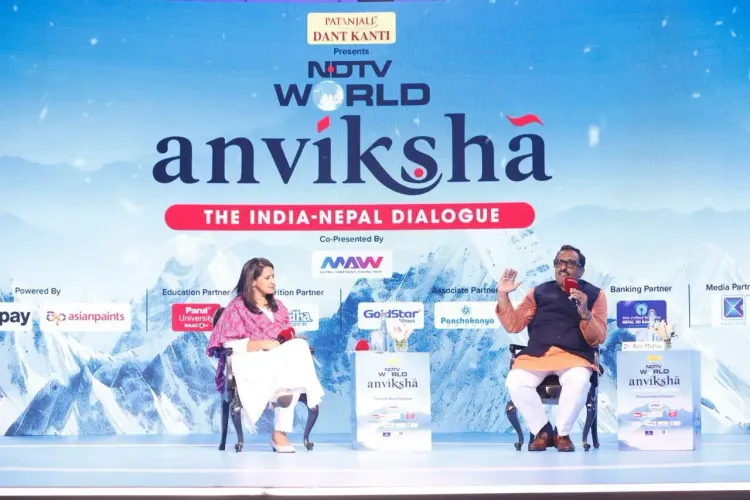
Bharatiya Janata Party (BJP) National Vice-President Ram Madhav on Thursday, 27 August declared that both the people and the government of India stand firmly behind Nepal as the country grapples with devastating flash floods that have caused widespread death and destruction since Wednesday. Speaking at the NDTV Anviksha: Ideas Across Borders dialogue in Kathmandu, Ram Madhav expressed solidarity and pointed to India's immediate relief response as evidence of the depth of the bilateral bond.
India's Flood Relief Response
'We are all with you, and we are really hopeful that with the relief activity that is being undertaken by the current government, Nepal would overcome this unfortunate tragedy,' Ram Madhav said at the event. He began his address by offering condolences to families who lost loved ones in Wednesday's flash floods.
Ram Madhav cited New Delhi's prompt action, noting that a plane-load of relief materials had reached Nepal on Wednesday, with a second relief aircraft landing in Kathmandu shortly after his own arrival on Thursday. The NDTV Anviksha dialogue itself observed a minute of silence for those who perished in the floods.
On the India-Nepal Open Border
Addressing the open border that India and Nepal share, Ram Madhav said it enables frequent people-to-people contact — a cornerstone of the bilateral relationship. At the same time, he stressed the need for vigilance: 'We have to take whatever necessary steps are to be taken to ensure that no illegal activity happens across the borders.'
Youth Protests in Nepal and India
The BJP leader also weighed in on youth-led political movements in both countries. He acknowledged last year's mass protests in Nepal, which he said resulted in a significant shift in the country's political landscape, adding: 'Whatever decision people of Nepal or youth of Nepal took was in the interest of their country, and that is their prerogative also.'
On student protests in India, Ram Madhav said the Prime Minister Narendra Modi-led government is always prepared to engage with young people and address their concerns. 'That's what happened in Delhi last month... The issues raised were immediately addressed, and the movement's agenda was fulfilled,' he said. He cautioned, however, against using generational labels — Gen Z, Gen Alpha, Millennials — to divide India's youth, stressing that the country is proud of its young population as a whole.
India-Nepal Ties and the China Question
Ram Madhav firmly dismissed the notion of any widespread anti-India sentiment in Nepal, describing bilateral disagreements as 'family quarrels' that should not be mistaken for hostility. He said Nepal views India 'as a good friend, a dear neighbour,' with the two countries sharing deep civilisational and cultural bonds.
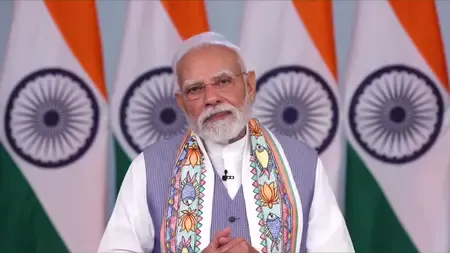
On Nepal-China relations, Ram Madhav was unequivocal: 'Nepal has sovereign rights to engage with any country, and India cannot dictate to any other country about its priority.' He invoked Prime Minister Modi's 'together we grow' philosophy for the neighbourhood, adding that Nepal's growth should benefit India, and vice versa.
Underscoring the complexity of regional geopolitics, Ram Madhav noted that India-China bilateral trade stands at $159 billion — higher than India's trade with the United States when the services sector is excluded — calling China 'an important country in our region.' He stressed that international relations ultimately rest on sovereign decisions of individual nations.
The Kathmandu dialogue, which brought together politicians, diplomats, business leaders, technology experts, athletes, and cultural figures from both countries, continues to spotlight the evolving and multi-layered relationship between the two neighbours.
Point of View
Projecting New Delhi as the first responder in Nepal's crisis. His candid acknowledgement that India-China trade at $159 billion outstrips India-US trade is a rare public admission from a senior BJP figure, one that complicates the ruling party's own hawkish China rhetoric. His framing of Nepal's youth protests as a legitimate democratic exercise, while simultaneously defending Delhi's handling of student demonstrations at home, reflects a careful balancing act that will be parsed closely in Kathmandu's political circles. The 'family quarrels' formulation for bilateral friction is a diplomatic softener, but it papers over structural tensions — from the border row to hydropower disputes — that have periodically strained ties.
NationPress
11 Oct 2026
Frequently Asked Questions
Why did BJP's Ram Madhav visit Kathmandu on 27 August?
Ram Madhav travelled to Kathmandu on 27 August to attend the NDTV Anviksha: Ideas Across Borders dialogue and to express India's solidarity with Nepal following devastating flash floods that struck the country on Wednesday. He also highlighted India's immediate relief response, including two aircraft carrying aid materials.
What flood relief has India sent to Nepal?
According to Ram Madhav, India dispatched at least two plane-loads of relief materials to Nepal — the first arrived on Wednesday, and a second landed in Kathmandu around the same time as his arrival on Thursday, 27 August.
What did Ram Madhav say about India-Nepal border issues?
Ram Madhav said the open border between India and Nepal facilitates frequent people-to-people contact, which he described as a strength of the relationship. He added, however, that both sides must take necessary steps to prevent illegal activity across the border.
How did Ram Madhav address Nepal-China relations?
Ram Madhav said Nepal has sovereign rights to engage with any country and that India cannot dictate another nation's foreign policy priorities. He also noted that India-China bilateral trade stands at $159 billion — higher than India-US trade excluding services — calling China 'an important country in our region.'
What did Ram Madhav say about youth protests in India and Nepal?
Ram Madhav acknowledged Nepal's youth-led protests last year as a legitimate democratic exercise that led to political change. On India, he said the Modi government addressed the concerns of Delhi student protesters last month and remains ready to engage with young people whenever issues arise.