Did the Ram Mandir Shilanyas Deal a Fatal Blow to 450 Years of Subjugation? PM Modi's Insights from 1989
Synopsis
In a revealing article from 1989, PM Narendra Modi, under the pseudonym 'Aniket', reflects on the Ram Mandir Shilanyas as a pivotal moment for Hindu resurgence in India. This piece examines the political dynamics at play and highlights the cultural significance of the event, marking a transformative period in Indian history.
Key Takeaways
Historical significance : The Ram Mandir Shilanyas marked a pivotal moment in India's cultural landscape.
Political dynamics : The article critiques Congress's long-standing resistance to Hindu aspirations.
Cultural awakening : It highlights the resurgence of Hindu consciousness in post-independence India.
Public mobilization : The movement gained momentum from the early 1980s, reflecting collective awareness.
Legacy of struggle : The event symbolizes the end of over four centuries of perceived subjugation.
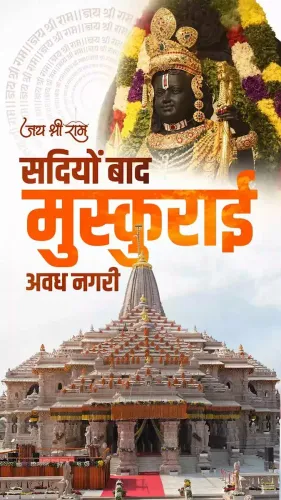
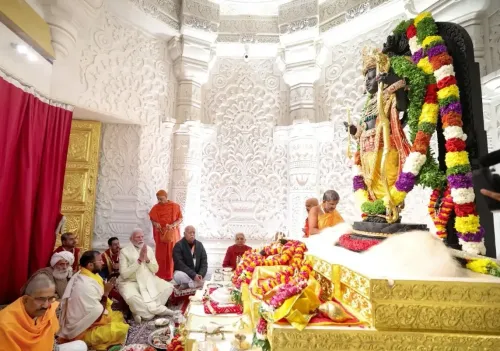
New Delhi, Jan 22 (NationPress) An article penned by Prime Minister Narendra Modi in 1989, under the alias 'Aniket', portrayed the Ram Mandir Shilanyas ceremony in Ayodhya as a monumental juncture in the resurgence of Hindu consciousness within a free India.
Published in the Gujarati publication Sadhana's 'Akshar Upvan' column on November 18, 1989, shortly after the foundation stone laying of the Ram Temple on November 9 and 10, PM Modi, then actively engaged with the Rashtriya Swayamsevak Sangh (RSS), characterized this event as a “devastating blow” to what he labeled a legacy of “450 years of subjugation” and heralded the start of a journey towards cultural emancipation.
The article articulated that successive Congress administrations had consistently resisted the demands regarding the Ram Janmabhoomi since 1947, accusing them of engaging in the “politics of minority appeasement” and attempting to hinder the movement at various intervals.
The foundation stone laying, or 'Ram Mandir Shilanyas', was orchestrated by the Vishva Hindu Parishad (VHP). Sacred bricks (known as Ram Shilas) gathered from all over India were utilized, and a symbolic foundation stone was placed by digging a pit, with the first brick often attributed to Kameshwar Chaupal, a Dalit participant linked with the initiative.
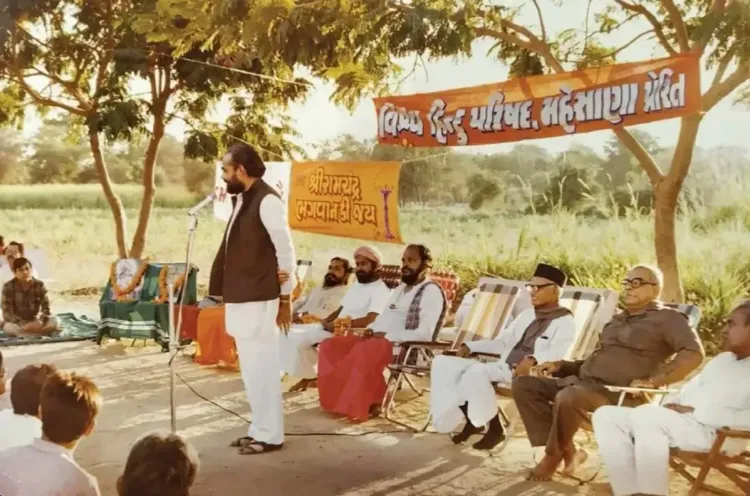
During this time, as an RSS pracharak, Narendra Modi was actively involved in organizing the campaign in Gujarat, notably visiting villages to gather bricks for the temple, collaborating closely with the VHP.
In the article, which has now been shared by the Modi Archive on X, PM Modi asserted that for the first time since gaining independence, Hindus were on the path to triumph, emphasizing that the Ayodhya event was a unified manifestation of cultural awareness rather than a mere political maneuver. He contended that political figures attempting to interpret the event through partisan perspectives neglected the historical currents propelling it.
“Some intellectuals, engaged in political manoeuvring, will color it with their own fantasies and derive arbitrary meanings. Some will see Congress' consent in the Hindu victory, while others will find pleasure in the Vishva Hindu Parishad's imaginative empire-building,” he noted.
“The entire globe was riveted on this event unfolding in India. Some power-hungry wolves, driven by the lure of votes, were intentionally disregarding the truth of the entire scenario and instilling fear of riots. For all such individuals, this magnificent day of Hindu awareness will serve as a lesson,” he remarked.
The article stated that public mobilization surrounding the issue began intensifying from the early 1980s, spearheaded by the Vishva Hindu Parishad.
“The Ayodhya event is distinctly a victory for the collective consciousness. This did not transpire by mere chance,” the article states.
“The Congress' politics of minority appeasement left no stone unturned in attempting to thwart this victorious march at every juncture,” it added.
“Post-independence, devotees of Ram sought the Ram Janmabhoomi starting in 1947. For a prolonged period of forty years, Congress leaders not only dismissed the idea but also entirely overlooked the appeals of impoverished Hindus. Beginning in 1982, Hindus gradually started to awaken concerning this matter,” it continued.
Referring to restrictions on Ram-Janaki chariot processions and Ram Shila movements, PM Modi, who was appointed as the General Secretary of the BJP's Gujarat unit in 1987, noted that government efforts to suppress religious mobilization repeatedly fell short in the face of public determination. He described the unlocking of the Ram Janmabhoomi structure as “the second victory for Hindus”, asserting it was compelled by mounting pressure.
“Saints and religious leaders issued warnings, Hindus became agitated, and then the Congress government had to retreat. The chariots had to be released within merely three months. The saints and religious leaders issued an ultimatum to unlock the Ram Janmabhoomi temple,” he stated.
“The Congress, which had resisted unlocking the lock for forty years, began to witness the might of the Hindus. Using the court's resolution as a pretext, they had to unlock the lock. This was the second triumph for the Hindus,” he added.
In his article, PM Modi asserted that when it came to the foundation stone laying ceremony for the Ram Temple, “The Congress government, with empty threats, declared that no such program would be permitted. The Hindus remained steadfast. The Congress government had to yield again. Ramshila worship programs unfolded in villages and homes nationwide. The Congress' laws remained merely on paper.”
Describing Congress as “vote-hungry” with a “petty mentality”, he noted that the party boasted intentions to prohibit processions of sacred stones—a challenge, he claimed, that was embraced by the Hindus.
“Grand and powerful processions occurred right under the gaze of Congress governments, and Congress' bans evaporated into thin air,” he stated.
“It threatened to ban the transport of sacred stones to Ayodhya, but achieved nothing. Even then, it attempted to prevent the November 9th event. Convoys of the army and police were deployed, a climate of fear was established, the propaganda machinery was extensively misused, threats were issued, and despicable attempts were made to dissuade the saints and religious leaders through all possible means, yet the Congress government achieved nothing. Their numerous endeavors to disrupt the sacred event completely failed,” he added.
Highlighting the broader implications of the events, PM Modi stated, “The Ayodhya incident signifies the defeat of state power in the presence of cultural forces,” and labeled it “a slap of truth on the emptiness of the Congress party's so-called secularism.”
The article further indicated that the developments in Ayodhya unveiled what it described as “the political conspiracies of 43 years of Congress culture,” portraying the Ram Shilanyas as the result of persistent collective consciousness rather than a fleeting political action.
Point of View
It is essential to recognize the significance of PM Modi's reflections on the Ram Mandir Shilanyas. This historical event not only underscores the awakening of Hindu consciousness but also reveals the intricate political narratives that have shaped contemporary India. The article serves as a reminder of the socio-political landscape and the enduring impact of cultural identity in national discourse.
NationPress
2 Oct 2026
Frequently Asked Questions
What was the significance of the Ram Mandir Shilanyas?
The Ram Mandir Shilanyas was seen as a turning point for Hindu consciousness in India, symbolizing a cultural awakening and a challenge to long-standing political narratives.
Who organized the Ram Mandir Shilanyas ceremony?
The ceremony was organized by the Vishva Hindu Parishad (VHP), with significant participation from various Hindu groups and individuals.
What did PM Modi say about Congress's role in the Ram Mandir movement?
PM Modi criticized the Congress party for obstructing the Ram Janmabhoomi movement and accused them of engaging in politics of minority appeasement.
How did the public react to the Ram Mandir movement?
Public mobilization intensified significantly from the early 1980s, reflecting a growing collective consciousness among Hindus regarding their cultural identity.
What were the implications of the Ram Mandir Shilanyas?
The event is viewed as a significant cultural milestone, indicating a shift in the socio-political dynamics of India and a resurgence of Hindu identity.