Ramdev alleges planned attacks on Sanatan Dharma, slams 'false' claims about Hindu deities
Synopsis
Baba Ramdev in Haridwar on Wednesday alleged coordinated, systematic attacks on Sanatan Dharma through false depictions of Hindu deities and distorted historical narratives. He rejected the Aryan migration theory, claimed over 150 crore global followers of Sanatan Dharma, and warned against what he called narratives engineered to divide Hindu society along caste and class lines.
Key Takeaways
Baba Ramdev alleged in Haridwar on 28 October that planned attacks are being carried out against Sanatan Dharma through false portrayals of Hindu deities.
He claimed Lord Ram , Goddess Sita , and Lord Shiva are being falsely depicted as consumers of alcohol, meat, and cannabis.
Ramdev alleged scriptures were 'interpolated' over the past 1,000 years during the Mughal and British periods to demean Sanatan Dharma.
He rejected the Aryan migration theory , asserting Indians travelled outward rather than arriving from outside.
Ramdev claimed more than 150 crore Sanatan Dharma followers globally, rising to 200 crore under the concept of Akhand Bharat .
He warned that narratives targeting Brahmins and promoting divisions between Hindu deities on economic lines were designed to fragment society.
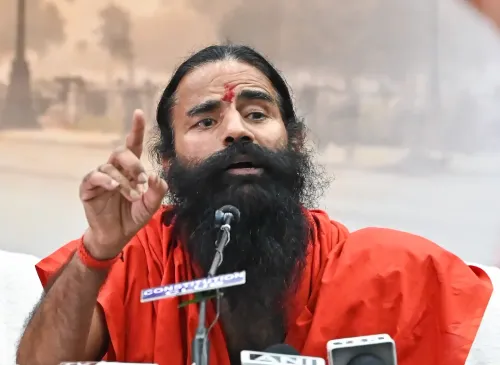
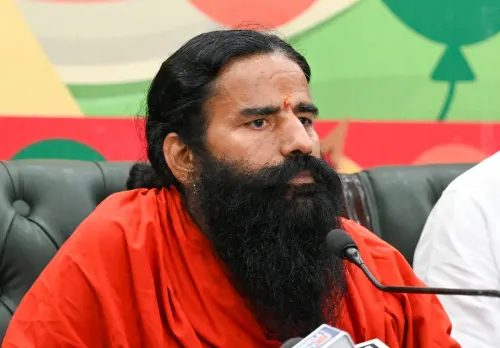
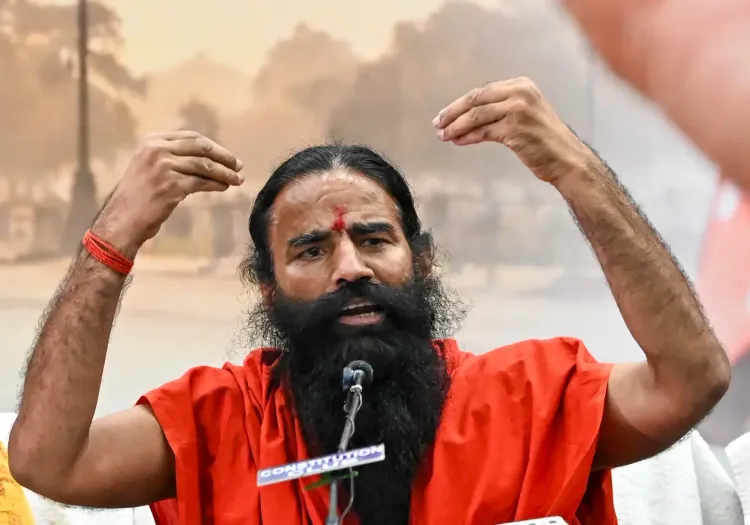
Yoga guru Baba Ramdev on Wednesday, 28 October alleged that planned and systematic attacks were being carried out against Sanatan Dharma, accusing unnamed elements of spreading what he described as false and derogatory claims about Hindu deities. Speaking to reporters in Haridwar, Ramdev called for a rejection of what he termed divisive narratives and claimed that historical accounts had been deliberately distorted to undermine the religion.
Allegations Over Depictions of Hindu Deities
Ramdev alleged that Lord Ram and Goddess Sita were being falsely portrayed as consumers of alcohol and meat, while Lord Shiva was being depicted as an addict and a consumer of cannabis and bhang. He also objected to what he described as the misrepresentation of Lord Krishna's Rasleela, allegations concerning Lord Brahma, and attempts to portray Hindu deities as immoral.
According to Ramdev, those propagating such narratives were acting in a contradictory manner — on one hand questioning the existence of Hindu deities and on the other making allegations about their personal lives.
Claims on Scripture Distortion and Historical Narratives
'By taking shelter of certain texts within Sanatan Dharma, over the past 1,000 years, during the Mughal period and the British era, opponents and heretics of Sanatan Dharma interpolated our scriptures to demean Sanatan Dharma,' he alleged.
Ramdev further criticised narratives that, according to him, sought to create divisions among Hindu deities along economic lines. 'In recent days, an even more unfortunate statement was made, claiming that Ram is the God of the rich, that 56 delicacies, offerings and adornments are presented to him, while Shiva is the God of the poor. These wicked people have even created a divide between rich and poor among the Gods!' he said.
Aryan Migration Theory and Social Unity
The yoga guru rejected the widely cited scholarly theory that Aryans migrated to India from outside, asserting instead that people from India had travelled outward to other parts of the world. 'I have travelled all over the world, and I asked people everywhere: "Did Aryans go to India from your place?" They replied, "No, people from India came to our place,"' he said.
Ramdev argued that migration typically occurred for three reasons: the pursuit of knowledge, the search for employment, and the expansion of business activities. He alleged that narratives promoting the concept of 'original inhabitants' and slogans such as 'Brahmins, leave India' were designed to fragment society. 'All these false narratives are being peddled in this country. But we are saying one clear thing: Aryans did not come from outside. There was no conflict between Aryans and Dravidians in this country,' he added.
Claims on Sanatan Dharma's Global Following
Ramdev also made claims about the ancestry of India's Muslim population, stating that many Muslims acknowledged having ancestors who followed Hindu traditions. He asserted that more than 150 crore followers of Sanatan Dharma lived across the world, adding that the figure would exceed 200 crore if the concept of Akhand Bharat was taken into account.
His remarks come amid continuing public debates over religious traditions, interpretations of ancient scriptures, and competing historical accounts concerning India's cultural and social origins.
Point of View
Yet it resonates with a segment of the public that views such theories as culturally imposed. What is notable is the breadth of the allegations: from deity depictions to scripture distortion to demographic claims about Muslims — a rhetorical sweep that conflates academic debate, cultural commentary, and political provocation. In an already charged religious discourse environment, statements of this scale from a figure of Ramdev's public reach carry real potential to sharpen communal sensitivities, and that dimension deserves scrutiny beyond the headlines.
NationPress
28 Oct 2026
Frequently Asked Questions
What did Baba Ramdev allege about Sanatan Dharma in Haridwar?
Baba Ramdev alleged in Haridwar on 28 October 2026 that planned and systematic attacks are being carried out against Sanatan Dharma by spreading false and derogatory claims about Hindu deities. He claimed figures such as Lord Ram, Goddess Sita, and Lord Shiva were being deliberately misrepresented, and that ancient scriptures had been distorted over centuries.
What did Ramdev say about the Aryan migration theory?
Ramdev rejected the scholarly Aryan migration theory, asserting that people from India had travelled to other parts of the world rather than arriving from outside. He claimed his global travels had reinforced this belief, though this position contradicts a significant body of archaeogenetic and linguistic research.
What claims did Ramdev make about the global following of Sanatan Dharma?
Ramdev asserted that more than 150 crore followers of Sanatan Dharma live across the world, and that the figure would exceed 200 crore if the concept of Akhand Bharat were taken into account. He also made claims about the Hindu ancestral roots of India's Muslim population.
What narrative divisions did Ramdev warn against?
Ramdev warned against narratives that he said sought to create a rich-poor divide between Hindu deities — specifically the claim that Ram is the God of the rich while Shiva is the God of the poor. He also flagged slogans targeting Brahmins and the promotion of an 'original inhabitants' framework as socially divisive.
What is the broader context of Ramdev's remarks?
His statements come amid ongoing public debates in India over religious traditions, interpretations of ancient scriptures, and competing historical accounts about the country's cultural origins. Ramdev is a prominent yoga guru with a large public following, and his remarks frequently intersect with religious and political discourse in India.