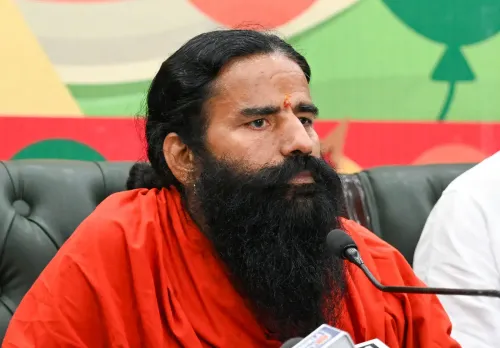
Baba Ramdev's remark on converted Muslims backed by Hindu seers
Synopsis
Baba Ramdev's claim that every Indian Muslim is a convert found swift endorsement from multiple Hindu spiritual leaders on 1 October 2026, with seers invoking Mughal-era forced conversions and asserting that 'everyone is born a Hindu.' The remarks reignite a long-running — and deeply contested — debate over religious ancestry and identity in India.
Key Takeaways
Baba Ramdev stated that 'every Muslim in India is a convert' and urged Muslims to reconnect with Sanatan ancestral roots.
Jagadguru Paramhans Acharya called it 'a very bitter truth' and invoked Ghar Wapsi as a path to forgiveness.
Mahamandaleshwar Vishnu Das Ji Maharaj claimed 'everyone is born a Hindu' and that all Muslims globally are 'inherently Sanatani.' Mahant Shri Girish Das Maharaj cited Mughal-era pressure and lure as the origin of Islamic conversions in India.
Sant Kripalu Ji Maharaj specifically named Babur, Humayun and Aurangzeb as rulers during whose reign Hindus were converted.
No formal response from Muslim religious bodies or government had been reported at the time of publication.
Yoga guru Baba Ramdev's assertion that 'all Muslims in India are converted' drew public support from several Hindu spiritual leaders on Thursday, 1 October 2026, with multiple seers arguing that the Sanatan tradition predates all other religions on the subcontinent and that conversion-era Muslims are, by ancestry, Hindu.
What Baba Ramdev Said
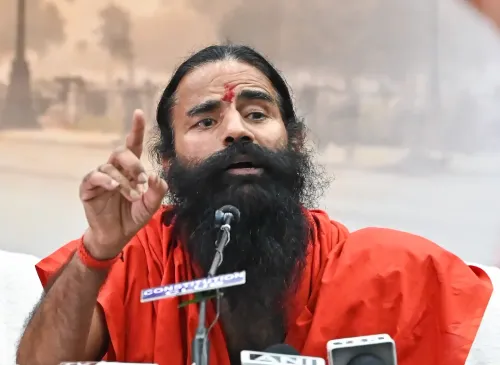
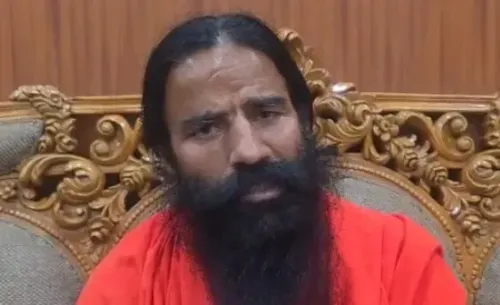
Ramdev had earlier stated: 'I would urge all my Muslim brothers to recognise that our ancient sages both male and female are their ancestors too; Ram and Krishna are their ancestors as well. If Muslims connect with their ancestral roots, they will never feel weak. After all, every Muslim in India is a convert. If Hindus and Muslims live together in unity, they will become strong themselves, and the country will also grow stronger.' The remark quickly sparked reaction across religious circles.
Spiritual Leaders Voice Support
Jagadguru Paramhans Acharya, Peethadhishwar of Tapasvi Chhawani, described it as 'a very bitter truth,' adding: 'All Muslims in India have Ram and Krishna as their ancestors. Everyone is Sanatani, and everyone's ancestors were Hindu. The day they perform Ghar Wapsi, all their sins will be forgiven.'
Jagatguru Ram Dinesh Acharya said he found Ramdev's statement 'correct and logical,' arguing that because the Sanatan tradition preceded other religions in India, those who later converted remain 'also Hindus' in his view.
Mahamandaleshwar Vishnu Das Ji Maharaj went further, contending that 'everyone is born a Hindu' and that rituals such as circumcision and recitation of the Kalima are what make a person Muslim. He added: 'All Muslims, whether in India or abroad, are inherently Sanatani.'
Historical Framing Invoked
Mahant Mahamandaleshwar Shri Girish Das Maharaj welcomed the statement and said that 'during the period of Mughal rule, Hindus were forcibly pressured or lured with various temptations to convert to Islam.' He added that Sanatan tradition welcomes back those who wish to undertake 'Ghar Wapsi'.
Sant Kripalu Ji Maharaj echoed the historical argument, noting: 'There were many Hindus during the rule of Babur, Humayun and Aurangzeb who were converted.' The invocation of Mughal-era rulers to frame contemporary religious identity is a recurring thread in such discourse.
Context and Significance
The remarks arrive at a politically charged moment in New Delhi, as debates around religious identity, Ghar Wapsi reconversion campaigns, and the Sanatan tradition have intensified in recent years. Critics and Muslim community leaders have historically rejected the framing that Indian Muslims are 'originally Hindu,' arguing it erases centuries of Islamic heritage and diverse ancestral origins. No formal response from Muslim religious bodies had been reported at the time of publication.
The episode underscores how statements by high-profile religious figures can rapidly coalesce into a coordinated narrative, drawing in institutional voices from across the seer community. Whether it prompts a counter-statement from interfaith platforms or government comment remains to be seen.
Point of View
Frame it as spiritual fact, and activate institutional religious voices to amplify it. What mainstream coverage often underplays is that the 'all Indian Muslims are converts' thesis is historically simplistic — Muslim communities in Kerala, coastal Karnataka, and parts of Bengal trace heritage to Arab traders and pre-Mughal migration, not Mughal coercion. The Ghar Wapsi framing, dressed here in conciliatory language about 'unity,' has in other contexts been linked to organised reconversion drives that civil society groups and courts have scrutinised. The absence of any Muslim institutional voice in this narrative is itself a data point about how asymmetrically this conversation unfolds in public.
NationPress
1 Oct 2026
Frequently Asked Questions
What exactly did Baba Ramdev say about Indian Muslims?
Ramdev said that every Muslim in India is a convert, and urged Muslim brothers to recognise that ancient Hindu sages, Ram and Krishna, are their ancestors too. He argued that if Hindus and Muslims lived together in unity, both communities and the country would grow stronger.
Who are the Hindu spiritual leaders who backed Ramdev's statement?
Several seers voiced support, including Jagadguru Paramhans Acharya (Peethadhishwar of Tapasvi Chhawani), Jagatguru Ram Dinesh Acharya, Mahamandaleshwar Vishnu Das Ji Maharaj, Mahant Mahamandaleshwar Shri Girish Das Maharaj, and Sant Kripalu Ji Maharaj.
What is Ghar Wapsi and why is it being mentioned?
Ghar Wapsi, literally meaning 'homecoming,' refers to reconversion ceremonies through which non-Hindus are brought back into the Hindu fold. Multiple seers in their statements explicitly invited Indian Muslims to undertake Ghar Wapsi, framing it as a return to ancestral roots.
Why do critics contest the claim that all Indian Muslims are converts?
Historians and Muslim community representatives have long argued that Muslim heritage in India is diverse — predating Mughal rule in regions like Kerala and coastal Karnataka — and cannot be reduced to forced or incentivised Mughal-era conversions. The claim is considered historically contested rather than established fact.
Has the government or any Muslim body responded to these remarks?
No formal government response or Muslim religious body statement had been reported at the time this article was published on 1 October 2026.