Baba Ramdev: All Indian Muslims are converts, should accept Ram and Krishna as ancestors
Synopsis
Yoga guru Baba Ramdev has declared that every Muslim in India is a convert and should accept Lord Ram and Krishna as ancestors — remarks that echo recent statements by BJP leaders and land in an already charged debate over Muslim political identity. With AIMIM's Owaisi alleging that no party backs genuine Muslim political agency, and Ramdev also firing back at Telangana CM Revanth Reddy's 'Ram for the rich, Shiva for the poor' framing, the religious and political temperature is rising sharply.
Key Takeaways
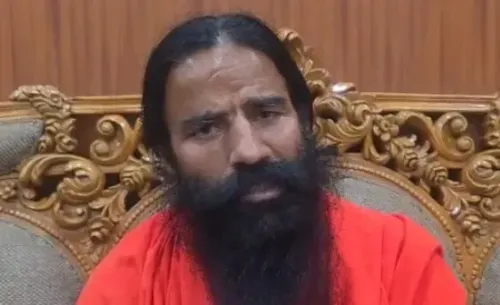
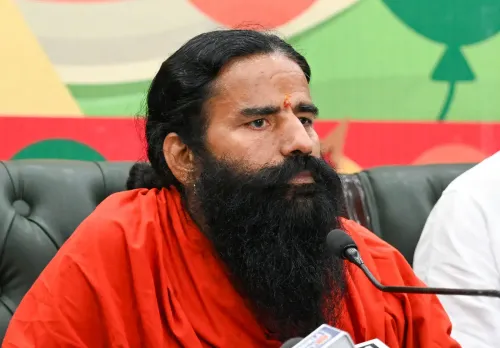
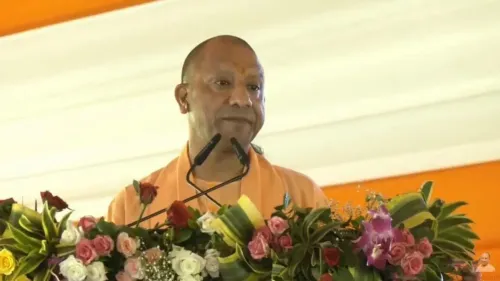
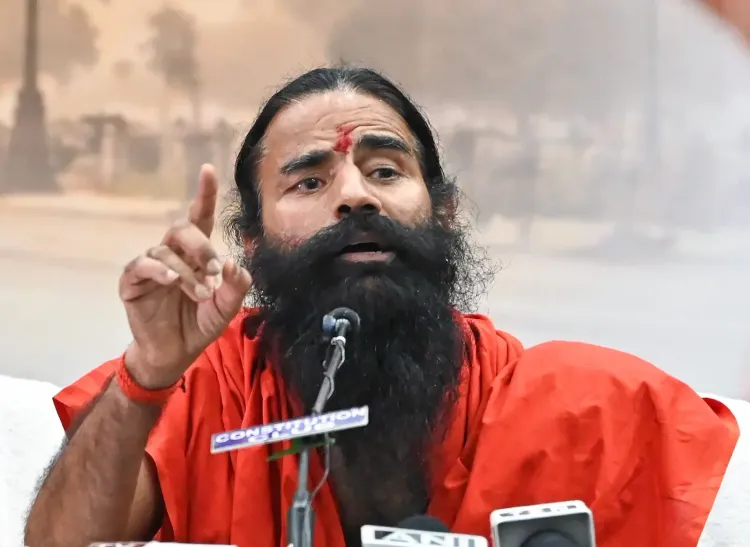
Baba Ramdev on 30 September in Mathura said every Muslim in India is a convert and should recognise Lord Ram and Lord Krishna as ancestors.
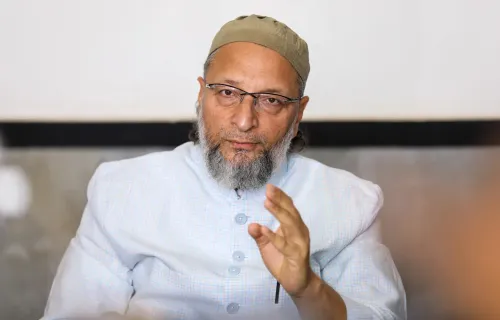
The remarks came in response to AIMIM chief Asaduddin Owaisi 's claim that no Indian political party wants Muslims to have independent political agency.
BJP Minority Morcha national president Jamal Siddiqui made similar statements earlier in 2026 , calling Muslims 'descendants of Lord Ram.' UP Minister Anand Swaroop Shukla made comparable remarks in 2021 , citing Ram, Krishna, and Shiva as ancestors of Indian Muslims.
Ramdev also rejected Telangana CM A.
Revanth Reddy 's framing of Lord Ram as the 'God of the rich' and Lord Shiva as the 'God of the poor.'
Yoga guru Baba Ramdev on Wednesday, 30 September sparked fresh controversy in Mathura by asserting that every Muslim in India is a convert and should recognise Lord Ram and Lord Krishna as their ancestors to find strength and unity. The remarks came in direct response to All India Majlis-e-Ittehadul Muslimeen (AIMIM) chief Asaduddin Owaisi's claim that no political party in India wants Muslims to have an independent political agency.
What Baba Ramdev Said
Speaking to reporters, Ramdev urged the Muslim community to reconnect with what he described as shared ancestral roots. 'I would urge all my Muslim brothers to recognise that our ancient sages are their ancestors too; Lord Ram and Lord Krishna are their ancestors as well. If Muslims connect with their ancestral roots, they will never feel weak,' he said.
He went further, adding: 'This is because every Muslim in India is a convert. If Hindus and Muslims live together in unity, they will become strong themselves, and the country will also grow stronger.' The remarks are certain to draw sharp reactions from minority groups and Opposition parties.
A Pattern of Similar Statements
Ramdev's comments are not an isolated incident. Earlier this year, Jamal Siddiqui, National President of the Bharatiya Janata Party (BJP)'s Minority Morcha, made comparable remarks, saying: 'Muslims who do not believe in Ram and Krishna cannot be called Muslims,' while asserting that the revered figures may have a place within Islamic spiritual lineage. In a separate media interview, Siddiqui also stated: 'All Muslims are descendants of Lord Ram.'
Going further back, Uttar Pradesh Minister Anand Swaroop Shukla made similar statements in 2021, declaring that Lord Ram, Shri Krishna, and Lord Shiva were the ancestors of Indian Muslims and urging them to bow to the 'land and culture of India.'
Ramdev on Telangana CM's Remarks About Ram and Shiva
The yoga guru also responded to recent statements by Telangana Chief Minister A. Revanth Reddy, who had described Lord Shiva as the 'God of the poor' and Lord Ram as the 'God of the rich' while questioning the BJP's repeated use of the 'Jai Shri Ram' slogan.
Ramdev rejected the framing categorically: 'Sanatan has existed for ages and will continue to do so. Some people previously sowed discord within Sanatan based on caste, class, and community. Now, they claim that Lord Ram is the God of the rich and Lord Shiva is the God of the poor. There is no distinction between Lord Ram, Shri Krishna, Lord Hanuman, Lord Shiva, the Divine Couple (Bhagavan-Bhagavati), Uma-Maheshwar, Lakshmi-Narayana, Sita-Ram, Radha-Krishna, or Rukmini-Krishna,' he said.
He called those who harbour such views 'opposed to Sanatan' and appealed to all: 'Do not create confusion and do not discriminate, at least not in the name of God.'
The Broader Context
The remarks come amid a wider, ongoing national debate over religious identity and political representation of Muslims in India. Owaisi's earlier allegation — that the community has been reduced to a vote bank with no independent political agency — has reignited discussions about the place of minority communities in Indian electoral politics. Ramdev's intervention adds a theological and civilisational dimension to what is already a charged political conversation. Critics argue that characterising Indian Muslims as converts and urging them to adopt Hindu ancestral identities risks deepening communal fault lines rather than bridging them. The statements are likely to draw scrutiny from civil society groups and Opposition leaders in the coming days.
Point of View
One that has now surfaced through a BJP Minority Morcha president, a sitting UP minister, and a nationally known yoga entrepreneur within the span of a few years. What is notable is the framing: the argument is cast as an invitation to unity rather than an assertion of supremacy, which makes it harder to dismiss and easier to circulate. Yet critics would rightly note that the claim that all Indian Muslims are converts is a contested historical position, not an established fact, and using it as the basis for prescribing ancestral identity carries profound implications for constitutional secularism. The timing — arriving precisely as Owaisi raises the question of Muslim political marginalisation — is unlikely to be coincidental.
NationPress
30 Sept 2026
Frequently Asked Questions
What did Baba Ramdev say about Indian Muslims on 30 September?
Ramdev said that every Muslim in India is a convert and urged the community to recognise Lord Ram and Lord Krishna as their ancestors, arguing this would give them strength and promote national unity. He made the remarks in Mathura on 30 September 2026.
Why did Baba Ramdev make these remarks?
Ramdev was responding to AIMIM chief Asaduddin Owaisi's allegation that no political party in India wants Muslims to have an independent political agency and that the community has been reduced to a vote bank. Ramdev offered a counter-narrative rooted in shared civilisational ancestry.
Have other political or public figures made similar statements before?
Yes. BJP Minority Morcha national president Jamal Siddiqui made comparable remarks earlier in 2026, stating 'All Muslims are descendants of Lord Ram.' Uttar Pradesh Minister Anand Swaroop Shukla made similar claims in 2021, describing Ram, Krishna, and Shiva as ancestors of Indian Muslims.
What did Ramdev say about Telangana CM Revanth Reddy's remarks?
Ramdev rejected Revanth Reddy's framing of Lord Ram as the 'God of the rich' and Lord Shiva as the 'God of the poor,' calling such views divisive and 'opposed to Sanatan.' He appealed to all not to discriminate in the name of God.
What is the significance of these remarks in the current political context?
The statements arrive amid a broader national debate on Muslim political representation and religious identity in India. Critics argue that characterising Indian Muslims uniformly as converts and prescribing ancestral Hindu identity risks deepening communal divisions, while proponents frame it as a call for civilisational unity.