Shivraj Singh Chouhan joins Chhath Sandhya Arghya in Mandideep
Synopsis
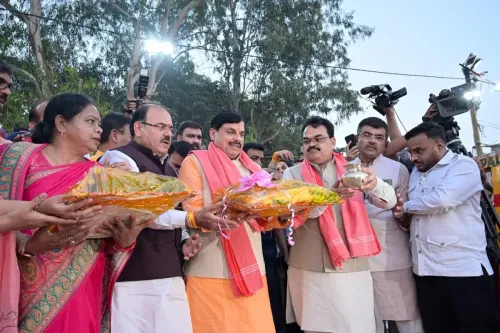
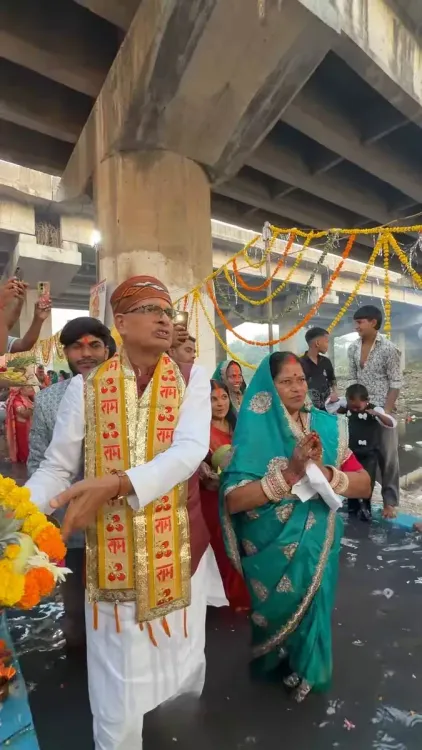
Union Agriculture Minister Shivraj Singh Chouhan joined the Chhath Mahaparv Sandhya Arghya in Mandideep, Raisen district, Madhya Pradesh on 15 November 2026, paying tribute to women observing the nirjala vrat and invoking blessings of Chhathi Maiya and Surya Dev.
Key Takeaways
Shivraj Singh Chouhan attended the Chhath Mahaparv Sandhya Arghya in Mandideep, Raisen district, Madhya Pradesh on 15 November 2026 .
He praised the mothers and sisters who observe the demanding nirjala vrat (waterless fast) for their families' welfare.
The minister invoked blessings of Chhathi Maiya and Surya Dev upon all devotees.
Mandideep hosts a significant migrant population from Bihar and eastern UP for whom Chhath holds deep cultural significance.
The visit reflects Chouhan's long-standing practice of attending community religious festivals across Madhya Pradesh.
Amid the glow of earthen lamps and the quiet devotion of fasting mothers and sisters, Union Agriculture Minister Shivraj Singh Chouhan joined the Sandhya Arghya celebrations of Chhath Mahaparv in Mandideep, Raisen district, Madhya Pradesh, on the evening of Sunday, 15 November 2026.
Chouhan described the experience as one of deep joy and reverence. 'मन आनंद और श्रद्धा से भर गया' ('my heart filled with joy and devotion'), he wrote, paying tribute to the women who observe the gruelling nirjala vrat — a waterless fast — for the welfare of their families and children. 'Their penance and dedication deserve repeated salutations,' he said, invoking the blessings of Chhathi Maiya and Surya Dev upon all.
The Sandhya Arghya — what the ritual means
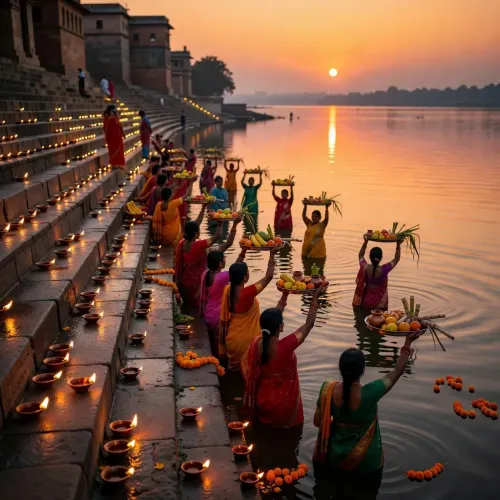
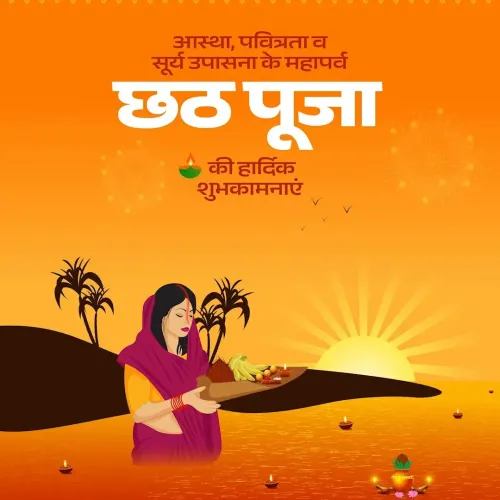
Chhath Mahaparv is among the most demanding of Hindu festivals, stretching across four days with strict fasting, ritual bathing, and offerings to the rising and setting sun. The Sandhya Arghya — the evening offering to the setting sun — is its emotional centrepiece, when devotees wade into water bodies to offer arghya as the sun dips below the horizon. The festival draws its deepest participation from Bihar, eastern Uttar Pradesh, and pockets of Madhya Pradesh, and has grown into a broadly pan-Indian observance over the last two decades.
Chouhan's sustained cultural thread in MP
For Chouhan, the Mandideep visit is consistent with a pattern he has sustained across his nearly two decades in Madhya Pradesh public life — turning up at community festivals not as a token presence but as a participant. As a four-term Chief Minister of Madhya Pradesh before moving to the Union Cabinet, he built much of his political identity around cultural accessibility, attending everything from tribal fairs to religious melas. That same instinct now travels with him even as a Union minister, keeping his connection to the state's grassroots intact.
Mandideep, an industrial township in Raisen district, hosts a significant migrant working population — many of them from Bihar and eastern UP — for whom Chhath is not merely a festival but a living thread to home. The minister's presence there carries a layered resonance: honouring a tradition that is both deeply regional and increasingly national.
As winter festival season settles over central India, the Chhath gathering in Mandideep offered a moment of collective stillness — and a Union minister pausing, in full public view, to salute the quiet, unbreakable devotion of ordinary families.
Point of View
The minister threads the needle between public duty and genuine cultural engagement.
NationPress
15 Nov 2026
Frequently Asked Questions
Where did Shivraj Singh Chouhan attend Chhath Mahaparv in 2026?
He attended the Chhath Mahaparv Sandhya Arghya celebration in Mandideep, located in Raisen district, Madhya Pradesh, on 15 November 2026.
What is Sandhya Arghya in Chhath Mahaparv?
Sandhya Arghya is the central evening ritual of Chhath Mahaparv where devotees wade into water bodies and offer prayers to the setting sun, marking one of the most sacred moments of the four-day festival.
What is the nirjala vrat observed during Chhath?
The nirjala vrat is a strict waterless fast observed primarily by women during Chhath Mahaparv for the welfare and long life of their children and family, lasting for an extended period without food or water.
What is Shivraj Singh Chouhan's current post?
Shivraj Singh Chouhan is currently the Union Minister of Agriculture and Farmers Welfare and Rural Development in the Government of India, and is a former four-term Chief Minister of Madhya Pradesh.
Why is Chhath celebrated in Mandideep, Madhya Pradesh?
Mandideep is an industrial township with a significant migrant workforce from Bihar and eastern Uttar Pradesh, communities for whom Chhath Mahaparv is a major cultural and religious festival, making it widely observed in the area.