RBI bars banks from selling stressed assets back to defaulters from October 2026
Synopsis
The RBI has shut a critical backdoor in stressed asset resolution: lenders can no longer sell immovable assets seized from defaulters back to those same borrowers or their associates. The new SNFA framework — effective October 2026 — also mandates seven-year disposal windows, biennial revaluations, and board-level governance policies, tightening a space that has long been prone to opaque recovery deals.
Key Takeaways
The RBI has issued final Resolution of Stressed Assets Directions 2026 , effective 1 October 2026 , applicable to commercial banks, SFBs , and NBFCs .
Lenders are barred from selling SNFAs back to the defaulting borrower or related parties as defined under the Insolvency and Bankruptcy Code, 2016 .
All SNFAs must be disposed of within a maximum of seven years via public auctions under the SARFAESI Act, 2002 .
SNFAs must be revalued at least once every two years on a distress sale basis; value diminution must be recognised immediately in the profit and loss statement .
Legacy SNFAs as on 30 September 2026 must comply with the new framework by 30 September 2027 .
SNFAs will be excluded from Gross NPA, Net NPA , and provisioning coverage ratios, and disclosed separately in balance sheets.
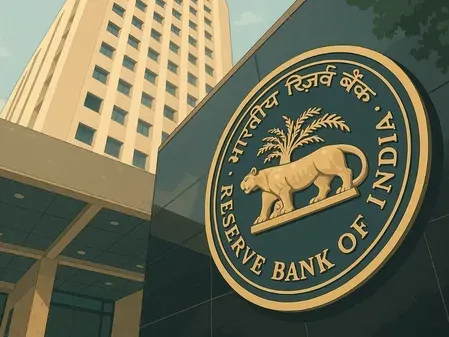
The Reserve Bank of India (RBI) has issued final prudential norms under its Resolution of Stressed Assets Directions 2026, barring commercial banks, small finance banks (SFBs), and non-banking financial companies (NBFCs) from selling specified non-financial assets (SNFAs) — acquired during stressed loan resolution — back to the defaulting borrower or its related parties. The new directions come into effect on 1 October 2026.
What Are SNFAs and Why This Matters
An SNFA refers to an immovable asset acquired by a lender in full or partial satisfaction of its claims on a borrower whose account has been classified as a non-performing asset (NPA). Lenders can acquire such assets only in exceptional circumstances — not as part of their routine business operations.
The RBI has explicitly stated: 'A SNFA shall not be sold back to the borrower or its related parties.' The definition of 'related parties' follows the Insolvency and Bankruptcy Code (IBC), 2016. Crucially, this restriction persists even if the asset later ceases to be classified as an SNFA — closing a potential regulatory loophole.
Key Disposal and Valuation Rules
Banks and NBFCs must dispose of SNFAs within a maximum period of seven years from acquisition. Disposal must follow public auction principles laid down under the SARFAESI Act, 2002. Post-acquisition, each SNFA must be revalued at least once every two years on a distress sale basis, factoring in reasons for any delay in disposal.
Valuation gains, if any, are to be ignored. Any diminution in value must be recognised immediately in the profit and loss statement. SNFAs must be recorded in the balance sheet at the lower of the net book value of the extinguished exposure or the distress sale value, as determined by at least two independent external valuers.
Treatment of Partial Loan Extinguishment
Where acquisition occurs against full extinguishment of a loan, the transaction is on a non-recourse basis. In cases of partial extinguishment, the remaining loan exposure will be treated as a restructured loan and attract the applicable prudential norms — adding a layer of accountability for lenders who do not fully recover dues through the asset.
Board-Level Governance Requirements
The RBI has directed all regulated entities to frame board-approved policies governing the acquisition and disposal of SNFAs. These policies must specify limits on such assets as a share of total assets, eligibility criteria, delegation of powers, recovery efforts undertaken before acquisition, and the seven-year maximum disposal period.
Notably, SNFAs will not form part of Gross NPA, Net NPA, stressed exposures, or the provisioning coverage ratio. They will instead be disclosed under relevant accounting heads — categorised as 'non-banking assets acquired in satisfaction of claims', 'Specified Non-Financial Assets', or 'Other Assets' — in line with applicable regulations and accounting standards.
Transition Timeline for Legacy Assets
Legacy SNFAs outstanding as on 30 September 2026 must comply with the new norms by 30 September 2027, giving lenders a one-year window to align existing holdings with the revised framework. Separate disclosure requirements have also been prescribed for these assets.
With the norms set to take effect in three months, banks and NBFCs will need to move swiftly on policy framing, valuation appointments, and disposal pipelines — particularly for assets that have lingered on balance sheets well beyond recovery timelines.
Point of View
Under pressure to clean up balance sheets, could quietly return seized immovable assets to the very borrowers who defaulted — often at negotiated prices that obscured true recovery rates. By making the ban permanent — even after an asset loses its SNFA classification — the regulator has closed a loophole that could have been exploited through reclassification timing. The seven-year disposal window and biennial distress-basis revaluation together prevent asset values from being artificially held up on balance sheets. What remains to be seen is whether public auction requirements under SARFAESI will generate genuine price discovery for illiquid commercial and industrial properties, or simply delay the inevitable write-downs that a transparent distress-sale market would force.
NationPress
15 Oct 2026
Frequently Asked Questions
What are Specified Non-Financial Assets (SNFAs) under the new RBI norms?
SNFAs are immovable assets acquired by a bank or NBFC in full or partial satisfaction of its claims on a borrower whose loan has been classified as a non-performing asset (NPA). Under the RBI's Resolution of Stressed Assets Directions 2026, lenders can acquire such assets only in exceptional circumstances, not as part of routine business.
Why has the RBI barred banks from selling SNFAs back to defaulters?
The RBI has prohibited this to prevent lenders from returning seized assets to the same borrowers who defaulted, a practice that could obscure true recovery outcomes and undermine stressed asset resolution integrity. The ban applies to the borrower and all related parties as defined under the Insolvency and Bankruptcy Code, 2016, and remains in force even if the asset is later reclassified.
When do the new SNFA prudential norms come into effect?
The new norms take effect from 1 October 2026. Legacy SNFAs already on lenders' books as on 30 September 2026 must be brought into compliance with the new framework by 30 September 2027.
What is the maximum period banks can hold an SNFA before disposing of it?
Banks, SFBs, and NBFCs must dispose of SNFAs within a maximum of seven years from acquisition. Disposal must be conducted through public auctions following principles under the SARFAESI Act, 2002, and assets must be revalued at least once every two years on a distress sale basis.
How will SNFAs appear on a bank's balance sheet?
SNFAs will not be counted as part of Gross NPA, Net NPA, stressed exposures, or the provisioning coverage ratio. They will be disclosed separately under accounting heads such as 'non-banking assets acquired in satisfaction of claims' or 'Specified Non-Financial Assets' or 'Other Assets', in line with applicable regulations and accounting standards.