RBI likely to hold rates as hawkish tilt looms, HSBC warns
Synopsis
The RBI is set to hold rates — but HSBC's chief India economist warns the central bank faces its 'hardest situation': inflation climbing toward 5% on oil and rupee pressure, while growth is already slowing. Two rate hikes from Q4 2026 are on the table, and the MPC's language at the upcoming meeting could be the clearest signal yet of where India's monetary cycle is heading.
Key Takeaways
RBI is expected to keep policy rates unchanged at the upcoming MPC meeting , according to HSBC .
Pranjul Bhandari , HSBC's chief India economist, projects approximately two rate hikes starting in Q4 2026 .
RBI's inflation projection could rise to nearly 5 per cent , up from an earlier estimate of 4.6 per cent , if oil is baselined at $95/bbl .
CareEdge Ratings flagged a below-normal monsoon and retail fuel price hikes as intensifying inflationary risks.
Current inflation is characterised as a supply shock , not demand-driven, complicating the rate-hike calculus.
FY27 GDP growth projected at 6.7 per cent at $90/bbl crude, but could fall to 6 per cent if oil sustains near $110/bbl .
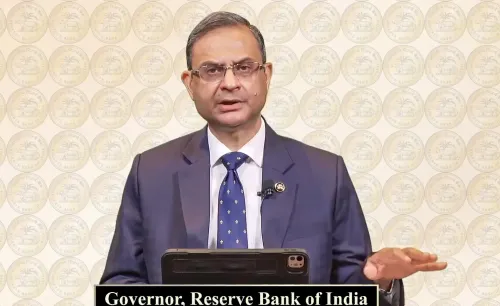
The Reserve Bank of India (RBI) is widely expected to keep policy rates unchanged at its upcoming Monetary Policy Committee (MPC) meeting, but its tone may shift decidedly more hawkish as rising oil prices and a weakening rupee cloud the inflation outlook, according to Pranjul Bhandari, chief India economist and macro strategist at HSBC.
What HSBC Expects
Bhandari projects a gradual tightening path rather than an aggressive cycle, with approximately two rate hikes beginning in the fourth quarter of 2026. She argues that the RBI's updated forecasts will offer the clearest signal yet of how policymakers are reading the ongoing energy shock.
At its previous review, the central bank had pegged its baseline oil assumption at around $85 per barrel, with an alternative scenario at $95. Bhandari now believes the higher figure will become the RBI's base case — a shift that would push inflation projections closer to 5 per cent, up from an earlier estimate of 4.6 per cent.
The Dilemma Facing the RBI
'Inflation is rising, which argues for higher rates, while growth is slowing, which argues against rate hikes,' Bhandari said, describing it as 'the hardest situation for a central bank.' She cautioned that elevated oil prices and a potential El Niño effect could simultaneously weigh on growth, inflation control, the fiscal deficit, and the current account.
This comes amid a broader reassessment of India's monetary trajectory, as global commodity volatility and erratic monsoon forecasts inject fresh uncertainty into policymakers' models.
CareEdge Ratings Flags Supply-Side Risks
A separate report from CareEdge Ratings reinforces the hawkish case. The agency noted that inflationary pressures have intensified due to a projected below-normal monsoon and recent retail fuel price hikes. A sharp rise in Wholesale Price Index (WPI) inflation also raises the risk of a faster second-round pass-through to consumer prices.
Critically, CareEdge characterised the current inflation uptick as a supply shock rather than a demand-driven phenomenon — a distinction that limits how aggressively the RBI can tighten without hurting growth.
Growth Outlook Under Pressure
CareEdge projected FY27 GDP growth at 6.7 per cent, assuming crude oil averages around $90 per barrel. However, if prolonged geopolitical conflict keeps oil near $110 per barrel, growth could slip closer to 6 per cent — a meaningful downgrade for an economy that has been a rare bright spot in a slowing global landscape.
With the MPC meeting approaching, markets and analysts will watch the RBI's revised inflation and growth projections closely. Any upward revision to the inflation path will be read as a hawkish signal, even if the policy rate itself remains on hold for now.
Point of View
The central bank has limited clean options. HSBC's call of two hikes from Q4 2026 is measured, but the real risk is that oil stays elevated longer than models assume, forcing a more disruptive tightening cycle. The MPC's communication at this meeting matters as much as the rate decision itself — markets will parse every word of the statement for the pivot signal.
NationPress
17 Oct 2026
Frequently Asked Questions
What is the RBI expected to decide at the upcoming MPC meeting?
The RBI is widely expected to hold policy rates unchanged at the upcoming Monetary Policy Committee meeting. However, its communication may turn more hawkish given rising oil prices and a weaker rupee complicating the inflation outlook.
Why might the RBI adopt a more hawkish tone?
Rising crude oil prices — potentially baselined at $95 per barrel — and a weakening rupee are expected to push the RBI's inflation projections closer to 5 per cent, up from 4.6 per cent. This inflationary pressure makes a hawkish shift in tone likely, even without an immediate rate hike.
When does HSBC expect the RBI to begin raising rates?
HSBC's chief India economist Pranjul Bhandari projects approximately two rate hikes beginning in the fourth quarter of 2026, describing it as a gradual tightening path rather than an aggressive cycle.
How could El Niño affect India's economy?
A potential El Niño could worsen the below-normal monsoon forecast, adding to food inflation pressures and weighing on agricultural output. Combined with elevated oil prices, it could simultaneously hurt growth, inflate the fiscal deficit, and widen the current account deficit.
What is CareEdge Ratings' GDP growth forecast for FY27?
CareEdge Ratings projected FY27 GDP growth at 6.7 per cent, assuming crude oil averages around $90 per barrel. If oil sustains near $110 per barrel due to prolonged geopolitical conflict, growth could fall closer to 6 per cent.