South Korea Obtains 50 Million Barrels of Alternative Oil Supplies for April Amidst Supply Challenges
Synopsis
Amidst the ongoing geopolitical tensions, South Korea has secured 50 million barrels of alternative oil supplies for April. This strategic move aims to mitigate disruptions in energy supply caused by the closure of the Strait of Hormuz. Government officials are actively working to ensure stability in energy management.
Key Takeaways
South Korea has secured 50 million barrels of alternative oil for April.
Negotiations are ongoing with countries like Saudi Arabia and the U.S. .
The government is implementing a crude oil swap system to manage demand.
Australia's gas export restrictions will have a minimal effect on South Korea.
Efforts are underway to stabilize the supply of critical petrochemicals like naphtha.
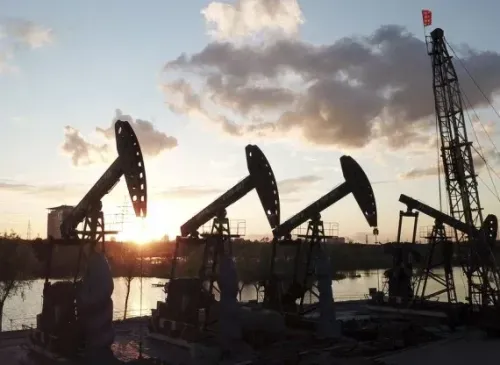
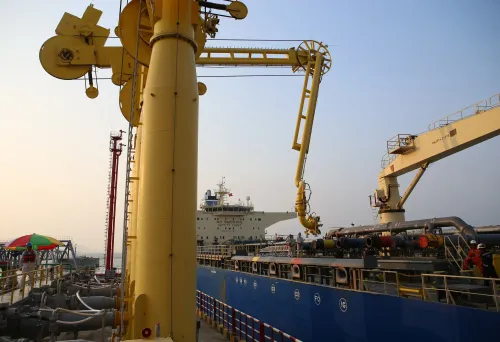
Seoul, April 2 (NationPress) South Korea has successfully secured approximately 50 million barrels of alternative oil supplies for this month. This measure aims to compensate for the oil imports from the Middle East that have been hindered due to the effective closure of the Strait of Hormuz, as confirmed by government officials on Thursday. They reiterated their commitment to ensuring stable energy management.
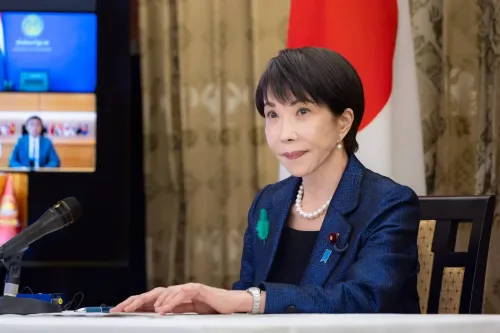
The government, alongside oil refineries, is diligently working to procure alternatives from various countries. Yang Ghi-wuk, the deputy minister for trade, industry, and resource security, shared insights during a regular energy supply briefing, highlighting that Seoul is actively reaching out to nations such as Saudi Arabia, Oman, Kazakhstan, and the United States, according to reports from the Yonhap news agency.
Typically, around 80 million barrels of oil are imported to South Korea each month, but only about 50 million barrels have been provisionally secured for April, with expectations for alternative supplies to rise in May.
To mitigate the supply gap, the government is managing demand and facilitating supplies through a crude oil swap system involving private enterprises. Yang emphasized that the government would maintain vigilant oversight of the market.
On the topic of Australia's proposed export restrictions on natural gas, Yang noted that the impact on South Korea is anticipated to be minor. He explained that Australia has assured Seoul's foreign ministry that it will uphold its long-term gas supply contract with Korea.
Australia's restrictions will primarily affect short-term spot contracts, which may lead to a temporary reduction of about 30,000 to 40,000 tons of gas supplies—equivalent to roughly half a day's supply.
In related news, Industry Minister Kim Jung-kwan pledged on Thursday to exert maximum effort to stabilize the supply of naphtha and other petrochemical materials amidst disruptions caused by the ongoing conflict in the Middle East.
During a meeting with officials from relevant ministries and business groups, as reported by the Ministry of Trade, Industry and Resources, Kim emphasized the importance of naphtha as a critical industrial commodity and a key raw material for everyday products. He assured that the government is dedicated to establishing a stable petrochemical supply chain to prevent any disturbances in daily life and industrial operations.
Furthermore, the minister committed to taking strict action against any unfair market practices that might undermine market trust.
Point of View
It's crucial to highlight South Korea's strategic response to ongoing geopolitical challenges affecting oil supply. The government's proactive measures not only ensure energy security but also reflect a commitment to maintaining stability in the face of international disruptions.
NationPress
22 Sept 2026
Frequently Asked Questions
What prompted South Korea to secure alternative oil supplies?
The effective closure of the Strait of Hormuz has blocked traditional oil supplies from the Middle East, prompting South Korea to seek alternative sources.
How much oil does South Korea typically import?
Under normal circumstances, South Korea imports about 80 million barrels of oil each month.
Which countries is South Korea negotiating with for alternative oil supplies?
South Korea is negotiating with Saudi Arabia, Oman, Kazakhstan, the United States, and others to secure alternative oil supplies.
What is the expected impact of Australia's gas export restrictions on South Korea?
Australia's planned restrictions are expected to have a limited impact, with assurances that long-term contracts will remain unaffected.
Why is naphtha supply stability important for South Korea?
Naphtha is a core raw material used in various everyday products and industrial processes, making its stable supply crucial for the economy.