South Korea weighs oil reserve release timing amid August supply crisis fears
Synopsis
South Korea is holding back on releasing 22.46 million barrels of strategic oil reserves pledged to the IEA, treating the move as a last-resort card while the IEA's own chief warns markets could hit a 'red zone' by August. With Seoul already sourcing 51.5% of its oil from outside the Middle East — up from 30.9% last year — the real question is whether that diversification buffer holds if the Strait of Hormuz stays shut.
Key Takeaways
South Korea pledged to release 22.46 million barrels of strategic oil reserves by 9 June under a 32-nation IEA coordinated plan.
Deputy Minister Yang Ghi-wuk said Seoul is treating the release as a 'final' card, not an immediate response.
IEA Executive Director Fatih Birol warned last week that oil markets could enter a 'red zone' in July or August .
South Korea has secured approximately 85 percent of pre-Iran war oil supplies for use through July .
Non-Middle East oil sourcing jumped to 51.5 percent for May–July, up sharply from 30.9 percent a year earlier.
Shipments from Africa surged to 8.3 percent from 2.2 percent ; Americas rose to 35.6 percent from 23.1 percent .
South Korea is proceeding with caution on the timing of its strategic oil stockpile release under the International Energy Agency (IEA) framework, as officials warn of a potential global oil supply crisis as early as August 2025. An industry ministry official confirmed the cautious stance on Tuesday, 26 May, signalling that Seoul views its reserve release as a last-resort instrument rather than an immediate response.
The IEA Commitment and Seoul's Hesitation
Earlier this year, South Korea pledged to release 22.46 million barrels of oil from its strategic reserves by 9 June, as part of a coordinated plan adopted by 32 IEA member nations. The joint release was designed to cushion global oil markets disrupted by the US-Israeli military conflict against Iran that erupted in late February.
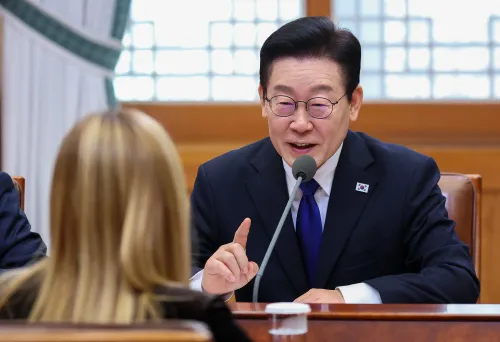
However, Yang Ghi-wuk, Deputy Minister for Trade, Industry and Resources Security, told reporters at a regular press briefing that Seoul is deliberately holding back. He described the reserve release as a 'final' card to be deployed only in the worst-case scenario, not as a routine market management tool.
IEA's Red Zone Warning
IEA Executive Director Fatih Birol last week cautioned that commercial oil inventories are depleting at a 'very fast' pace, warning that oil markets could enter a 'red zone' in July or August. The concern centres on the prolonged effective closure of the Strait of Hormuz, a critical chokepoint for global crude shipments.
'Concerns over a possible oil crisis have somewhat eased recently with news that the situation in the Middle East may get better, but until just a few days ago, there have been projections that oil supplies may suffer disruptions if the effective closure of the Strait of Hormuz continues for longer,' Yang said.
Alternative Supplies Cushion the Blow
South Korea's industry ministry said the country's crude oil supplies are relatively stable for now, with approximately 85 percent of pre-Iran war supply volumes secured for use through July. The government has also activated a crude swap system with private firms to manage near-term demand.
Notably, the combined share of oil supplies sourced from regions outside the Middle East for the May–July period reached 51.5 percent, a sharp jump from 30.9 percent in the same period last year. Shipments from North and South America climbed to 35.6 percent from 23.1 percent, while supplies from Asia rose to 7.4 percent from 5 percent. Imports from Africa surged to 8.3 percent from just 2.2 percent.
Flexibility Within the IEA Framework
Deputy Minister Yang emphasised that South Korea's IEA commitment is not legally binding in terms of exact timing. 'We are trying to adhere to the IEA's plan as much as possible, but it is not an obligation or something we could get penalized for,' he said, adding that the timing and method of release can vary by member country.
This comes amid a broader recalibration by IEA member states on how aggressively to draw down strategic reserves, with the August supply outlook remaining a key variable. How the Strait of Hormuz situation evolves in the coming weeks will likely determine whether Seoul activates its reserves before or after the June deadline.
Point of View
South Korea's wait-and-see posture could prove prescient if the Strait of Hormuz situation improves — or dangerously late if it does not. The sharp diversification away from the Middle East, while impressive on paper, has been achieved in a matter of weeks under duress, raising questions about the resilience and price premium of those alternative supply chains. The real stress test comes if multiple IEA members simultaneously decide their reserves are too precious to deploy.
NationPress
26 Sept 2026
Frequently Asked Questions
Why is South Korea delaying its IEA oil reserve release?
South Korea is treating its 22.46 million barrel reserve release as a last-resort measure, not a routine one. Deputy Minister Yang Ghi-wuk said the government wants to preserve the option for a worst-case scenario, particularly given IEA warnings of a potential oil supply 'red zone' in July or August 2025.
How much oil did South Korea commit to releasing under the IEA plan?
South Korea pledged to release 22.46 million barrels from its strategic petroleum reserves by 9 June 2025, as part of a coordinated plan adopted by 32 IEA member nations in response to oil market disruptions caused by the US-Israeli conflict against Iran.
What did IEA Executive Director Fatih Birol warn about oil markets?
Fatih Birol warned last week that commercial oil inventories are depleting at a 'very fast' pace and that oil markets could enter a 'red zone' in July or August 2025. The warning is linked to the prolonged effective closure of the Strait of Hormuz.
How has South Korea diversified its oil supply away from the Middle East?
South Korea sourced 51.5 percent of its oil from non-Middle East regions for the May–July period, up sharply from 30.9 percent in the same period last year. Shipments from the Americas, Asia, and Africa all increased significantly over this period.
Is South Korea obligated to release oil reserves by the IEA deadline?
No. Deputy Minister Yang clarified that the IEA commitment is not a legally binding obligation with penalties attached. He noted that the timing and method of reserve releases can differ by member country, giving Seoul flexibility to act when it deems conditions most critical.