Revamped Investigation into Sri Lanka's Easter Bombing Highlights NTJ's Radicalization Network in South India
Synopsis
The arrest of former Intelligence chief Suresh Sallay could reshape the ongoing investigation into the 2019 Easter bombings in Sri Lanka, with a focus on the NTJ's radical activities in South India. The implications are significant for regional security and international cooperation.
Key Takeaways
Suresh Sallay's arrest could change the course of the Easter bombing investigations.
The NTJ has a significant presence in South India .
Collaboration between India and Sri Lanka is crucial for regional security.
Radicalization efforts are being closely monitored by Indian authorities.
Transparency in investigations is essential for justice.
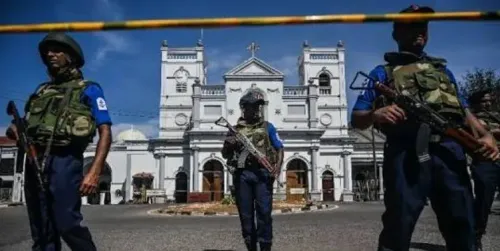
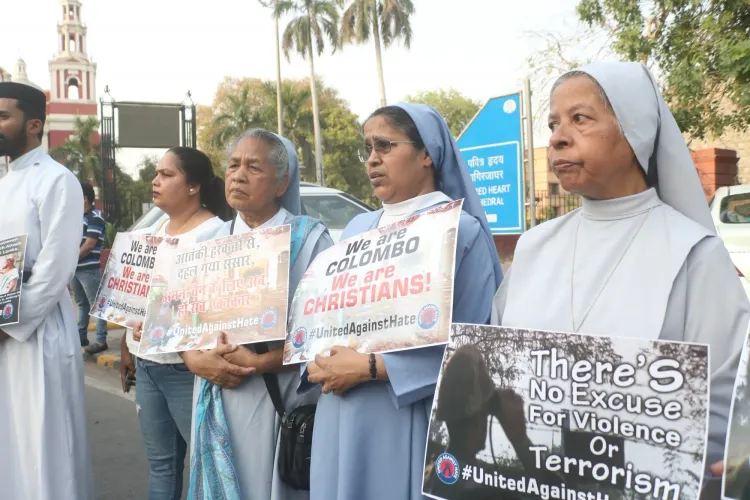
New Delhi, Feb 27 (NationPress) The apprehension of Sri Lanka's former Intelligence chief, Retired Major-General Suresh Sallay, marks a significant development in the inquiries surrounding the 2019 Easter Sunday bombings, which resulted in the deaths of 279 individuals.
This decisive action was initiated by President Anura Kumara Dissanayake, who assumed the presidency in 2024 with a commitment to ensuring that all individuals implicated in this tragedy would face justice.
Sallay had been appointed as the chief of the State Intelligence Service (SIS) in 2019, following Gotabaya Rajapaksa's election as President.
Accusations against Sallay suggest that he allowed the attack to unfold to sway the outcome of that year's presidential elections, which ultimately favored Rajapaksa.
Previously recognized for his role in dismantling the LTTE, Sallay's arrest has stirred political turbulence, with many fearing a potential resurgence of LTTE-related tensions.
Ali Sabry, the former Sri Lankan Minister for Foreign Affairs, has expressed that these developments are profoundly concerning.
An Indian official indicated that the situation in Sri Lanka is under close surveillance.
When asked whether the LTTE issue might resurface following Sallay's detention, the officer remarked that while efforts are underway, it would prove to be quite challenging.
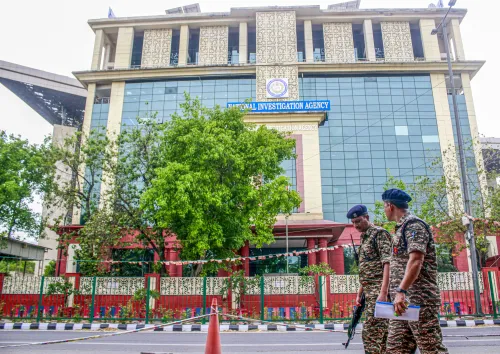
The National Investigation Agency (NIA) has been actively investigating several cases related to the potential revival of the LTTE.
Moreover, the ISI has sought to facilitate the LTTE's resurgence but has yet to achieve success.
To thwart the revival of the LTTE, both India and Sri Lanka have been collaborating closely.
As articulated by another official, the current relationship with Sri Lanka has transitioned from ideological to an investment-driven partnership.
Prime Minister Narendra Modi and President Dissanayake have developed a pragmatic rapport that has significantly fostered cooperation across various domains, particularly in security.
Although dissenting voices within Sri Lanka challenge Dissanayake's action regarding Sallay, it remains imperative to investigate the Easter Bombing incident from every conceivable perspective.
An official from the Intelligence Bureau has highlighted that one of the primary concerns today is the activities of the National Thowheeth Jama’ath (NTJ) and Jamathei Millathu Ibrahim (JMI), the two organizations implicated in this attack.
In particular, the NTJ has established a substantial presence in South India, successfully radicalizing a significant number of youths in Tamil Nadu and Kerala.
The attack's mastermind, Mohammad Zahran Hashim, frequently visited Tamil Nadu and was instrumental in the radicalization of Jamesha Mubeen, who attempted to detonate a bomb at a temple in Coimbatore in 2022.
Indian authorities are diligently investigating the involvement of Hashim. An NIA inquiry into the radicalization case in South India has revealed that the entire conspiracy was orchestrated by Hashim from Sri Lanka.
At least 50 of the 100 radicalization videos seized by the agency featured discourses by Hashim, who maintained close ties with the Islamic State.
Officials believe that Sallay could provide critical insights to investigators about the network that Hashim operated.
This information would be invaluable for Indian agencies currently probing cases directly connected to the NTJ in South India.
Hashim, who led the suicide bombers during the Easter Bombing, spent a considerable amount of time in India.
Indian authorities aim to ascertain whether any locals Hashim interacted with were aware of the Easter Bombings.
During his time in India, Hashim primarily targeted his radicalization efforts in regions such as Mallapuram, Coimbatore, Nagapattinam, Kanyakumari, Ramnathpuram, Vellore, Trichy, and Thirunelveli, as discovered by the NIA investigation.
For now, Pallay has denied any involvement in the Easter Bombings.
Indian officials have refrained from commenting on Pallay and his alleged connections.
Nevertheless, it is crucial that the bombings are thoroughly investigated, as the activities of the NTJ have direct implications for India, particularly in its southern states.
Point of View
The recent arrest of Suresh Sallay is a significant development that could influence the broader security landscape in South Asia. The investigation into the Easter bombings must be comprehensive and transparent, ensuring that all responsible parties are held accountable while maintaining regional stability.
NationPress
26 Sept 2026
Frequently Asked Questions
Who is Suresh Sallay?
Suresh Sallay is a retired Major-General and former chief of the State Intelligence Service in Sri Lanka, recently arrested in connection with the 2019 Easter bombings.
What are the Easter Sunday bombings?
The Easter Sunday bombings refer to a series of coordinated terrorist attacks in Sri Lanka on April 21, 2019, that killed 279 people and injured over 500.
What is the National Thowheeth Jama’ath (NTJ)?
The National Thowheeth Jama’ath (NTJ) is a radical Islamist group in Sri Lanka, responsible for the Easter Sunday bombings, and has been linked to radicalization efforts in South India.
What role does India play in preventing terrorism from Sri Lanka?
India actively monitors and collaborates with Sri Lanka to prevent the resurgence of terrorist groups like the LTTE and NTJ, focusing on security and intelligence sharing.
How have Indian agencies responded to the radicalization efforts of NTJ?
Indian agencies, including the NIA, are investigating the NTJ's activities and radicalization efforts in South India, seeking to understand its connections to the Easter bombings.